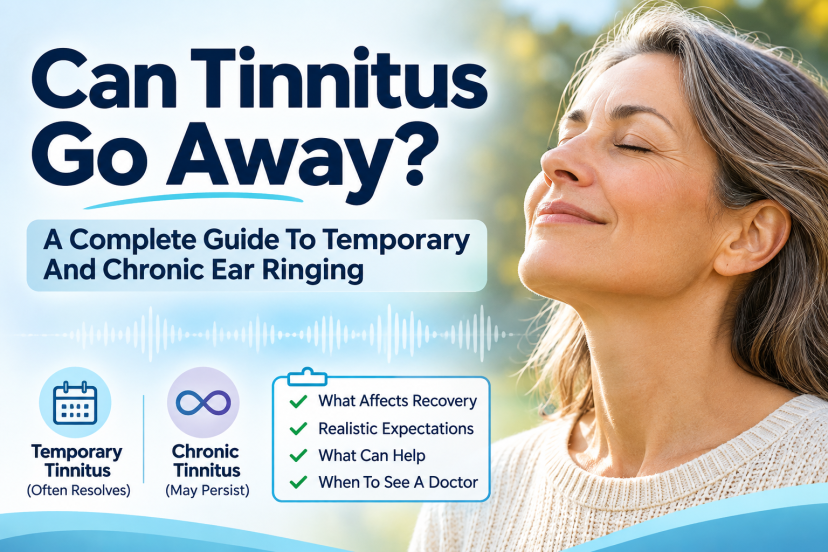
Can Tinnitus Go Away? A Complete Guide To Temporary And Chronic Ear Ringing
Understanding Temporary Tinnitus, Chronic Ear Ringing, Recovery Chances, And When To Seek Medical Help
Yes, tinnitus can go away, especially when it is temporary and related to a short-term trigger such as loud noise exposure, an earwax blockage, or an underlying condition that can be treated. However, the answer to can tinnitus go away depends on what is causing the sound, how long it has been present, and whether hearing-related changes are involved. Some people experience complete resolution, others notice gradual improvement, and some develop persistent tinnitus that requires ongoing management.
Hearing ringing, buzzing, hissing, or humming when no external sound is present can be unsettling. It may be especially worrying when the noise continues for several days or becomes more noticeable in a quiet bedroom.
The encouraging news is that tinnitus does not always remain equally noticeable or distressing. Even when the sound persists, many people find that it interferes less with sleep, concentration, and everyday activities over time.
Understanding the difference between temporary and chronic tinnitus is an important first step toward making informed decisions about your hearing health.
New to tinnitus? Explore our Tinnitus 101 Hub for beginner-friendly guides covering symptoms, causes, triggers, and practical ways to manage ear ringing.
Quick Answer: Can Tinnitus Go Away On Its Own?
Tinnitus can disappear on its own, particularly when it follows a temporary trigger or a reversible ear condition. Ringing after loud noise exposure may improve over hours or days, although some cases last longer or indicate hearing damage. Tinnitus caused by earwax buildup or certain medical conditions may improve after appropriate treatment. Persistent tinnitus is less predictable and may not disappear completely, but hearing care, sound enrichment, counseling, and other evidence-based strategies can help reduce its impact on daily life.
Key Takeaways
When asking can tinnitus go away, the answer depends largely on its cause and how long symptoms have lasted. Ringing linked to temporary noise exposure, earwax buildup, or treatable ear conditions may disappear, while chronic tinnitus is less predictable. Even when the sound persists, many people find it becomes less disruptive over time.
Protecting your hearing, improving sleep, managing stress, and exploring evidence-based treatments can make everyday life more comfortable. A medical evaluation is especially important for persistent, one-sided, or heartbeat-like tinnitus, and sudden hearing loss requires urgent care.
What Is Tinnitus And Why Does It Happen?
Tinnitus is the perception of sound without a corresponding external sound source. It is commonly described as ringing in the ears, but the experience can vary considerably.
Some people hear a high-pitched whistle, while others notice buzzing, clicking, roaring, humming, or a steady hiss. The sound may affect one ear, both ears, or seem to originate somewhere inside the head.
Tinnitus is a symptom rather than a single disease. It can be associated with several different conditions involving the ears, hearing pathways, or other parts of the body.
Common contributing factors include:
-
Exposure to loud music, machinery, or other intense sounds.
-
Age-related or noise-related hearing loss.
-
Earwax buildup or certain ear conditions.
-
Some medications that can affect hearing.
-
Jaw disorders and neck-related problems.
-
Certain inner-ear conditions.
-
Changes in how the brain processes auditory signals.
In many cases, tinnitus occurs alongside hearing loss. Researchers believe that changes in auditory input can alter activity within the brain’s hearing networks, contributing to the perception of sound.
However, tinnitus can also occur in people whose standard hearing tests appear normal.
Because different mechanisms may be involved, identifying the underlying cause is important when evaluating the likelihood of improvement.
Learn More: Explore our Common Tinnitus Causes: A Complete Guide To Why Your Ears May Be Ringing to understand the underlying conditions and factors that can contribute to tinnitus.
Temporary Vs. Chronic Tinnitus: What’s The Difference?
One of the most useful distinctions is whether tinnitus is short-lived or persistent.
Temporary Tinnitus
Temporary tinnitus lasts for a limited period and eventually disappears.
It may occur after attending a loud concert, using headphones at excessive volume, or experiencing a short-term ear problem.
For example, someone might notice ringing after spending several hours near loud speakers. The sound may gradually fade as their auditory system recovers from the exposure.
Other temporary episodes may be associated with earwax obstruction or an ear infection.
However, a brief episode does not automatically mean that no damage occurred. Repeated loud noise exposure can harm hearing even when the ringing eventually disappears.
Chronic Tinnitus
Chronic tinnitus generally refers to tinnitus that continues for several months. Definitions vary, but clinical guidelines often use six months to distinguish persistent or chronic tinnitus from more recent symptoms.
Chronic tinnitus can be continuous or intermittent.
Some people hear it throughout the day, while others notice it primarily in quiet environments.
Importantly, chronic does not necessarily mean severe.
A person may have persistent tinnitus for years while experiencing relatively little disruption to daily life. Another person may develop substantial distress shortly after symptoms begin.
The duration of tinnitus alone does not determine how difficult it will be to manage.
Temporary And Chronic Tinnitus Compared
| Feature | Temporary Tinnitus | Chronic Tinnitus |
|---|---|---|
| Duration | Hours, days, or a limited period | Often six months or longer |
| Common associations | Noise exposure, earwax, temporary ear conditions | Hearing loss, auditory changes, ongoing conditions |
| Possibility of resolution | Often possible | Possible, but less predictable |
| Medical evaluation | Important when symptoms persist or warning signs appear | Recommended, particularly if not previously evaluated |
| Main management goal | Identify and address the cause | Identify treatable factors and reduce daily disruption |
These categories describe patterns rather than guarantee outcomes. Recent tinnitus can persist, and long-standing tinnitus can become less noticeable or occasionally resolve.
Learn More: Read our Common Tinnitus Symptoms: What Different Sounds And Patterns May Mean to understand ringing, buzzing, hissing, and other common tinnitus experiences.
How Long Does It Take For Tinnitus To Go Away?
There is no universal recovery timeline. Some episodes resolve quickly, while others continue for weeks, months, or longer.
The duration often depends on the underlying cause, although individual outcomes remain difficult to predict.
Tinnitus Lasting A Few Hours
Brief ringing sometimes occurs after exposure to loud environments.
For example, a person leaving a concert might experience a high-pitched tone that gradually fades later that evening.
This can happen following temporary changes in hearing sensitivity.
However, ringing after loud noise is a warning sign that the sound level may have been harmful. Hearing protection and reduced exposure are important even when symptoms disappear.
Tinnitus Lasting Several Days
Tinnitus that continues for several days may still improve.
Possible contributing factors include ear inflammation, hearing changes, recent noise exposure, or an underlying medical condition.

Rather than assuming the ringing will disappear, consider arranging a medical evaluation, especially if symptoms are new, persistent, or accompanied by other ear complaints.
Sudden hearing loss requires urgent assessment rather than waiting several days.
Tinnitus Lasting Several Weeks
When tinnitus lasts for weeks, it becomes increasingly important to investigate possible causes.
A clinician may examine the ear canal, review medications, assess associated symptoms, and recommend hearing tests.
Some people experience gradual improvement during this period. Others notice that the sound fluctuates without disappearing.
These fluctuations do not necessarily indicate that the condition is becoming permanent.
Tinnitus Lasting Six Months Or Longer
Tinnitus lasting six months or more is commonly described as persistent or chronic in clinical practice.
However, definitions differ. The National Institute on Deafness and Other Communication Disorders (NIDCD) describes tinnitus lasting at least three months as chronic, while the 2026 American Academy of Otolaryngology–Head and Neck Surgery Foundation guideline focuses on persistent, bothersome tinnitus lasting six months or longer.
Long-standing tinnitus is less likely to disappear spontaneously than a short-lived episode, but its future course cannot be predicted precisely.
For many people, the most meaningful improvement is a reduction in how frequently the sound attracts attention or interferes with life.
7 Factors That May Influence Whether Tinnitus Goes Away
Several factors can influence the course of tinnitus. None provides a reliable individual prediction, but understanding them can help guide appropriate care.
1. The Underlying Cause
The cause is often one of the most important considerations.
Tinnitus associated with a treatable ear condition may improve when that condition is addressed.
For example, removing obstructive earwax or treating an ear infection may reduce tinnitus in some people.
However, treating an underlying condition does not guarantee complete resolution, particularly when other hearing-related changes are present.
2. Hearing Loss
Tinnitus frequently occurs alongside hearing loss.
Damage to sensory cells within the inner ear can alter the signals reaching the brain. These changes may contribute to abnormal auditory activity associated with tinnitus.
Hearing-related tinnitus may persist, especially when the underlying hearing loss is permanent.
Nevertheless, hearing aids can improve access to environmental sounds and may make tinnitus less noticeable for some individuals.
A hearing test is valuable even when someone believes their hearing is normal.
3. Duration Of Symptoms
Recently developed tinnitus may have a different outlook from tinnitus that has continued for years.
Short-lived tinnitus sometimes resolves as a temporary trigger subsides.
Persistent tinnitus may involve longer-lasting changes in auditory processing.
Still, duration is not a countdown to permanence. Researchers have not established a specific point after which tinnitus can never improve.
4. Noise Exposure
Repeated exposure to loud sounds can contribute to hearing damage and tinnitus.
Common sources include concerts, power tools, industrial equipment, firearms, and headphones played at excessive volume.
Protecting your ears can reduce the risk of additional hearing damage.
Use properly fitted hearing protection in hazardous noise environments, lower headphone volume, and take listening breaks.
Avoid wearing earplugs continuously in ordinary safe environments unless a clinician recommends doing so, because excessive sound avoidance may increase sensitivity in some people.
5. Medication-Related Effects
Certain medications can cause or worsen tinnitus, particularly at specific doses.
Examples include some antibiotics, chemotherapy drugs, and high doses of certain pain relievers.
Medication-related tinnitus sometimes improves after a medication is adjusted or discontinued, but not always.
Never stop or change a prescribed medication without consulting your healthcare professional.
A medication review can help determine whether a drug may be contributing to symptoms and whether a safer alternative is appropriate.
6. Jaw And Neck Conditions
Some people notice that their tinnitus changes when they clench their jaw, turn their head, or move their neck.
This pattern may suggest somatosensory tinnitus, sometimes called somatic tinnitus.
Temporomandibular joint disorders, muscle tension, or certain neck problems may contribute to symptoms.
Appropriate treatment of an identified jaw or neck condition can help selected patients, although movement-related changes do not prove that the condition is the sole cause.
7. Sleep, Stress, And Emotional Distress
Stress and inadequate sleep can make tinnitus more intrusive.
When someone is tired or anxious, the brain may devote more attention to the ringing. This can make the sound seem louder or more difficult to ignore.
The resulting frustration may further interfere with sleep, creating a difficult cycle.
Managing stress and improving sleep may reduce tinnitus-related distress, even if the underlying auditory signal remains unchanged.
Can Tinnitus Go Away After Loud Noise Exposure?
Yes, tinnitus following loud noise exposure can sometimes disappear, but it should never be dismissed automatically as harmless.
Loud sounds can temporarily alter hearing sensitivity. In some cases, symptoms improve after the exposure ends.
In other cases, noise damages delicate structures within the inner ear, potentially contributing to lasting hearing loss and tinnitus.
A person may notice:
-
Ringing or buzzing after a concert.
-
Muffled hearing following loud machinery exposure.
-
Increased sensitivity to everyday sounds.
-
Difficulty understanding conversations.
-
A sensation of fullness in the ears.
If ringing follows a loud event, avoid further hazardous noise exposure and give your ears a quieter environment without isolating yourself from normal everyday sounds.
Seek urgent medical assessment if you experience sudden hearing loss, whether or not tinnitus accompanies it. Sudden sensorineural hearing loss is time-sensitive and may require prompt treatment.
If tinnitus persists after noise exposure, arrange a hearing evaluation rather than relying on home remedies.
Can Tinnitus From Earwax Or Ear Infections Disappear?
Some forms of tinnitus improve when an ear condition is successfully treated.
Earwax Blockage
Earwax normally protects the ear canal. However, excessive buildup can occasionally obstruct hearing and contribute to tinnitus.
A healthcare professional can examine the ear and determine whether wax removal is appropriate.
If earwax is the main cause, tinnitus may improve after removal.
Avoid inserting cotton swabs or sharp objects into the ear canal, as these can push wax deeper or damage the ear.
Ear Infections
Middle-ear infections and some other ear conditions may cause temporary hearing changes accompanied by ringing or buzzing.
As the infection or associated fluid resolves, tinnitus may improve.
However, persistent symptoms may require further examination to identify lingering fluid, hearing changes, or other problems.
Eustachian Tube Dysfunction
The Eustachian tubes help regulate pressure between the middle ear and the back of the nose.
When they do not function normally, people may experience ear fullness, muffled hearing, popping, or tinnitus.
Treatment depends on the underlying cause, and improvement in ear pressure does not always eliminate tinnitus.
Can Chronic Tinnitus Ever Disappear Completely?
Chronic tinnitus can sometimes resolve, but complete disappearance is not a predictable outcome.
For some individuals, the sound gradually becomes quieter. Others experience longer periods when they do not notice it, even though it remains detectable in silence.
Some continue hearing tinnitus but no longer find it especially bothersome.
These experiences represent different types of improvement.
Complete Resolution
Complete resolution means that tinnitus is no longer perceived.
This may occur spontaneously or after successful treatment of an underlying cause.
However, no treatment can reliably guarantee complete resolution of chronic subjective tinnitus.
Reduced Perceived Loudness
Some people report that their tinnitus becomes less intense over time.
This change may happen gradually, and perceived loudness can fluctuate with the listening environment, fatigue, and attention.
Not every change reflects an actual alteration in the underlying auditory signal.
Reduced Distress
A person may continue hearing tinnitus but experience less frustration, anxiety, or disruption.
This is an important treatment outcome.
Being able to sleep comfortably, concentrate at work, and participate in social activities can represent substantial progress even when tinnitus remains audible.
Habituation
Habituation occurs when the brain becomes less responsive to a repeated, non-threatening stimulus.
For example, people often stop consciously noticing the sound of a refrigerator or ventilation system after spending time in the same environment.
Some people experience a similar reduction in attention toward tinnitus.
Habituation does not mean the sound has disappeared. Instead, the brain may assign it less importance.
The process varies widely and cannot be forced or guaranteed.
Can Tinnitus Improve Without Medication?
Yes. Many tinnitus management approaches do not involve medication.
There is currently no medication proven to reliably cure chronic subjective tinnitus. However, several approaches can improve quality of life and reduce tinnitus-related distress.
Cognitive Behavioral Therapy
Cognitive behavioral therapy (CBT) is one of the best-supported approaches for bothersome tinnitus.
CBT helps people recognize and change unhelpful thoughts, emotional reactions, and behaviors associated with tinnitus.
For example, someone who interprets every increase in ringing as evidence of permanent deterioration may experience substantial anxiety.
CBT can help develop more balanced interpretations and practical coping responses.
It does not necessarily reduce the sound itself, but it can improve functioning, sleep-related coping, and emotional well-being.
The updated 2026 American Academy of Otolaryngology–Head and Neck Surgery Foundation guideline recommends CBT for adults with persistent, bothersome tinnitus.
Hearing Aids
Hearing aids may benefit people who have both hearing loss and tinnitus.
By improving access to speech and environmental sounds, hearing aids can reduce the contrast between tinnitus and surrounding sound.
Some people consequently notice tinnitus less often.
Hearing aids are not appropriate for everyone, and the benefit varies.
A qualified audiologist can determine whether hearing amplification is suitable.
Sound Enrichment
Sound enrichment involves introducing comfortable background sounds into the environment.
Examples include:
-
Gentle rainfall recordings.
-
A quiet fan.
-
Soft instrumental music.
-
Ocean or nature sounds.
-
Low-volume ambient noise.
These sounds may make tinnitus less prominent, particularly in quiet rooms.
Keep the volume comfortable. The goal is not to overpower tinnitus with loud noise.
Evidence for specific sound therapy approaches remains mixed, so sound enrichment should be viewed as a management option rather than a cure.
Counseling And Education
Understanding tinnitus can reduce uncertainty and fear.
A clinician or audiologist can explain possible causes, discuss hearing test results, and help establish realistic expectations.
Education may also help people avoid unnecessary treatments and misleading cure claims.
Treatment Of Associated Conditions
Addressing hearing loss, jaw disorders, sleep difficulties, anxiety, or other relevant conditions may improve overall well-being and sometimes reduce tinnitus symptoms.
Treatment should be individualized rather than based on assumptions about the cause.
What Can You Do At Home To Make Tinnitus Less Noticeable?
Daily habits cannot guarantee that tinnitus will disappear, but they can make symptoms easier to live with.
Protect Your Hearing Without Avoiding Everyday Sound
Use hearing protection around genuinely loud noise, such as power tools, concerts, or firearms.
At the same time, continue participating in ordinary safe listening environments.
A balanced approach protects hearing while avoiding unnecessary sound restriction.
Improve Your Sleep Environment
Tinnitus often becomes more noticeable at night because external sounds decrease.
Try maintaining a regular sleep schedule, keeping your bedroom comfortable, and using gentle background sound if silence makes tinnitus more intrusive.
Avoid repeatedly checking whether the ringing is still present when trying to fall asleep.
Reduce Stress In Practical Ways
Consider gentle physical activity, relaxation exercises, enjoyable hobbies, or mindfulness practices.
These approaches can help manage the emotional response to tinnitus.
They should not be presented as methods that directly repair hearing damage.
Pay Attention To Personal Triggers
Some people notice changes in tinnitus after poor sleep, intense stress, alcohol consumption, or other circumstances.
A symptom diary can help identify patterns.
However, avoid assuming that every daily fluctuation has a specific cause.
There is insufficient evidence to recommend universal avoidance of caffeine or particular foods for everyone with tinnitus.
Stay Connected And Active
Social isolation and excessive monitoring can make tinnitus more disruptive.
Continue enjoyable activities, maintain relationships, and seek support when symptoms interfere with daily life.
The objective is to prevent tinnitus from becoming the center of everyday attention.
When Should You See A Doctor About Tinnitus?
Although tinnitus is common and often not associated with a dangerous condition, certain symptoms require prompt medical evaluation.
The goal is to identify potentially treatable causes and avoid missing conditions that need timely attention.
Seek Emergency Or Immediate Medical Care If:
-
Tinnitus begins alongside sudden hearing loss, especially over hours or a few days.
-
You develop facial weakness, difficulty speaking, or other sudden neurological symptoms.
-
Tinnitus accompanies severe, sudden, uncontrolled vertigo or symptoms suggesting a stroke.
-
Symptoms develop after a significant head injury, particularly with hearing changes or neurological symptoms.
Sudden hearing loss should be assessed urgently, ideally within 24 hours, because some treatments are time-sensitive.
Arrange A Medical Appointment If:
-
Tinnitus continues or repeatedly returns.
-
Ringing occurs primarily in one ear.
-
You hear rhythmic sounds that seem synchronized with your heartbeat.
-
Symptoms have changed significantly.
-
Tinnitus is accompanied by hearing difficulties, ear pain, or discharge.
-
Ringing interferes with sleep, concentration, work, or emotional well-being.
Pulsatile tinnitus deserves medical assessment because certain vascular or structural conditions can produce heartbeat-related sounds.
A healthcare professional may recommend imaging or specialist evaluation depending on the findings.
Persistent one-sided tinnitus also warrants assessment, although it does not automatically indicate a serious condition.
Prepare for your appointment with our Tinnitus Doctor Visit Checklist — a free, practical guide to help you organize your symptoms, ask important questions, and make the most of your doctor’s visit.
What Happens During A Tinnitus Evaluation?
A tinnitus evaluation usually begins with a medical history and examination.
Your healthcare professional may ask when the sound started, whether it affects one or both ears, and whether you have experienced hearing changes.
They may also review recent noise exposure, medications, ear infections, and associated symptoms.
An audiologist can perform hearing tests to identify hearing loss or other auditory problems.
Depending on the findings, further assessment by an ear, nose, and throat (ENT) specialist may be appropriate.
Imaging is not routinely necessary for every person with tinnitus. It is generally reserved for situations involving particular warning signs, such as pulsatile tinnitus, asymmetric hearing findings, or relevant neurological symptoms.
Current clinical guidance emphasizes comprehensive hearing evaluation and individualized care rather than unnecessary testing.
How To Set Realistic Expectations For Tinnitus Recovery
One of the most difficult parts of experiencing tinnitus is uncertainty.
People naturally want to know whether the ringing will disappear tomorrow, next month, or sometime in the future.
Unfortunately, no hearing test, symptom pattern, or online questionnaire can reliably predict an individual’s recovery.
A more useful approach is to recognize three possible outcomes:
-
The tinnitus resolves. This may occur naturally or after treatment of a reversible cause.
-
The tinnitus improves. The sound becomes quieter, less frequent, or less disruptive.
-
The tinnitus persists but becomes manageable. Appropriate support helps restore sleep, concentration, and daily comfort.
These outcomes are not mutually exclusive. Someone may experience reduced distress before noticing changes in the sound itself.
Progress is also not always linear. Temporary fluctuations do not necessarily mean that recovery or successful management has failed.
Avoid evaluating your condition solely by checking the loudness of tinnitus multiple times each day.
Instead, consider whether you are sleeping better, enjoying activities, concentrating more comfortably, and feeling less distressed.
These improvements matter.
A Practical 30-Day Tinnitus Management Plan
This plan is intended to support healthy habits and informed decision-making, not to guarantee recovery.
| Timeframe | Recommended Actions |
|---|---|
| Days 1–7 | Arrange appropriate medical evaluation, especially for new or persistent symptoms. Record important symptom details and avoid hazardous noise exposure. |
| Days 8–14 | Review hearing test findings or follow-up recommendations. Establish consistent sleep habits and experiment with gentle background sounds. |
| Days 15–21 | Identify meaningful patterns in your symptoms without excessive monitoring. Practice stress-management techniques and maintain normal activities. |
| Days 22–30 | Review sleep, concentration, and emotional well-being. Discuss persistent difficulties with your clinician and consider tinnitus-focused CBT or hearing support when appropriate. |
Do not wait until the end of the plan to seek medical attention for urgent warning signs.
A useful way to measure progress is to record how tinnitus affects your daily activities rather than focusing exclusively on its perceived loudness.
For additional support, consider using the Tinnitus Trigger Tracker & 30-Day Symptom Diary available through TinnitusCureGuide.com.
Common Myths About Tinnitus Recovery
Misleading information can create unnecessary fear or unrealistic expectations.
Myth: Tinnitus Always Means Permanent Hearing Damage
Tinnitus is frequently associated with hearing loss, but it can also occur with temporary ear conditions or without measurable hearing loss on standard tests.
A hearing evaluation can help clarify the situation.
Myth: If Tinnitus Lasts Six Months, It Can Never Improve
Chronic tinnitus can become less noticeable or distressing over time.
The six-month threshold is a clinical classification, not proof that improvement is impossible.
Myth: Natural Supplements Can Cure Tinnitus
There is no convincing evidence that commonly marketed supplements reliably cure tinnitus.
The 2026 clinical guideline recommends against routinely using dietary supplements specifically to treat persistent, bothersome tinnitus.
Myth: You Must Eliminate Every Sound To Protect Your Ears
Hearing protection is important in hazardous noise environments.
However, avoiding normal everyday sounds is generally unnecessary and can sometimes contribute to increased sound sensitivity.
Myth: If The Ringing Remains, Treatment Has Failed
Tinnitus treatment often focuses on improving sleep, emotional well-being, concentration, and quality of life.
These are meaningful outcomes even when the auditory sensation continues.
Frequently Asked Questions About Tinnitus Recovery
1. Can Tinnitus Go Away After Several Years?
Yes, tinnitus can sometimes improve or disappear after several years, although complete resolution becomes less predictable with long-standing symptoms. Some people experience gradual reductions in perceived loudness, while others develop habituation and notice the sound less frequently. Even when tinnitus persists, appropriate management can substantially improve quality of life.
2. Can Tinnitus Go Away If You Have Hearing Loss?
Tinnitus associated with hearing loss may persist, particularly when the hearing damage is permanent. However, hearing aids and other hearing rehabilitation strategies can make tinnitus less noticeable for some people. A hearing evaluation can identify suitable treatment options, although hearing aids do not guarantee that tinnitus will disappear.
3. Does Tinnitus Get Worse With Age?
Not necessarily. Hearing loss becomes more common with age, and tinnitus may occur alongside age-related hearing changes. However, tinnitus does not inevitably become louder or more distressing as someone gets older. Symptoms can remain stable, fluctuate, improve, or worsen depending on individual circumstances.
4. Can Stress-Related Tinnitus Go Away?
Tinnitus that becomes more noticeable during stressful periods may improve as stress and sleep difficulties are addressed. However, stress is not always the underlying cause. Relaxation, CBT, and healthy sleep habits can reduce tinnitus-related distress even when the sound itself remains present.
5. Is There A Permanent Cure For Chronic Tinnitus?
There is currently no universally effective cure for chronic subjective tinnitus. Some people experience complete resolution, particularly when a treatable cause is identified, but outcomes vary. Evidence-based approaches such as CBT, hearing aids when appropriate, and individualized tinnitus management can help reduce symptoms’ impact and support a better quality of life.
Final Thoughts: Can Tinnitus Go Away Permanently?
Tinnitus can go away, particularly when it is associated with a temporary trigger or a treatable underlying condition. However, chronic tinnitus does not have a predictable recovery timeline, and complete disappearance cannot be guaranteed.
For people experiencing persistent ringing, the most helpful next step is often a thorough hearing evaluation followed by an individualized management plan.
Protecting your hearing, addressing relevant medical conditions, improving sleep, and considering evidence-based treatments can all contribute to better outcomes.
Perhaps most importantly, persistent tinnitus does not mean that your quality of life must remain permanently affected.
Many people learn to experience tinnitus with significantly less distress and interference.
Whether your tinnitus eventually disappears or becomes easier to manage, meaningful improvement remains possible.
Medical Disclaimer: This article is for general educational purposes only and does not provide medical advice, diagnosis, or treatment. Tinnitus can have multiple causes, and individual outcomes vary. Consult a qualified healthcare professional for persistent or concerning symptoms. Sudden hearing loss, new neurological symptoms, or severe acute vertigo require urgent medical attention. Do not stop prescribed medications or begin treatments without appropriate professional guidance.
Medical References And Further Reading
These authoritative resources support the medical information and management recommendations discussed in this guide.
1. National Institute on Deafness and Other Communication Disorders (NIDCD). Tinnitus: Causes, Symptoms, Diagnosis, And Treatment — Overview of tinnitus, potential causes, diagnosis, and management.
2. American Academy of Otolaryngology–Head and Neck Surgery Foundation. Clinical Practice Guideline: Tinnitus Update (2026) — Current evidence-based recommendations for evaluating and managing persistent, bothersome tinnitus.
3. National Institute for Health and Care Excellence (NICE). Tinnitus: Assessment And Management — Recommendations for referral, hearing evaluation, investigation, and tinnitus support.
4. National Institute for Health and Care Excellence (NICE). Hearing Loss In Adults: Assessment And Management — Guidance on hearing assessment and urgent evaluation of sudden hearing loss.
5. American Academy of Audiology. 2026 Tinnitus Guideline Endorsement And Overview — Audiology perspective on current tinnitus management guidance.
Explore more:
- Tinnitus Doctor Visit Checklist
- Tinnitus Trigger Tracker And 30-Day Symptom Diary
- The Complete Beginner’s Guide To Tinnitus
- Tinnitus Treatment And Management
- Tinnitus At Night: Complete Sleep Guide
- Tinnitus And Stress: Understanding The Cycle
- Tinnitus In One Ear Vs Both Ears
- Common Tinnitus Symptoms
- Tinnitus And Hearing Tests
- Common Tinnitus Causes
- Common Tinnitus Triggers
- What Is Pulsatile Tinnitus?
- Living With Tinnitu