Tinnitus In One Ear Vs Both Ears: What The Difference May Mean
Understanding Unilateral, Bilateral, And Changing Tinnitus Patterns
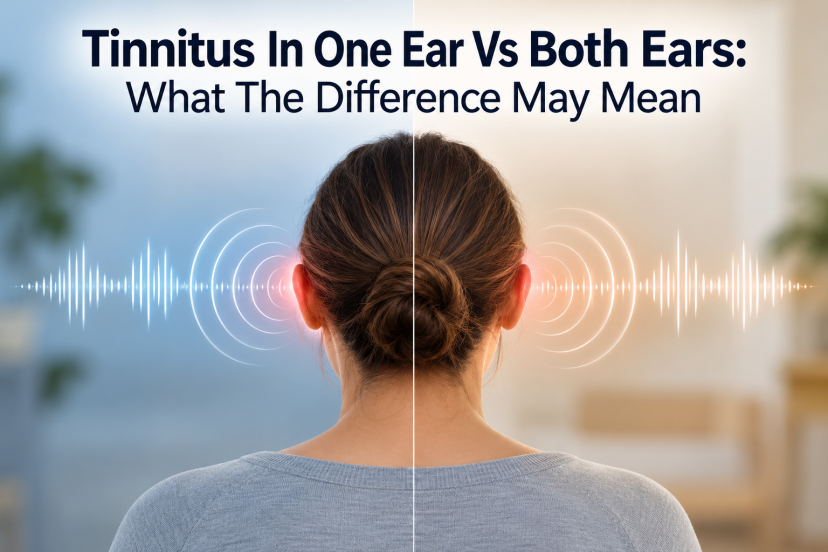
Tinnitus in one ear more often points to a localized or structural issue in that ear or pathway, whereas tinnitus in both ears typically reflects generalized or symmetrical causes like age-related hearing loss or noise exposure. What is the difference between tinnitus in one ear vs. both ears? Tinnitus can vary widely from person to person. Some people hear a high-pitched tone in one ear. Others notice buzzing, humming, hissing, or ringing in both ears.
For some, the sound seems centered inside the head rather than clearly coming from either side. And occasionally, tinnitus may seem to move, switch sides, or become more noticeable in one ear at different times.
These differences naturally raise questions. Is tinnitus in one ear more concerning than tinnitus in both ears? Does ringing in both ears suggest hearing changes? What if the tinnitus suddenly appears on just one side? And what does it mean if your hearing seems completely normal?
Understanding tinnitus in one ear vs both ears can provide useful clues, but location alone usually cannot tell you exactly what is causing tinnitus. Hearing changes, noise exposure, earwax, medications, jaw or neck factors, and many other issues can potentially influence how tinnitus is perceived.
What matters is the whole pattern: where you hear it, when it began, whether it is constant or intermittent, whether it pulses with your heartbeat, and whether you have other symptoms such as hearing loss, dizziness, ear pressure, or pain.
This guide explains the differences between one-sided and two-sided tinnitus, what various patterns may mean, what details are useful to track, and when it makes sense to seek professional evaluation.

Quick Answer: Tinnitus In One Ear Vs Both Ears
Tinnitus in one ear is often called unilateral tinnitus, while tinnitus affecting both ears is known as bilateral tinnitus. Either pattern can have many possible explanations.
Bilateral tinnitus is commonly associated with factors that affect hearing in both ears, including age-related hearing changes and long-term noise exposure. One-sided tinnitus may also result from relatively simple issues, such as earwax or differences in hearing between the ears, but persistent unilateral tinnitus deserves medical attention because healthcare professionals may want to rule out less common causes.
The location of tinnitus is only one clue. Sudden hearing changes, severe dizziness, neurological symptoms, or tinnitus that pulses with your heartbeat are particularly important to discuss promptly with a healthcare professional.
Key Takeaways
Most likely cause: There is no single cause of tinnitus in one ear vs both ears. Hearing changes, noise exposure, ear conditions, medications, and jaw or neck factors are among the possibilities.
Usually serious? Most tinnitus is not a sign of a dangerous condition, but persistent one-sided tinnitus, pulsatile tinnitus, sudden hearing changes, or tinnitus accompanied by certain other symptoms should be evaluated.
First thing to check: Notice which ear is affected, when the tinnitus started, whether your hearing has changed, whether the sound is constant or intermittent, and whether it follows your heartbeat.
Best solution: Rather than trying to diagnose tinnitus from its location alone, consider a hearing evaluation and appropriate medical assessment, especially when tinnitus is new, persistent, one-sided, pulsatile, or accompanied by other symptoms.
What Does Tinnitus In One Ear Mean?
When tinnitus is heard primarily or exclusively in one ear, it is generally described as unilateral tinnitus.
For example, you might notice:
- Ringing only in your left ear
- Buzzing only in your right ear
- A high-pitched tone that consistently seems stronger on one side
- Intermittent tinnitus that repeatedly affects the same ear
- A whooshing or pulsing sound in one ear
Having tinnitus in one ear does not automatically mean something serious is happening. There are several possible explanations, and some are relatively straightforward.
However, the fact that the tinnitus is consistently one-sided is useful information for a doctor or hearing professional.
Earwax And Ear Canal Problems
A buildup of earwax can sometimes affect hearing or create sensations such as fullness, muffled hearing, or tinnitus.
If one ear has significantly more wax than the other, tinnitus may appear more noticeable on that side.
Other problems involving the ear canal or middle ear can also produce symptoms that differ between the ears.
Avoid inserting cotton swabs or other objects deeply into your ear in an attempt to remove wax yourself. This can push wax farther into the canal or potentially injure the ear.
Differences In Hearing Between Your Ears
Hearing loss does not always affect both ears equally.
One ear may have been exposed to more noise, experienced an infection, or developed a different degree of hearing change. Tinnitus may then be perceived predominantly on that side.
Importantly, you can have subtle hearing changes without realizing it during everyday conversations.
That is one reason a formal hearing test can be useful even when you feel that your hearing is normal.
Previous Noise Exposure
Think about whether one ear has historically received more noise exposure.
Occupational equipment, machinery, firearms, loud tools, concerts, headphones, or other sources of intense sound can potentially contribute to hearing changes and tinnitus.
Sometimes exposure affects both ears. In other situations, one side may have received greater exposure.
A single episode of loud sound can also temporarily make tinnitus more noticeable.
Ear Infections Or Middle-Ear Problems
Ear infections, fluid behind the eardrum, or other middle-ear problems may cause symptoms in one ear.
Depending on the underlying issue, a person might also notice:
- Ear pressure
- Fullness
- Muffled hearing
- Discomfort
- Popping sensations
If these symptoms persist, an ear examination can help identify whether something is affecting the ear canal, eardrum, or middle ear.
Jaw And Neck Influences
Some people notice that their tinnitus changes when they:
- Clench their teeth
- Open their mouth widely
- Move their jaw from side to side
- Turn their neck
- Press certain areas around the jaw, head, or neck
This is sometimes described as somatic or somatosensory tinnitus.
Jaw problems, muscle tension, or neck issues do not explain every case of tinnitus, but they can influence tinnitus perception in some people.
The effect can also be stronger on one side.
Less Common Causes Of Persistent One-Sided Tinnitus
There are less common medical conditions that healthcare professionals may consider when tinnitus remains consistently unilateral, particularly when there is also asymmetric hearing loss or other symptoms.
This is why persistent tinnitus confined to one ear should not simply be self-diagnosed based on information online.
An appropriate evaluation does not mean that a serious condition is expected. It means that one-sided tinnitus can provide clinicians with a reason to look more closely at hearing and other possible contributing factors.
What Does Tinnitus In Both Ears Mean?
Tinnitus heard in both ears is called bilateral tinnitus.

People may describe it as:
- Ringing in both ears
- A high-frequency tone on both sides
- Hissing or static
- Buzzing
- A sound that seems to fill the head
- Tinnitus that is stronger in one ear but still present in both
Bilateral tinnitus is very common.
It can occur when a factor influences the auditory system on both sides.
Age-Related Hearing Changes
Hearing often changes gradually as people get older.
These changes frequently affect both ears, although not always to exactly the same degree.
Tinnitus can accompany hearing loss, which is why someone with bilateral tinnitus may benefit from having their hearing checked even if they can still follow normal conversations reasonably well.
Long-Term Noise Exposure
Repeated exposure to loud environments can affect hearing over time.
Potential sources include:
- Construction equipment
- Power tools
- Factory machinery
- Lawn equipment
- Motorcycles
- Concerts
- Clubs
- Loud recreational activities
- Frequently listening to music at excessive volume
Noise-related hearing changes can affect both ears and may be accompanied by bilateral tinnitus.
Protecting your hearing going forward remains worthwhile even if tinnitus is already present.
Medication And Health Factors
Some medications can be associated with tinnitus, particularly at certain doses or under particular circumstances.
Never stop a prescribed medication simply because you suspect that it may be contributing to tinnitus. Instead, discuss your symptoms, medication list, and concerns with your doctor or pharmacist.
Various health conditions can also influence tinnitus directly or indirectly, which is another reason tinnitus should be considered in the context of your overall health rather than as an isolated ear symptom.
One Ear Vs Both Ears: Is One Pattern More Serious?
This is probably the biggest question people have when comparing tinnitus in one ear vs both ears.
The answer is more nuanced than simply saying that one pattern is “bad” and the other is “good.”
Bilateral tinnitus is frequently associated with widespread factors such as age-related hearing changes or long-term noise exposure.
Unilateral tinnitus can also have common explanations, but persistent tinnitus affecting only one ear tends to receive additional attention during medical evaluation because clinicians may want to investigate why the ears are behaving differently.
The most useful approach is to look beyond location.
Important details include:
- Did the tinnitus begin suddenly or gradually?
- Is it always in the same ear?
- Is it constant or intermittent?
- Has your hearing changed?
- Do you have ear fullness or pain?
- Do you feel dizzy or unsteady?
- Does the sound pulse with your heartbeat?
- Does moving your jaw or neck change it?
- Was there recent loud-noise exposure?
- Have medications recently changed?
These clues can be more informative than simply counting how many ears are affected.
What If Tinnitus Is Louder In One Ear But Present In Both?
Tinnitus does not need to be perfectly symmetrical.
You may hear tinnitus in both ears while one side is noticeably louder.
For example, you might describe your left ear as having a strong ringing sound while your right ear has only a faint hiss.
That can still be considered bilateral tinnitus, but the asymmetry is worth mentioning during a hearing evaluation.
Your hearing may also differ between ears.
An audiologist can measure hearing at different frequencies and compare one ear with the other rather than relying solely on your perception of whether your hearing feels normal.
What If Tinnitus Switches From One Ear To The Other?
Tinnitus can sometimes seem to change sides.
One day, the ringing may be more obvious in your right ear. Later, you may notice it primarily on the left.
There are several possible reasons for this perception.
Tinnitus itself can fluctuate. Your attention can also shift between ears, especially in quiet environments where subtle internal sounds become easier to notice.
Other factors may include:
- Changes in background noise
- Stress
- Fatigue
- Sleep quality
- Jaw tension
- Neck tension
- Temporary changes in ear pressure
- Recent noise exposure
Keeping a simple diary can help you determine whether tinnitus is genuinely changing sides or whether its loudness and your awareness of it are fluctuating.
Learn more: Why Does My Tinnitus Switch From One Ear To The Other?
What If Tinnitus Sounds Like It Is In The Middle Of Your Head?
Not everyone can identify tinnitus as coming from a particular ear.
Some people describe the sound as being:
- In the center of the head
- Behind the ears
- Everywhere
- Inside the brain
- Difficult to localize
This does not necessarily indicate a separate type of condition.
Tinnitus is a perception of sound rather than an external sound entering the ear. Because auditory processing involves both the ears and the brain, its perceived location can vary considerably.
If you cannot determine whether tinnitus is coming from one ear or both, you can simply describe that experience to your healthcare provider.
You do not need to force tinnitus into a specific category.
Does The Type Of Sound Matter?
Location is only one characteristic of tinnitus.
The actual sound can provide additional information to discuss during an evaluation.
Common descriptions include:
Ringing
The classic tinnitus description is a steady, high-pitched ringing or tone.
It may affect one or both ears and can be constant or intermittent.
Buzzing
Some people hear a lower buzzing or electrical sound.
Again, buzzing alone does not identify a specific cause.
Hissing Or Static
Tinnitus may resemble air escaping, radio static, or a soft hiss.
This can sometimes be particularly noticeable in a quiet bedroom.
Humming
Lower-frequency tinnitus can sound more like humming, machinery, or an engine.
Before assuming a low-frequency sound is tinnitus, it can be useful to determine whether an actual environmental sound could be responsible.
Clicking
Clicking or repetitive sounds may have different explanations from continuous tonal tinnitus and are worth describing accurately during an evaluation.
Pulsing Or Whooshing
A rhythmic sound that appears synchronized with your heartbeat is particularly important to distinguish from ordinary continuous tinnitus.
This is commonly called pulsatile tinnitus.
Pulsatile Tinnitus In One Ear Vs Both Ears
Pulsatile tinnitus deserves its own discussion because it differs from the typical steady ringing many people associate with tinnitus.
You may hear:
“Whoosh…whoosh…whoosh…”
or another rhythmic sound that seems to match your pulse.
It may occur in one ear, both ears, or feel as though it is inside the head.
Because pulsatile tinnitus can sometimes be associated with blood-flow or vascular factors, it should be discussed with a healthcare professional rather than simply treated as ordinary ringing.
If you are unsure whether your tinnitus follows your heartbeat, quietly check your pulse and compare its rhythm with the sound.
Do not repeatedly obsess over the timing, however. The goal is simply to gather useful information you can report to a clinician.
What If You Have Tinnitus In One Ear But Your Hearing Seems Normal?
This situation can be confusing.
You hear ringing clearly in one ear, yet conversations, television, music, and everyday sounds all seem normal.
That is possible.
Everyday hearing is not a precise hearing test. Subtle changes at particular frequencies may be difficult to notice yourself.
Additionally, tinnitus can occur in people who do not show obvious hearing difficulty in everyday life.
So “my hearing seems normal” and “I have tinnitus” are not contradictory statements.
If tinnitus remains consistently on one side, a professional hearing evaluation can provide more useful information than trying to test your hearing at home.
Learn more: Why Is My Ear Ringing But My Hearing Seems Normal?
What If You Have Tinnitus In Both Ears But No Hearing Loss?
The same principle applies to bilateral tinnitus.
You may experience ringing in both ears without being aware of any hearing problem.
Tinnitus and hearing loss frequently occur together, but tinnitus does not automatically mean that you have noticeable hearing loss.
A formal hearing assessment can help clarify the situation.
This is especially useful if tinnitus is persistent, bothersome, or changing.
Constant Vs Intermittent Tinnitus
Another important clue is whether tinnitus is present continuously.
Constant Tinnitus
Constant tinnitus is there most or all of the time, although its perceived loudness may fluctuate.
It may become more noticeable:
- At bedtime
- In a quiet room
- During stressful periods
- When tired
- After noise exposure
- When focusing on it
Intermittent Tinnitus
Intermittent tinnitus comes and goes.
You might experience it for minutes or hours and then barely notice it later.
A short-lived tone that occasionally appears and disappears can happen, but repeated or persistent changes are still worth tracking, particularly if they consistently involve one ear or occur with other symptoms.
Sudden Vs Gradual Tinnitus
How tinnitus begins can matter as much as where it occurs.
Gradual Tinnitus
Some people cannot identify the exact day their tinnitus began.
It may have gradually become more noticeable over months or years.
This can occur alongside gradual hearing changes or long-term noise exposure.
Sudden Tinnitus
Suddenly developing tinnitus deserves more attention, particularly if it is accompanied by a sudden decrease in hearing.
Sudden hearing loss can sometimes feel like:
- A blocked ear
- Muffled hearing
- Ear pressure
- Reduced hearing on one side
A person may initially focus on the ringing rather than recognizing the hearing change.
Sudden hearing loss should be treated as a time-sensitive medical issue and evaluated promptly.
Do not assume that a suddenly blocked or muffled ear is simply earwax if your hearing has abruptly changed.
Symptoms To Pay Attention To Alongside Tinnitus
Tinnitus location becomes much more useful when combined with other symptoms.
Make a note if tinnitus occurs with:
- Sudden hearing loss
- Gradually worsening hearing
- Significant differences in hearing between ears
- Dizziness or vertigo
- Balance difficulties
- Ear pain
- Ear drainage
- Persistent ear pressure or fullness
- A heartbeat-like pulsing sound
- Facial weakness or numbness
- Other new neurological symptoms
This does not mean these symptoms necessarily indicate a serious condition.
It means they provide important information that may affect how urgently and thoroughly tinnitus should be evaluated.
When Should Tinnitus In One Ear Be Checked?
Consider arranging an evaluation if tinnitus:
- Persists in only one ear
- Keeps returning in the same ear
- Is accompanied by hearing changes
- Is becoming progressively more noticeable
- Interferes significantly with sleep or daily life
- Is associated with dizziness, balance problems, or other ear symptoms
- Pulses in time with your heartbeat
A primary-care doctor, audiologist, or ear, nose, and throat specialist may be involved depending on your symptoms and local healthcare system.
Evaluation may include an ear examination and hearing test, with additional testing considered when clinically appropriate.
When Should Tinnitus In Both Ears Be Checked?
Bilateral tinnitus can also warrant professional evaluation.
Consider discussing it with a healthcare professional if it:
- Is new and persistent
- Is becoming more intrusive
- Affects concentration or sleep
- Is accompanied by hearing difficulties
- Started after a medication change
- Follows significant noise exposure
- Pulses with your heartbeat
- Occurs with dizziness or other concerning symptoms
Even when tinnitus is not medically dangerous, it can still have a meaningful impact on quality of life.
You do not need to wait until tinnitus becomes unbearable before asking for help.
When Tinnitus Needs More Urgent Medical Attention
Certain combinations of symptoms should not be handled with a wait-and-see approach.
Seek prompt medical care for sudden hearing loss, especially when tinnitus appears at the same time.
You should also seek urgent medical attention for tinnitus associated with significant new neurological symptoms, severe acute dizziness, or other sudden concerning symptoms.
Pulsatile tinnitus should be medically evaluated as well, even though the appropriate urgency depends on the circumstances and associated symptoms.
If you are uncertain about the urgency of a new symptom, contacting a healthcare professional is safer than attempting to diagnose the cause yourself.
How A Hearing Test Can Help
A hearing test is one of the most useful steps in evaluating persistent tinnitus.
An audiologist can examine how well each ear detects different frequencies and compare the results between sides.
This may help identify:
- Hearing loss you had not noticed
- Differences between your ears
- Frequency-specific hearing changes
- Whether further medical evaluation may be appropriate
The hearing test does not necessarily reveal exactly why tinnitus exists, but it can provide valuable context.
For someone comparing tinnitus in one ear vs both ears, testing each ear separately is particularly useful.
What To Track Before Your Appointment
You do not need to document every moment of tinnitus.
A few consistent observations are usually more helpful than constantly checking the sound.
Write down:
Location: Left ear, right ear, both ears, or inside your head?
Sound: Ringing, buzzing, humming, hissing, clicking, or whooshing?
Timing: Constant or intermittent?
Beginning: Sudden or gradual?
Hearing: Any noticeable change?
Pulse: Does the sound appear synchronized with your heartbeat?
Associated symptoms: Dizziness, ear pressure, pain, hearing changes, or balance problems?
Possible triggers: Loud noise, poor sleep, stress, jaw tension, neck movement, or other noticeable patterns?
Impact: Does it interfere with sleep, concentration, work, or relaxation?
A tinnitus diary can make these patterns easier to identify without relying on memory weeks later.
Learn more about the Tinnitus Doctor Visit Checklist on our questions and symptoms to write down before your appointment
Avoid Turning Tracking Into Constant Monitoring
Tracking tinnitus can be helpful, but there is an important balance.
Checking the sound every few minutes may make you more aware of it.
Instead, consider making a brief entry once a day or when something genuinely changes.
For example:
Monday: Left ear more noticeable after mowing the lawn. Slept poorly Sunday night.
Tuesday: Faint in both ears. Better sleep. No unusual noise exposure.
Wednesday: Mostly right-sided tonight. Jaw feels tense.
After several weeks, patterns may become clearer.
The purpose of tracking is to gather information—not to spend your day measuring tinnitus.
If your tinnitus changes from day to day, our Free Tinnitus Trigger Tracker And 30-Day Symptom Diary can help you record sounds, patterns, sleep, stress, noise exposure, and possible triggers without relying on memory.
Practical Steps That May Help With Either Pattern
Whether tinnitus affects one ear or both, several general strategies may make it easier to manage.
Protect Your Hearing From Excessive Noise
Use appropriate hearing protection around genuinely loud equipment, machinery, concerts, or other hazardous sound levels.
At the same time, you generally do not need to wear earplugs throughout ordinary daily activities. Excessive protection in normal environments may make everyday sounds seem unusually loud and can make tinnitus stand out more when the plugs are removed.
Add Gentle Background Sound
Tinnitus often seems louder when everything else becomes quiet.
You might experiment with:
- A fan
- Soft music
- Nature sounds
- White or pink noise
- A bedside sound machine
- Quiet ambient audio
The goal does not necessarily have to be completely masking tinnitus.
A gentle background sound can simply reduce the contrast between tinnitus and silence.
Pay Attention To Sleep
Tinnitus may feel considerably more intrusive when you are exhausted.
A regular bedtime, comfortable bedroom, relaxing evening routine, and consistent wake time can support better sleep.
If tinnitus itself is preventing sleep, discuss this with a healthcare professional rather than accepting chronic sleep disruption as something you simply have to tolerate.
Manage Stress Without Blaming Stress For Everything
Stress can make tinnitus more noticeable for some people.
Tinnitus can also create stress.
That can produce a frustrating cycle:
Notice tinnitus → worry about tinnitus → become more alert → notice tinnitus even more.
Relaxation, exercise, enjoyable activities, counseling, and evidence-based approaches such as cognitive behavioral therapy may help reduce tinnitus-related distress.
This does not mean tinnitus is imaginary or “just stress.”
It means your emotional and attentional response can influence how intrusive the sound feels.
Consider Jaw And Neck Patterns
If tinnitus clearly changes when you move your jaw or neck, mention this during your evaluation.
Avoid repeatedly forcing movements simply to test the tinnitus.
Instead, note obvious patterns and discuss persistent jaw pain, teeth grinding, neck problems, or related symptoms with an appropriate healthcare professional.
One Ear, Both Ears, Or Changing Ears: Think In Patterns
It is tempting to search for a simple rule:
One ear = one cause.
Both ears = another cause.
Tinnitus usually is not that straightforward.
A more useful approach is to think of tinnitus as a pattern.
Consider:
Where is it?
One ear, both ears, or the head?
When is it present?
Constantly, occasionally, or only in particular situations?
How did it start?
Suddenly or gradually?
What does it sound like?
Tonal, buzzing, hissing, clicking, or pulse-like?
What comes with it?
Hearing changes, pressure, dizziness, pain, or nothing else?
What changes it?
Noise, silence, sleep, stress, jaw movement, neck movement, or exercise?
These details create a much more informative picture than tinnitus location alone.
Frequently Asked Questions
Is Tinnitus In One Ear More Serious Than Tinnitus In Both Ears?
Not necessarily. One-sided tinnitus can have relatively common explanations, including earwax or differences in hearing between the ears. However, persistent unilateral tinnitus generally deserves evaluation because clinicians may want to investigate why the symptom is occurring predominantly on one side.
Why Do I Have Tinnitus In One Ear And Not The Other?
Possible explanations include differences in hearing, earwax, previous noise exposure, ear conditions, or jaw and neck influences. There are also less common causes, so persistent one-sided tinnitus should be discussed with a healthcare professional rather than diagnosed solely from symptoms.
Why Does My Tinnitus Switch From One Ear To The Other?
Tinnitus perception can fluctuate. Changes in attention, background sound, fatigue, stress, sleep, jaw or neck tension, and other factors may make one side seem more prominent at different times. Tracking the pattern can help identify whether anything consistently accompanies the changes.
Is Tinnitus In Both Ears Normal?
Bilateral tinnitus is common, particularly among people with hearing changes or a history of noise exposure. “Common” does not mean it should always be ignored, however. New, persistent, bothersome, pulsatile, or changing tinnitus can still benefit from professional evaluation.
Should I Get A Hearing Test If Tinnitus Is Only In One Ear?
A hearing evaluation is often useful for persistent one-sided tinnitus because it can compare hearing between your ears and identify subtle or asymmetric hearing changes that may not be obvious in everyday life. Depending on the results and your other symptoms, your healthcare provider may recommend additional evaluation.
Final Thoughts: Tinnitus In One Ear Vs Both Ears
The main difference between tinnitus in one ear vs both ears is that one-sided tinnitus is localized to one ear, while bilateral tinnitus is perceived on both sides. But that simple distinction is only the beginning.
Tinnitus in both ears is often seen alongside factors such as age-related hearing changes or long-term noise exposure. Tinnitus in one ear can also have common explanations, including earwax, hearing differences, or ear-related problems, but persistent unilateral tinnitus is worth evaluating because healthcare professionals may want to investigate the asymmetry.
The pattern matters even more when you consider other details.
Is the tinnitus new? Did it appear suddenly? Is your hearing different? Does it pulse with your heartbeat? Do you have dizziness, ear pressure, or other symptoms? Does it switch sides or respond to jaw and neck movement?
Instead of trying to diagnose yourself from a single tinnitus characteristic, track the overall pattern and discuss persistent or concerning symptoms with an appropriate healthcare professional.
And remember that tinnitus does not have to disappear completely before life can become easier. Hearing care, appropriate medical evaluation, sound enrichment, better sleep, stress management, and evidence-based tinnitus management strategies can all play a role in reducing how much tinnitus interferes with everyday life.
Medical Disclaimer: This article is for general informational and educational purposes only and is not a substitute for professional medical advice, diagnosis, or treatment. Seek appropriate medical care for new, persistent, worsening, or concerning symptoms.
Explore more:
- Tinnitus Doctor Visit Checklist
- Tinnitus Trigger Tracker And 30-Day Symptom Diary
- The Complete Beginner’s Guide To Tinnitus
- Tinnitus Treatment And Management
- Tinnitus At Night: Complete Sleep Guide
- Tinnitus And Stress: Understanding The Cycle
- Common Tinnitus Symptoms
- Common Tinnitus Causes
- Common Tinnitus Triggers
- Living With Tinnitus