Tinnitus After Flying: Why It Happens, How To Relieve It, And When To See A Doctor
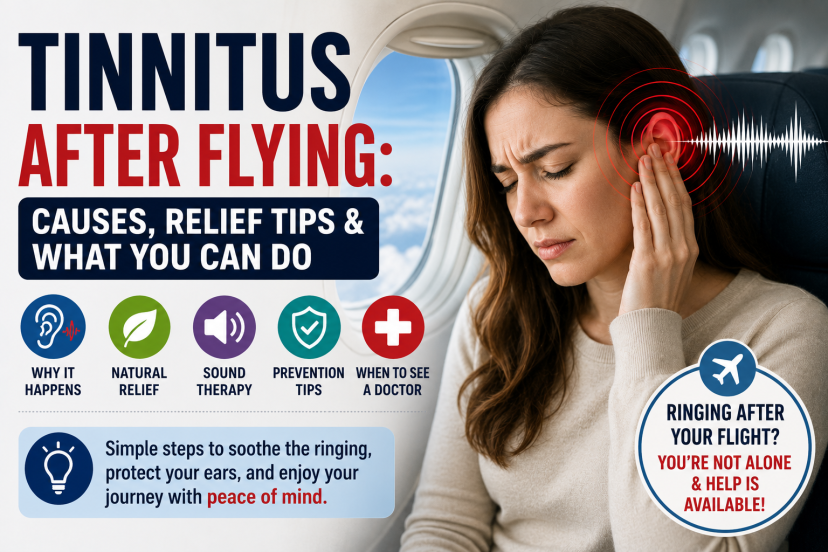
Flying is an exciting way to travel, but for some people, the journey ends with an unexpected problem—ringing, buzzing, humming, or whooshing in the ears. If you’ve noticed tinnitus after flying, you’re not alone. Many travelers experience temporary ear ringing after a flight, especially during takeoff or landing when cabin pressure changes rapidly.
In most cases, the ringing is temporary and improves as your ears adjust. However, persistent tinnitus or symptoms accompanied by hearing loss, severe ear pain, or dizziness should not be ignored.
This guide explains why tinnitus after flying happens, practical ways to ease symptoms naturally, and how to protect your ears before your next trip.
⭐ Quick Answer: Tinnitus After Flying
Tinnitus after flying is often caused by changes in cabin air pressure that affect the middle ear and Eustachian tubes. Most cases improve within hours or a few days, but persistent ringing, hearing loss, or severe dizziness should be evaluated by an ENT or audiologist.
Key Takeaways
Most likely cause: Rapid cabin pressure changes during takeoff and landing can temporarily affect the middle ear and Eustachian tubes, sometimes causing ringing, pressure, muffled hearing, or discomfort.
Usually serious? Usually not. Tinnitus after flying is often temporary and may improve within several hours or a few days as pressure in the ears returns to normal.
First thing to check: Pay attention to other symptoms, including ear fullness, pain, muffled hearing, dizziness, or noticeable hearing loss. Persistent or severe symptoms deserve medical evaluation.
Best solution: Give your ears time to recover and use gentle pressure-equalizing measures such as swallowing, yawning, or chewing gum. Avoid forceful attempts to pop your ears. If ringing persists, worsens, or occurs with sudden hearing loss, severe dizziness, drainage, or significant ear pain, contact an ENT, audiologist, or other healthcare professional promptly.
✈️ Why Does Tinnitus After Flying Happen?
During a flight, cabin pressure changes significantly—especially during takeoff and landing.
Normally, your Eustachian tubes equalize pressure between your middle ear and the outside environment. If these tubes don’t open properly, pressure builds up behind the eardrum.
This temporary pressure imbalance may trigger tinnitus after flying.
Common causes include:
- Rapid cabin pressure changes
- Blocked Eustachian tubes
- Seasonal allergies
- Sinus congestion
- Common cold
- Ear infections
- Existing tinnitus becoming more noticeable
- Noise exposure during travel
People with chronic sinus problems or allergies are often more likely to experience ear discomfort after flying.
👂 Common Symptoms Of Tinnitus After Flying
The symptoms vary from person to person.
You may notice:
- Ringing
- Buzzing
- Humming
- Hissing
- Whooshing
- Ear fullness
- Popping sensations
- Mild hearing changes
- Pressure in one or both ears
- Temporary dizziness
Some travelers notice symptoms immediately after landing, while others experience them several hours later.
🌬️ How Cabin Pressure Affects Your Ears
The middle ear is an air-filled space behind the eardrum.
As airplane altitude changes, outside air pressure changes quickly.
If the Eustachian tubes don’t equalize pressure fast enough, you may experience:
- Ear pressure
- Temporary hearing changes
- Ear discomfort
- Tinnitus
Yawning, swallowing, or chewing gum often helps open the Eustachian tubes and restore normal pressure.
🌿 Natural Ways To Relieve Tinnitus After Flying
Fortunately, many cases improve naturally with a little time and supportive care.
Stay Hydrated
Airplane cabins have very low humidity.
Drinking water before, during, and after your flight may help keep your nasal passages and Eustachian tubes functioning properly.
Use Gentle Sound Therapy
Quiet environments often make tinnitus seem louder.
Helpful options include:
- White noise
- Ocean waves
- Rain sounds
- Soft instrumental music
- Nature recordings
Popular U.S. apps include:
- ReSound Relief
- BetterSleep
- myNoise
- White Noise Lite
These sounds can be especially helpful at bedtime.
Rest Your Ears
Avoid loud concerts, power tools, or high headphone volume for a day or two after flying.
Giving your ears time to recover may reduce irritation.
💊 Supplements That May Support Ear Health
Some people use supplements as part of a broader tinnitus management plan.
Research remains mixed, so always consult your healthcare provider first.
Magnesium
Magnesium supports healthy nerve and muscle function and may benefit overall hearing health.
Vitamin B12
Vitamin B12 plays an important role in nerve health.
People with deficiencies sometimes experience hearing-related symptoms.
Ginkgo Biloba
Ginkgo biloba is one of the most commonly used supplements for tinnitus.
While scientific evidence is inconsistent, some individuals report improvements when combined with other healthy lifestyle habits.
Supplements should support—not replace—professional medical care.
🧘 Relaxation Techniques That May Help
Travel itself can be stressful, and stress often makes tinnitus seem louder.
Helpful relaxation techniques include:
- Deep breathing
- Meditation
- Gentle stretching
- Yoga
- Progressive muscle relaxation
- Mindfulness exercises
Reducing stress may decrease your awareness of tinnitus, even if it doesn’t eliminate the sound completely.

🛡️ How To Prevent Tinnitus After Flying
A little preparation can reduce the risk of ear problems during future flights.
Helpful prevention tips include:
- Swallow Frequently during takeoff and landing.
- Chew Gum Or Suck On Hard Candy to encourage pressure equalization.
- Stay Hydrated before boarding.
- Avoid Flying With Severe Congestion whenever possible.
- Use A Saline Nasal Spray if recommended by your healthcare provider.
- Wear Filtered Earplugs Designed For Flying to slow pressure changes.
- Protect Your Hearing by keeping headphone volume moderate during the flight.
These simple habits may help your ears adjust more comfortably.
🎧 Can Flying Cause Permanent Tinnitus?
For most people, tinnitus after flying is temporary.
However, if pressure changes cause significant ear injury—or if flying aggravates an existing hearing condition—symptoms may last longer.
Persistent tinnitus is more likely if you already have:
- Hearing loss
- Chronic tinnitus
- Frequent ear infections
- Eustachian tube dysfunction
- Ménière’s disease
An audiologist or ENT can determine whether another underlying condition is contributing to your symptoms.
🚨 When To See A Doctor
Temporary ringing after a flight often improves within a few days.
However, schedule an appointment with an ENT or audiologist if:
- Ringing lasts longer than one week.
- Hearing loss develops.
- Severe ear pain continues after landing.
- One ear is significantly worse than the other.
- You experience dizziness or balance problems.
- Ear drainage occurs.
- Symptoms interfere with daily activities.
Seek immediate medical attention if you experience sudden hearing loss, severe vertigo, or intense ear pain after flying.
❓ FAQs: Tinnitus After Flying
1. Is tinnitus after flying common?
Yes. Many people experience temporary ear ringing because of rapid cabin pressure changes during flights.
2. How long does tinnitus after flying last?
Most cases improve within several hours to a few days. Persistent symptoms should be evaluated by a healthcare professional.
3. Can airplane pressure damage hearing?
Usually not, but severe pressure changes or blocked Eustachian tubes can occasionally lead to ear injury.
4. Why do my ears ring after landing?
Pressure differences between your middle ear and the cabin environment may temporarily affect hearing and trigger tinnitus.
5. Can chewing gum help?
Yes. Chewing gum encourages swallowing, which helps open the Eustachian tubes and equalize pressure.
6. Are special earplugs helpful when flying?
Many travelers find filtered earplugs designed for flying helpful because they slow pressure changes during takeoff and landing.
7. Should I fly if I already have tinnitus?
Many people with tinnitus fly without major problems. If your tinnitus is severe or you have an active ear infection, consult your healthcare provider before traveling.
🌟 Final Thoughts On Tinnitus After Flying
Experiencing tinnitus after flying can be frustrating, but for most people, it’s a temporary response to changing air pressure rather than a sign of permanent damage. Giving your ears time to recover, staying hydrated, using gentle sound therapy, and practicing healthy ear care can often make symptoms much easier to manage.
Before your next trip, take simple preventive steps like chewing gum during descent, staying well hydrated, and protecting your hearing from unnecessary noise exposure. If ringing persists, worsens, or occurs alongside hearing loss or severe dizziness, don’t hesitate to schedule an evaluation with an ENT or audiologist.
With the right habits and consistent self-care, many people successfully manage tinnitus and continue traveling comfortably.
Medical Disclaimer: This article is for educational purposes only and should not replace professional medical advice, diagnosis, or treatment. Always consult a qualified healthcare provider, ENT specialist, or audiologist if you experience persistent tinnitus, hearing loss, severe dizziness, or other concerns about your hearing health.
 Explore more:
- Tinnitus After Ear Infection
- Can A Pinched Nerve In Neck Cause Tinnitus?
- Tinnitus Pronounce: How To Say It Correctly