Tinnitus After Ear Infection: Causes, Recovery, And Natural Ways To Find Relief
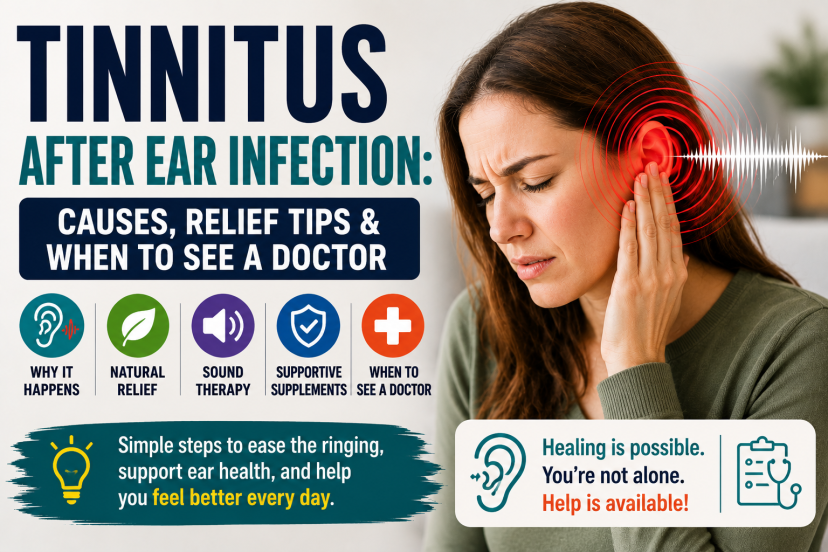
Few things are more frustrating than finally recovering from an ear infection—only to be left with ringing, buzzing, humming, or whooshing in your ears. If you’re experiencing tinnitus after ear infection, you’re not alone. Many people notice temporary ear ringing during or after an infection as the ear heals.
In most cases, the ringing gradually improves over days or weeks as inflammation decreases and normal hearing returns. However, persistent tinnitus or symptoms accompanied by hearing loss, dizziness, or severe pain should be evaluated by a healthcare professional.
This guide explains why tinnitus after ear infection occurs, what you can do to support recovery naturally, and when it’s time to see an ENT or audiologist.
⭐ Quick Answer: Tinnitus After Ear Infection
Tinnitus after ear infection is often caused by inflammation, fluid buildup, temporary hearing changes, or irritation of the middle or inner ear. Most cases improve as the infection heals, but persistent tinnitus, hearing loss, or dizziness should be evaluated by an ENT or audiologist.
Key Takeaways
- Most likely cause: Tinnitus after an ear infection is most commonly caused by lingering inflammation, fluid trapped behind the eardrum, temporary hearing changes, or irritation affecting the middle or inner ear.
- Usually serious? Most cases are temporary and improve as the ear heals. However, persistent ringing, worsening hearing loss, severe dizziness, or intense ear pain should be evaluated by a healthcare professional.
- First thing to check: Consider whether your ear infection symptoms have fully resolved, whether you still feel ear fullness or reduced hearing, and if the ringing is improving over time.
- Best solution: Allow time for the ear to heal, follow your healthcare provider’s treatment plan, protect your ears from loud noise, stay hydrated, and seek evaluation from an ENT or audiologist if symptoms persist or worsen.
👂 Why Does Tinnitus After Ear Infection Happen?
Ear infections can affect different parts of the ear, including the outer ear, middle ear, and inner ear.
When an infection causes swelling or fluid buildup, sound cannot travel through the ear as efficiently. As hearing changes temporarily, the brain may compensate by creating phantom sounds such as ringing or buzzing.

Common causes of tinnitus after an ear infection include:
- Middle ear inflammation
- Fluid trapped behind the eardrum
- Temporary hearing loss
- Inner ear irritation
- Eustachian tube dysfunction
- Pressure changes inside the ear
- Ongoing healing after the infection
Fortunately, most cases improve as the inflammation resolves.
🔔 Common Symptoms Alongside Tinnitus After Ear Infection
Everyone experiences tinnitus differently.
Common symptoms include:
- Ringing
- Buzzing
- Humming
- Hissing
- Ear fullness
- Muffled hearing
- Mild ear pressure
- Popping sensations
- Difficulty hearing conversations
- Occasionally mild dizziness
Some people notice symptoms in one ear, while others experience ringing in both ears.
🦠 How Ear Infections Can Affect Hearing
The middle ear normally contains air that allows the eardrum and tiny hearing bones to move freely.
During an ear infection, inflammation and fluid reduce this movement.
This temporary hearing reduction may cause your brain to amplify internal sound signals, resulting in tinnitus after an ear infection.
As the infection clears and fluid drains, hearing often returns to normal and tinnitus becomes less noticeable.
🌿 Natural Ways To Relieve Tinnitus After Ear Infection
Although the infection itself may require medical treatment, several supportive habits can help you feel more comfortable during recovery.
Allow Time For Healing
Your ears often need several days or even weeks to fully recover after an infection.
Avoid becoming discouraged if ringing doesn’t disappear immediately.
Use Gentle Sound Therapy
Quiet rooms can make tinnitus seem louder.
Helpful background sounds include:
- White noise
- Rain sounds
- Ocean waves
- Soft instrumental music
- Nature recordings
Popular U.S. apps include:
- ReSound Relief
- BetterSleep
- White Noise Lite
- myNoise
Many people find these especially useful at bedtime.
Stay Hydrated
Proper hydration supports healthy mucus drainage and overall recovery.
Get Plenty Of Sleep
Sleep allows your body to repair damaged tissues and reduce inflammation.
Aim for seven to nine hours whenever possible.
💊 Supplements That May Support Ear Health
Some supplements may support healthy nerve and hearing function, although they should never replace treatment for an active ear infection.
Always consult your healthcare provider before taking supplements.
Magnesium
Magnesium supports healthy nerve function and overall hearing health.
Vitamin B12
Vitamin B12 helps maintain healthy nerves.
Individuals with low B12 levels sometimes experience hearing-related symptoms.
Ginkgo Biloba
Ginkgo biloba is commonly used by people with tinnitus.
Research findings remain mixed, but some individuals report symptom improvement when combined with healthy lifestyle habits.
Supplements work best as supportive tools rather than cures.
🧘 Relaxation Techniques That May Help
Stress often makes tinnitus seem louder.
Helpful relaxation strategies include:
- Deep breathing
- Meditation
- Progressive muscle relaxation
- Gentle yoga
- Mindfulness practice
Relaxation doesn’t eliminate tinnitus, but it may reduce how much attention your brain gives to it.

🛡️ Lifestyle Habits That Support Recovery
Healthy daily habits can support both ear healing and overall wellness.
Helpful tips include:
- Finish Any Prescribed Antibiotics exactly as directed.
- Avoid Smoking, which may slow healing.
- Stay Well Hydrated.
- Protect Your Hearing from loud noises.
- Keep Headphone Volume Moderate.
- Manage Seasonal Allergies, if they contribute to congestion.
- Avoid Inserting Cotton Swabs deep into the ear canal.
These habits may reduce irritation while your ears recover.
🎧 Can Tinnitus After Ear Infection Become Permanent?
Most cases of tinnitus after ear infection are temporary.
However, permanent tinnitus may develop if the infection causes significant damage to the inner ear or if hearing loss already existed before the infection.
Risk factors include:
- Severe inner ear infections
- Repeated ear infections
- Delayed treatment
- Existing hearing loss
- Chronic Eustachian tube dysfunction
An ENT or audiologist can evaluate persistent symptoms and recommend appropriate treatment options.
🚨 When To See A Doctor
Temporary ringing often improves as the infection heals.
However, you should schedule an appointment with an ENT or audiologist if:
- Ringing lasts longer than two weeks after the infection improves.
- Hearing loss continues.
- Ear pain becomes severe.
- Fluid drains from the ear.
- One ear is much worse than the other.
- You experience dizziness or balance problems.
- Tinnitus significantly affects sleep or daily life.
Seek immediate medical attention if you experience sudden hearing loss, severe vertigo, facial weakness, or high fever.
❓ FAQs: Tinnitus After Ear Infection:
1. Is tinnitus after an ear infection common?
Yes. Temporary ringing is fairly common while the ear heals and inflammation decreases.
2. How long does tinnitus after an ear infection last?
Many people improve within several days or weeks, although recovery varies depending on the severity of the infection.
3. Can fluid behind the eardrum cause tinnitus?
Yes. Fluid can temporarily reduce hearing and make tinnitus more noticeable.
4. Will antibiotics stop tinnitus?
Antibiotics treat bacterial infections, but tinnitus may continue until inflammation and hearing fully recover.
5. Can ear infections permanently damage hearing?
Most ear infections resolve without permanent damage, but severe or untreated infections may occasionally affect hearing.
6. Should I use headphones while recovering?
It’s best to keep headphone volume low and avoid prolonged listening while your ears heal.
7. Can hearing aids help if tinnitus continues?
If hearing loss contributes to ongoing tinnitus, hearing aids with tinnitus masking features may improve both hearing and symptom management.
📌 Final Thoughts On Tinnitus After Ear Infection
Experiencing tinnitus after ear infection can be frustrating, but it is often part of the normal healing process. As inflammation decreases and hearing returns to normal, many people notice the ringing gradually fades.
Focus on giving your ears time to recover, protecting your hearing from loud noise, getting quality sleep, staying hydrated, and using gentle sound therapy if needed. If your symptoms persist, worsen, or occur alongside hearing loss or dizziness, don’t hesitate to schedule an evaluation with an ENT or audiologist.
With patience, consistent self-care, and appropriate medical guidance, many people successfully recover from post-infection tinnitus and return to normal daily life.
Medical Disclaimer: This article is for informational purposes only and should not replace professional medical advice, diagnosis, or treatment. Always consult a qualified healthcare provider, ENT specialist, or audiologist if you experience persistent tinnitus, hearing loss, severe ear pain, dizziness, or other concerns about your hearing health.
 Explore more:
- Can Acid Reflux Cause Tinnitus?
- What Does Tinnitus Sound Like?
- Tinnitus Pronounce: How To Say It Correctly