Tinnitus Treatment And Management: What Options Are Available?

Tinnitus Treatment And Management Options Explained
If you’re living with ringing, buzzing, humming, hissing, or another persistent sound in your ears, it’s natural to start searching for something that will make it stop. You may come across hearing aids, sound machines, supplements, medications, therapy programs, tinnitus apps, relaxation techniques, and devices that promise very different results. That can make tinnitus treatment and management confusing.
Which options actually help?
Do you need to see an ENT or audiologist?
Can tinnitus be medically treated?
What happens if doctors can’t find a specific cause?
And does successful treatment mean making the tinnitus disappear completely—or simply making it much less disruptive?
The answer depends partly on why you have tinnitus and how much it is affecting your life.
Sometimes tinnitus is connected with an identifiable problem that can be addressed, such as excessive earwax or certain jaw-joint problems. In other cases, particularly chronic tinnitus associated with hearing changes, there may not be a simple underlying problem that can be reversed.
In those situations, management becomes the focus. That doesn’t mean you’re being told to simply “live with it.”
Modern tinnitus management may involve hearing care, sound enrichment, cognitive behavioral therapy, counseling, sleep support, stress management, and practical changes that help reduce how much tinnitus interferes with everyday life.

Here’s what the major options involve and how to decide which ones may be worth discussing with a healthcare professional.
Quick Answer: Tinnitus Treatment And Management
What Treatments Are Available For Tinnitus?
There is currently no universal cure for tinnitus, but there are several ways to reduce its impact. Treatment may begin by addressing an identifiable underlying problem, such as earwax or certain jaw-joint problems. For persistent tinnitus, options can include hearing aids when hearing loss is present, sound therapy or sound enrichment, cognitive behavioral therapy (CBT), counseling, and tinnitus retraining approaches.
There is currently no medication specifically approved to eliminate tinnitus itself. However, healthcare professionals may sometimes treat related problems such as significant anxiety, depression, or sleep difficulties. Vitamins, herbal extracts, and dietary supplements commonly marketed as tinnitus cures have not been proven effective for treating tinnitus.
The right approach varies from person to person. A useful first step is often an ear examination, hearing evaluation, review of your symptoms and medications, and discussion of how tinnitus is affecting your sleep, concentration, mood, and everyday activities.
Key Takeaways
Most established options: treat an identifiable underlying problem, use hearing aids when hearing loss is present, use sound-based strategies, provide education and counseling, and use behavioral approaches such as CBT.
Is there a cure? There is currently no universal cure that reliably eliminates chronic tinnitus for everyone.
First thing to check: Have your ears and hearing evaluated and review possible causes, medications, associated symptoms, and how much tinnitus is affecting your life.
Best approach: Effective tinnitus treatment and management is usually individualized. The goal may be treating a reversible cause when one exists or reducing tinnitus-related distress and interference when the sound persists.
Start By Looking For A Treatable Cause
Before deciding that you need a sound machine, therapy program, supplement, or specialized tinnitus device, it’s worth asking a more basic question:
Is there an identifiable cause of the tinnitus that can be treated?
Tinnitus is a symptom rather than one single disease.
Potential associations include hearing loss, noise exposure, medications, earwax, ear infections, head or neck injuries, jaw-joint problems, and certain other health conditions.
In some cases, addressing the underlying problem can reduce tinnitus considerably.
Earwax And Ear Problems
Excessive earwax can block the ear canal and may contribute to tinnitus or hearing changes.
Ear infections and fluid can also be associated with tinnitus.
If you’ve recently developed tinnitus along with:
- Muffled hearing
- Ear pressure
- Ear pain
- Fullness
- Recent infection
an ear examination may reveal something that can be addressed.
Don’t assume that earwax is responsible simply because your ear feels blocked, however. Let a healthcare professional examine the ear rather than repeatedly inserting cotton swabs or other objects into the ear canal.
Medication Review
Certain medications can cause or worsen tinnitus, particularly at higher doses.
Examples identified by NIDCD include certain NSAIDs, antibiotics, anti-cancer medications, anti-malaria drugs, and antidepressants.
If tinnitus began after starting a medication or changing the dosage, write down:
- The medication
- Dosage
- When you started it
- When tinnitus appeared
- Whether anything else changed
Then discuss the timing with your doctor or pharmacist.
Don’t abruptly stop prescribed medication on your own because you suspect it is affecting your tinnitus.
Jaw And TMJ Problems
The temporomandibular joint sits close to the ear, and jaw-joint problems can sometimes contribute to tinnitus.
Pay attention to symptoms such as:
- Jaw pain
- Clicking
- Teeth grinding
- Morning jaw soreness
- Facial tension
- Difficulty comfortably opening your mouth
Some people also notice that moving their jaw, head, or neck temporarily changes their tinnitus. NIDCD describes this as a form of somatosensory tinnitus.
If your tinnitus appears closely connected with jaw symptoms, discussing both problems with an appropriate healthcare or dental professional may be useful.
Hearing Tests And Tinnitus Management
Hearing evaluation is an important part of tinnitus care because tinnitus and hearing loss frequently occur together.
You may have obvious hearing difficulties.
Or you may think: “My hearing seems completely normal.”
A formal hearing test can still provide useful information.
Why A Hearing Test Matters
An audiologist can measure your ability to hear sounds across different frequencies and evaluate whether hearing loss is present.
This can help determine whether hearing support might be part of your tinnitus management plan.
Hearing loss can develop gradually enough that you adapt without realizing how much has changed.
Possible clues include:
- Difficulty understanding speech in restaurants
- Frequently asking people to repeat themselves
- Turning up the television
- Difficulty following conversations in groups
- Feeling mentally exhausted after listening in noisy places
If any of these sound familiar, don’t focus only on the tinnitus.
Your hearing itself deserves attention.
Learn more: Why Is My Ear Ringing But My Hearing Seems Normal?
Hearing Aids For Tinnitus
For people who have tinnitus and hearing loss, hearing aids are one of the main management options described by NIDCD.
This makes sense when you consider what hearing aids do.
They amplify external sounds that have become difficult to hear.
That can improve communication while also increasing the amount of meaningful environmental sound reaching you.
How Hearing Aids May Make Tinnitus Less Noticeable
Imagine sitting in a room where you’re not hearing subtle background sounds clearly.
Your tinnitus may stand out.
With appropriate amplification, you may hear:
- Voices more clearly
- Birds outside
- Footsteps
- Air conditioning
- Traffic
- Household activity
- Other everyday environmental sounds
Tinnitus may then have more external sound competing for your attention.
NIDCD notes that hearing aids amplify external noises and can make tinnitus less noticeable for people who have hearing loss.
Hearing Aids Aren’t Primarily A Tinnitus Cure
This distinction matters.
Hearing aids are designed primarily to help with hearing loss.
They shouldn’t be presented as a guaranteed way to eliminate tinnitus.
If hearing loss is part of your situation, however, improving access to external sound may provide both communication and tinnitus-related benefits.
Combination Devices
Some hearing devices combine amplification with built-in sound generation.
These can provide external sound amplification while also offering sound-based tinnitus features. NIDCD includes combination devices among the sound-therapy options available to people with tinnitus and hearing loss.
Whether you need such features depends on your hearing, tinnitus, preferences, and professional recommendations.
Sound Therapy And Sound Enrichment
Sound is one of the simplest tinnitus-management tools.
You may already have discovered this accidentally.
Perhaps tinnitus seems much more noticeable when you’re lying in a silent bedroom but fades into the background while you’re:
- Outside
- Driving
- Talking with friends
- Listening to music
- Sitting near a fan
That doesn’t necessarily mean your tinnitus physically disappeared.
The listening environment changed.
What Is Sound Therapy?
Sound-based tinnitus management involves adding external sound to reduce the contrast between tinnitus and silence, support relaxation, provide distraction, or help people become less focused on tinnitus.
NIDCD describes several sound-based options, including tabletop or smartphone sound generators, wearable sound generators, hearing aids, and combination devices.
Simple Sound Enrichment At Home
You may not need a specialized device.
Try:
- A fan
- Rain sounds
- Ocean sounds
- Soft instrumental music
- Nature sounds
- Quiet radio
- Household environmental sounds
Sound enrichment can be particularly helpful in quiet environments or around bedtime.
Don’t Turn Sound Into A Volume Competition
A common mistake is thinking: “If I can still hear my tinnitus, the sound isn’t loud enough.”
The goal doesn’t always need to be completely masking tinnitus.
Gentle background sound may be enough to reduce the sharp contrast between tinnitus and silence.
Using unnecessarily high volume—especially through headphones—is not a good long-term strategy.
Protecting your hearing remains important because excessive noise exposure can itself cause hearing damage and tinnitus.
Cognitive Behavioral Therapy For Tinnitus
One of the most important distinctions in tinnitus treatment is the difference between changing the sound itself and changing the distress caused by the sound.
This is where cognitive behavioral therapy can be valuable.
What Is CBT?
Cognitive behavioral therapy focuses on relationships among thoughts, emotions, behaviors, and reactions.
With tinnitus, someone might hear ringing and immediately think:
- This is never going to stop.
- Something terrible must be wrong.
- I’ll never sleep normally again.
Those thoughts can increase anxiety. Anxiety can increase attention toward tinnitus, and the tinnitus then feels even more intrusive.
CBT works on that reaction cycle.
NIDCD states that CBT can teach people to identify distressing negative thoughts, change their responses to those thoughts, and reduce tinnitus’s impact on their lives.
CBT Doesn’t Mean Tinnitus Is Imaginary
This point is essential.
CBT isn’t recommended because tinnitus is “all in your head” in the dismissive sense.
Tinnitus is a real auditory perception.
CBT addresses the distress, fear, attention, and behaviors surrounding that perception.
A useful comparison is chronic pain.
Treating emotional and behavioral responses to chronic pain doesn’t mean the pain isn’t real.
The same principle applies to tinnitus.
What Can Improve Even If The Sound Remains?
Successful tinnitus management may mean:
- Thinking about tinnitus less often
- Feeling less frightened by it
- Sleeping better
- Concentrating more easily
- Returning to activities
- Reacting less strongly to fluctuations
- Feeling more in control
NIDCD-supported research has also examined internet-delivered CBT, with findings indicating improvements in tinnitus distress and insomnia.
Learn more: CBT For Tinnitus
Tinnitus Counseling And Education
Sometimes one of the most useful parts of treatment is simply understanding what is happening.
Before evaluation, tinnitus can feel mysterious.
And mysterious symptoms can be frightening.
You may wonder:
- Is my hearing disappearing?
- Is something seriously wrong?
- Will this get worse forever?
Professional tinnitus counseling can help put the symptom into context.
Why Education Can Help
NIDCD notes that education about tinnitus may reduce anxiety by helping people understand that tinnitus is usually not linked to a serious medical problem. Counseling can also teach coping techniques and strategies such as protecting hearing from excessive noise.
Understanding tinnitus doesn’t automatically eliminate it.
But reducing uncertainty may reduce the fear surrounding it.
And when tinnitus becomes less threatening, it may become easier to stop constantly monitoring it.
Tinnitus Retraining Therapy
You may encounter tinnitus retraining therapy, commonly abbreviated TRT.
TRT combines counseling with sound therapy.
The general aim is to reduce the emotional significance of tinnitus and help a person become less aware of it over time.
What Does TRT Involve?
NIDCD describes tinnitus retraining therapy as combining counseling intended to help reclassify tinnitus as a neutral sound with continuous low-level sound designed to help the person become accustomed to tinnitus.
The idea isn’t necessarily: Make the tinnitus vanish immediately.
It is closer to: Help the brain stop treating this sound as something requiring constant attention.
Is TRT Guaranteed To Work?
No tinnitus treatment works for everyone.
The NHS notes that tinnitus retraining therapy may be available for severe or persistent tinnitus but that it is unclear whether it works for everyone.
If you’re considering a structured TRT program, ask what the program involves, how long it lasts, what evidence supports it, what realistic goals are, and what it costs.
Learn more: Tinnitus Retraining Therapy
Managing Stress And Anxiety
Stress doesn’t necessarily explain why someone originally developed tinnitus.
But stress can make tinnitus much harder to live with.
Consider what happens when you’re anxious.
- Your attention narrows.
- Your muscles tense.
- You monitor bodily sensations.
- You sleep poorly.
- You may repeatedly check whether tinnitus has changed.
That can create a tinnitus-stress cycle.
Stress Management Doesn’t Have To Be Complicated
Helpful activities might include:
- Walking
- Exercise
- Relaxation exercises
- Slow breathing
- Yoga
- Gardening
- Spending time outdoors
- Hobbies
- Socializing
- Mindfulness practices
The goal isn’t to perform a relaxation technique and expect the tinnitus to disappear.
The goal is to reduce the overall level of stress surrounding the tinnitus.
Treat Significant Anxiety As Its Own Problem
If tinnitus has led to persistent anxiety, panic, depression, or severe distress, tell your healthcare professional.
You don’t have to wait until tinnitus disappears before addressing your mental well-being.
Behavioral treatment can be an important part of tinnitus management precisely because tinnitus can affect mood, sleep, and concentration.
Learn more: The Stress and Tinnitus Connection
Sleep Management
Tinnitus can become particularly noticeable at night.
The house becomes quiet.
Traffic decreases.
Conversations stop.
You put your head on the pillow.
Suddenly the ringing seems to fill the room.
Sleep problems can then create another cycle:
Tinnitus → difficulty sleeping → fatigue and stress → tinnitus becomes harder to cope with → more difficulty sleeping.
Use Gentle Bedtime Sound
Try:
- A bedside fan
- Rain sounds
- Ocean sounds
- Quiet music
- Nature sounds
- A sound generator
- A comfortable smartphone sound app
NIDCD specifically identifies tabletop and smartphone sound generators as options that may support relaxation and sleep.
Keep the volume comfortable.
You don’t necessarily need to completely cover the tinnitus.
Work On Sleep Beyond Tinnitus
Also consider your broader sleep habits.
Try to maintain:
- A consistent sleep schedule
- A comfortable bedroom
- A relaxing wind-down period
- Less stimulating activity immediately before bed
If insomnia remains persistent, discuss it with a healthcare professional rather than assuming nothing can be done until the tinnitus goes away.
Are There Medications For Tinnitus?
This is one of the most common tinnitus-treatment questions.
At present, there is no medication specifically approved to cure tinnitus itself.
NIDCD states that doctors may sometimes prescribe antidepressant or anti-anxiety medication to improve mood or help with sleep, but these are addressing associated problems rather than serving as a tinnitus cure.
Be Careful With “Tinnitus Cure” Pills
Online advertising can make tinnitus supplements sound extremely convincing.
You may see claims involving:
- Vitamins
- Herbal extracts
- Minerals
- Proprietary blends
- “Brain support” ingredients
- “Ear health” formulas
NIDCD states that vitamins, herbal extracts, and dietary supplements commonly promoted as tinnitus cures have not been proven effective.
That doesn’t mean nutrition is irrelevant to health.
It means a supplement shouldn’t be assumed to treat tinnitus simply because the bottle says “tinnitus support.”
Review Supplements With Your Healthcare Professional
Supplements can also interact with medications or be inappropriate for certain health conditions.
If you’re considering one, discuss the ingredients with your doctor or pharmacist—particularly if you take prescription medication.
Lifestyle Changes And Tinnitus Management
People with tinnitus frequently start looking for lifestyle rules.
- No coffee.
- No chocolate.
- No salt.
- No alcohol.
- No exercise.
- No headphones.
- No restaurants.
Before long, the attempt to control tinnitus can become more restrictive than tinnitus itself.
Don’t Build Your Life Around Avoidance
Individual patterns matter. If something repeatedly and convincingly makes your tinnitus harder to manage, tracking that pattern may be useful.
But one difficult tinnitus day after drinking coffee doesn’t prove caffeine caused it.
Perhaps you also:
- Slept poorly
- Had a stressful day
- Spent time around loud noise
- Had jaw tension
- Became sick
Look for repeatable patterns rather than one-time coincidences.
Protect Your Hearing From Excessive Noise
This lifestyle change has a clearer rationale. Repeated or intense loud-noise exposure can damage hearing and cause tinnitus.
Use appropriate hearing protection around genuinely hazardous noise. But don’t assume you need earplugs for ordinary everyday environments.
The objective is hearing protection—not fear of sound.
Learn more: Why Do My Ears Ring After Mowing The Lawn?
Stay Active
Continue exercising, working, socializing, traveling, and enjoying hobbies when you comfortably can.
Meaningful activity gives your attention somewhere else to go.
The NHS advises people with tinnitus not to continually focus on it and suggests activities and hobbies as ways to redirect attention.
Using A Tinnitus Tracker As Part Of Management
A tinnitus diary or Tinnitus Trigger Tracker can be useful when you’re trying to understand why some days seem easier than others.
The key is using it strategically.
What Should You Track?
For a few weeks, consider recording:
- Tinnitus noticeability
- Sound or location changes
- Sleep quality
- Stress level
- Loud-noise exposure
- Headphone use
- Exercise
- Caffeine or alcohol
- Jaw or neck tension
- Illness or congestion
- Medication changes
You don’t need to track every detail.
You’re looking for repeated patterns.
Look For Patterns Rather Than Individual Days
Suppose tinnitus feels louder one evening after drinking coffee.
That doesn’t establish coffee as the reason.
But if the same pattern appears repeatedly under similar circumstances, it may be worth exploring.
A 30-day record can also reveal something unexpected.
Perhaps the factor you were worried about doesn’t correlate with your tinnitus at all.
Or perhaps poor sleep consistently appears before your most difficult tinnitus days.
Don’t Let Tracking Become Obsessive
Complete your tracker once per day rather than rating tinnitus every 20 minutes.
The purpose of a tinnitus diary is to provide perspective.
If tracking makes you more anxious or causes you to constantly listen for tinnitus, scale it back.
Ultimately, a good management tool should help tinnitus occupy less of your attention.
If your tinnitus changes from day to day, our Free Tinnitus Trigger Tracker And 30-Day Symptom Diary can help you record sounds, patterns, sleep, stress, noise exposure, and possible triggers without relying on memory.
Emerging And Experimental Tinnitus Treatments
Tinnitus research continues to evolve.
Researchers are studying several approaches designed to influence auditory and brain networks involved in tinnitus.
Bimodal Stimulation
Bimodal stimulation combines sound with another type of stimulation, such as electrical stimulation delivered to the tongue, head, neck, or another pathway.
NIDCD lists bimodal stimulation among active areas of tinnitus research.
This is a developing field.
Be careful about interpreting “new” as automatically meaning “proven for everyone.”
Different devices, protocols, tinnitus profiles, and study designs can produce different results.
Brain Stimulation
Researchers have also investigated techniques such as repetitive transcranial magnetic stimulation, commonly called rTMS.
This noninvasive technique uses magnetic pulses directed toward areas of the brain.
NIDCD reports that preliminary rTMS trials have produced mixed results and that researchers continue studying factors such as stimulation location and treatment frequency.
Cochlear Implants
Cochlear implants aren’t general tinnitus treatments.
They are primarily hearing devices for people with severe-to-profound hearing loss who meet appropriate criteria.
However, NIDCD notes that cochlear implants have also been shown to suppress tinnitus in some people while restoring functional hearing.
That doesn’t make cochlear implantation appropriate for the average person with tinnitus and otherwise usable hearing.
Personalized Tinnitus Treatment
One particularly interesting direction is personalization.
Tinnitus isn’t identical in everyone.
People differ in:
- Hearing ability
- Tinnitus sound
- Severity
- Causes
- Emotional response
- Sleep problems
- Medical history
- Daily triggers
NIDCD researchers are studying ways to characterize different tinnitus profiles and identify which treatments may work best for different people.
This may ultimately be more useful than searching for one universal solution for every form of tinnitus.
How To Choose A Tinnitus Management Approach
With so many possibilities, where should you begin?
Think in stages.
Step 1: Get The Basics Evaluated
Start with questions such as:
- Is there excessive earwax?
- Is there an infection?
- Has my hearing changed?
- Did tinnitus begin after a medication change?
- Is there significant jaw involvement?
- Is it one-sided?
- Is it pulsatile?
- Are there other symptoms?
An ENT, audiologist, primary care clinician, or another appropriate professional can help determine what evaluation is needed.
Step 2: Address Treatable Problems
If an identifiable medical or hearing-related problem is found, address it appropriately.
Don’t skip straight to a supplement or tinnitus gadget while ignoring an obvious underlying issue.
Step 3: Identify Your Biggest Tinnitus Problem
Ask:
What is tinnitus actually stopping me from doing?
Is it:
- Sleeping?
- Concentrating?
- Relaxing?
- Working?
- Socializing?
- Managing anxiety?
Your answer helps determine where management should focus.
Someone with hearing loss and communication problems may need a very different approach from someone with normal everyday hearing whose biggest problem is tinnitus-related anxiety at bedtime.
Step 4: Combine Strategies When Appropriate
Tinnitus management doesn’t always require choosing one option.
A person might use:
Hearing aids + gentle sound enrichment + CBT + better sleep habits.
Another might benefit from:
Treatment of a jaw problem + stress management + hearing protection around occupational noise.
Individualized care matters.
Step 5: Measure The Right Outcomes
Don’t only ask:
“Is the ringing gone?”
Also ask:
- Am I sleeping better?
- Am I concentrating more easily?
- Does tinnitus frighten me less?
- Am I checking it less?
- Can I work normally?
- Am I socializing again?
- Are difficult tinnitus days easier to handle?
Those improvements matter.
When To Seek Medical Evaluation
Self-management has a place, but not every tinnitus change should simply be tracked at home.
Persistent or troublesome tinnitus is worth discussing with a healthcare professional, particularly if it affects sleep, concentration, mood, or everyday life.
Sudden Hearing Loss With Tinnitus
Sudden hearing loss accompanied by tinnitus requires prompt medical evaluation.
Don’t wait weeks to see whether your hearing returns.
Pulsatile Tinnitus
If your tinnitus seems to beat in time with your pulse, have it medically evaluated.
Pulsatile tinnitus can have identifiable underlying causes and may require imaging or additional investigation.
Tinnitus After Head Injury
New tinnitus following a significant head injury should be medically assessed.
Tinnitus With Other Concerning Symptoms
Seek appropriate medical attention for tinnitus accompanied by significant symptoms such as sudden hearing changes, severe vertigo, facial weakness, or other new neurological symptoms.
Learn more about the Tinnitus Doctor Visit Checklist on our questions and symptoms to write down before your appointment
Be Careful With Claims Of A “Permanent Tinnitus Cure”
People bothered by tinnitus can be especially vulnerable to dramatic marketing.
If something promises to:
- Cure every type of tinnitus
- Permanently eliminate tinnitus in days
- “Repair” your auditory system with one supplement
- Work regardless of the cause
- Guarantee results
Be cautious. Tinnitus is not one single condition with one single cause.
A treatment that makes sense for hearing-loss-associated tinnitus may have little relevance to someone whose tinnitus is connected with an ear problem or jaw disorder.
NIDCD states clearly that there is currently no cure for tinnitus, although several approaches can help reduce symptoms and their impact.
That doesn’t mean there is no hope. It means realistic management is more useful than exaggerated promises.
FAQs About Tinnitus Treatment And Management
What Is The Most Effective Treatment For Tinnitus?
There isn’t one treatment that is best for everyone. Treatment depends on factors such as the underlying cause, hearing loss, tinnitus severity, and how tinnitus affects daily life. Options may include treating an identifiable underlying problem, hearing aids for people with hearing loss, sound-based approaches, counseling, and CBT. CBT has evidence for reducing tinnitus-related distress even though its purpose isn’t necessarily to eliminate the sound itself.
Can Tinnitus Be Completely Cured?
There is currently no universal cure for chronic tinnitus. However, some cases may improve when an identifiable underlying problem—such as excessive earwax or certain jaw problems—is successfully addressed. When tinnitus persists, treatment usually focuses on making it less noticeable, less distressing, and less disruptive to everyday life.
Do Hearing Aids Help Tinnitus?
They can help some people who have tinnitus along with hearing loss. Hearing aids amplify external sounds, improve communication, and may make tinnitus less noticeable. They aren’t appropriate for everyone with tinnitus, so a hearing evaluation can help determine whether amplification makes sense for you.
Does Sound Therapy Get Rid Of Tinnitus?
Sound therapy shouldn’t generally be thought of as a guaranteed cure. External sound can reduce the contrast between tinnitus and silence, support relaxation or sleep, provide distraction, or form part of a broader tinnitus-management program. Options range from ordinary fans and nature sounds to smartphone apps, wearable sound generators, hearing aids, and combination devices.
Are Tinnitus Supplements Worth Trying?
Vitamins, herbal extracts, and dietary supplements are widely advertised for tinnitus, but NIDCD states that these products have not been proven effective as tinnitus treatments. Before taking a supplement, particularly if you use prescription medications or have other health conditions, discuss the ingredients with your healthcare professional or pharmacist.
Final Thoughts On Tinnitus Treatment And Management
The most useful way to think about tinnitus treatment and management is not as a search for one product that works for everyone.
Start by understanding your tinnitus.
Have your ears and hearing evaluated when appropriate.
Look for potentially treatable underlying problems.
- If hearing loss is present, hearing aids may be worth discussing.
- If quiet environments or bedtime are difficult, sound enrichment may help.
- If fear, anxiety, or constant monitoring has become part of the problem, CBT or tinnitus counseling may be particularly valuable.
- If sleep is suffering, treat sleep as an important part of your overall management plan.
And be cautious about supplements, devices, or programs that promise a guaranteed cure. For many people, successful tinnitus management isn’t necessarily waking up one morning to complete silence.
It may be reaching a point where you wake up without immediately checking your ears.
- You work without constantly monitoring the sound.
- You go to restaurants and travel again.
- You sleep more comfortably.
- A tinnitus spike doesn’t frighten you as much.
- And hours, or eventually much of the day, can pass without tinnitus demanding your attention.
That is meaningful progress.
The tinnitus may still be there, but it no longer has to be in charge of your day.
Medical Disclaimer: The information in this guide is for general educational purposes only and does not substitute for professional medical advice, diagnosis, or treatment.
Explore more:
- Tinnitus Doctor Visit Checklist
- Tinnitus Trigger Tracker And 30-Day Symptom Diary
- The Complete Beginner’s Guide To Tinnitus
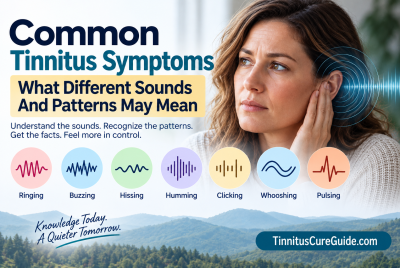
- Common Tinnitus Symptoms
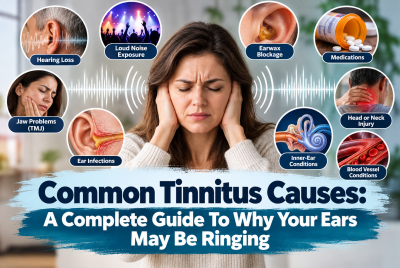
- Common Tinnitus Causes
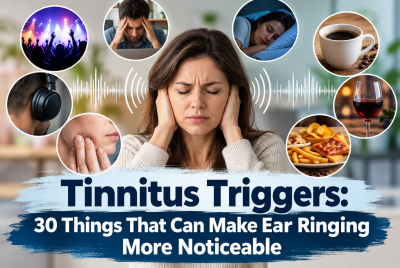
- Common Tinnitus Triggers