Why Do My Ears Ring After Mowing The Lawn? 9 Reasons And How To Protect Your Hearing
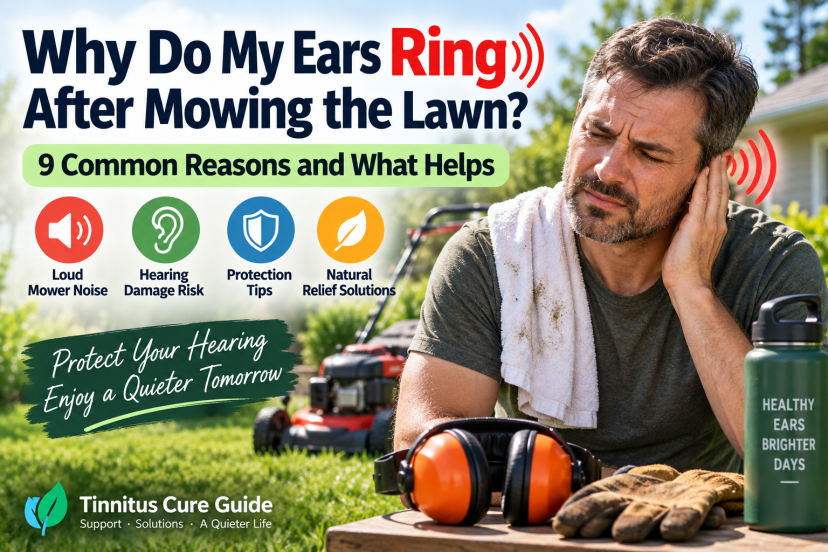
You finish mowing, turn off the engine, and suddenly the yard seems strangely quiet except for a high-pitched ringing, buzzing, or humming inside your ears. If you’ve wondered, “Why do my ears ring after mowing the lawn?”, the most likely explanation is exposure to loud noise from the mower.
For someone already living with tinnitus, this temporary spike can be especially stressful. The ringing may seem sharper, sleep may be harder that night, and it’s easy to worry that you’ve permanently made your tinnitus worse.
Lawn equipment deserves respect when it comes to hearing. The National Institute on Deafness and Other Communication Disorders (NIDCD) estimates lawnmowers can produce roughly 80–100 dBA, while repeated or prolonged exposure to sounds at or above 85 dBA can cause hearing damage.
Fortunately, noise-induced hearing problems are largely preventable. The right hearing protection and a few simple mowing habits can substantially reduce your future exposure.
🔊 Quick Answer: Why Do My Ears Ring After Mowing The Lawn?
Your ears may ring after mowing because the lawn mower exposed your auditory system to potentially harmful noise. Lawn mowers can reach about 80–100 dBA, and loud-noise exposure can cause temporary tinnitus, muffled hearing, or noise-induced hearing loss. Give your ears a break from loud sound afterward and use properly fitted earplugs or protective earmuffs the next time you mow.
Key Takeaways
Most likely cause: If you’re asking why do my ears ring after mowing the lawn, exposure to the mower’s loud engine is the most likely explanation.
Usually serious? Brief ringing can improve after the noise stops, but tinnitus after loud-noise exposure is also a warning that your ears were exposed to potentially harmful sound.
First thing to check: Notice whether your hearing also seems muffled, dull, distorted, or different between your two ears.
Best solution: Avoid additional loud noise while your ears recover and consistently wear properly fitted hearing protection whenever you mow or use other loud lawn equipment.
🌱 Why Lawn Mowers Can Make Your Ears Ring
A lawn mower doesn’t have to sound painfully loud to expose your ears to potentially damaging noise.
NIDCD puts typical lawn mower sound levels at approximately 80 to 100 dBA. It also explains that long or repeated exposure at or above 85 dBA can cause hearing loss, with louder sounds requiring less exposure time to cause damage.
The risk depends on three important factors:
- Sound Level: How loud the equipment is.
- Time: How long you’re exposed.
- Distance: How close your ears are to the noise source.
With a push mower or riding mower, you may spend 30 minutes, an hour, or longer relatively close to the engine.
Add a gas-powered leaf blower, string trimmer, hedge trimmer, or other yard equipment afterward, and your total noise exposure can increase further.
CDC’s NIOSH also identifies ringing ears or sounds seeming dull or flat after leaving a noisy environment as warning signs of excessive noise exposure.
👂 9 Reasons Your Ears May Ring After Mowing The Lawn
1. Your Mower Is Loud Enough To Stress Your Hearing
This is the most straightforward explanation.
Lawn equipment is a recognized source of potentially harmful noise. NIDCD specifically lists lawnmowers and leaf blowers among household sources capable of contributing to noise-induced hearing loss.
The ringing you hear afterward is tinnitus.
It may disappear, decrease gradually, or persist.
2. You Mowed For Too Long Without Hearing Protection
Noise risk isn’t based only on volume.
Duration matters too.
Mowing a tiny patch of grass is different from spending an entire Saturday mowing, trimming, blowing leaves, and using power tools.
The louder the sound, the less time your ears can safely tolerate it.
If you regularly mow a large U.S. suburban yard, acreage, or multiple properties, hearing protection should become part of your normal lawn-care equipment.
3. Your Hearing May Be Temporarily Muffled
Sometimes ringing isn’t the only symptom after loud noise.
You might notice that:
- Voices Sound Less Clear
- Television Sounds Different
- Your Ears Feel Full
- High-Pitched Sounds Seem Dull
- Everything Seems Slightly Muffled
NIDCD notes that continuous or impulse noise can sometimes cause a temporary hearing change that disappears within about 16–48 hours. Importantly, apparent recovery does not guarantee that no lasting damage occurred.
That’s one reason post-mowing tinnitus shouldn’t simply be dismissed.
4. You Already Have Tinnitus
If you live with chronic tinnitus, mowing may cause a temporary tinnitus spike.
Perhaps your usual tinnitus is a quiet background hiss. After mowing, it suddenly seems louder, sharper, or more intrusive.
Noise exposure is a well-established tinnitus trigger, and most people with tinnitus also have some degree of hearing loss.
Protecting your remaining hearing is particularly important if tinnitus is already part of your life.
5. The Sudden Silence Makes Ringing More Obvious
There’s another reason tinnitus can seem dramatic immediately after mowing.
For the previous hour, your brain was surrounded by engine noise. Then you switch the mower off.
The contrast can be striking.
Suddenly, birds, distant traffic, and the breeze seem quiet—and your tinnitus becomes easy to notice.
This change in contrast doesn’t prove the tinnitus is purely psychological. Loud noise really can trigger tinnitus. But the sudden quiet may make the ringing feel even more prominent.
6. You Used Several Loud Tools In One Session
Maybe mowing wasn’t your only noisy activity.
A typical yard-work session could include:
Mower → String trimmer → Leaf blower → Hedge trimmer → Power washer.

Your ears don’t get a clean slate each time you change equipment.
Noise exposure accumulates, so a long afternoon of loud yard work can create greater risk than one short task.
NIDCD emphasizes avoiding sounds that are too loud, too close, or last too long.
7. Your Hearing Protection Wasn’t Effective Enough
Simply wearing something over or inside your ears doesn’t guarantee adequate protection.
Earplugs need to fit properly. Earmuffs should create a good seal around the ears.
NIDCD recommends hearing protectors when you cannot avoid, move away from, or reduce loud sounds. Common choices include properly fitted earplugs and protective earmuffs.
For lawn work, look for hearing protectors with a clearly stated Noise Reduction Rating (NRR) and follow the manufacturer’s fitting instructions.
8. Years Of Noise Exposure May Be Adding Up
You may have mowed lawns for decades without thinking about your hearing.
That doesn’t mean your ears were unaffected.
Noise-related hearing damage can accumulate gradually, and you may not recognize it until speech begins sounding less clear or tinnitus becomes more frequent.
Your lifetime noise exposure might include:
- Lawn Equipment
- Power Tools
- Construction Work
- Motorcycles
- Concerts
- Firearms
- Loud Workplaces
- High-Volume Headphones
If why do my ears ring after mowing the lawn has become a recurring question every weekend, consider it a reason to change your hearing-protection habits now.
9. Noise-Induced Hearing Loss May Be Developing
Repeated tinnitus after loud activities can sometimes accompany noise-induced hearing loss (NIHL).
Noise can damage delicate structures within the inner ear. Unlike some animals, humans cannot regrow damaged inner-ear hair cells.
In the U.S., this isn’t a small problem. NIDCD reports that hearing-test data suggest nearly one in four adults ages 20–69 have features suggestive of noise-induced hearing loss in one or both ears.
A hearing test can help identify changes that aren’t obvious in everyday conversation.
🌿 What To Do If Your Ears Ring After Mowing
First, don’t panic.
Temporary tinnitus after noise exposure does not automatically mean you’ve developed permanent hearing loss. But it does mean you should take the exposure seriously.
Give Your Ears A Quiet Recovery Period
Avoid piling more loud noise onto your day.
That means postponing unnecessary power-tool use, loud music, or other high-volume activities.
You don’t need to sit in complete silence or wear earplugs around ordinary household sounds. Simply avoid additional hazardous noise.
Don’t Blast Music To Cover The Ringing
It can be tempting to put on headphones and drown out tinnitus.
That’s the opposite of what your ears need after loud-noise exposure.
If you want background sound, choose a comfortable, low-level sound such as rain, a fan, soft music, or nature sounds.
Try Gentle Sound Therapy
Sound therapy can reduce the contrast between tinnitus and a quiet environment.
NIDCD lists smartphone sound generators, tabletop sound machines, hearing aids for people with hearing loss, and wearable sound generators among approaches used to reduce tinnitus’s impact.
The sound doesn’t have to completely cover the ringing.
A low, comfortable background level may be enough to make tinnitus less attention-grabbing.
🎧 How To Protect Your Ears While Mowing
Prevention is much easier than trying to undo hearing damage later.
Wear Hearing Protection Every Time
Use properly fitted earplugs or protective earmuffs before starting your mower.
Keep them next to your mower, gasoline container, battery charger, or lawn-care shoes so you don’t forget them.
NIDCD recommends making hearing protectors a habit whenever you expect to be around loud sound.
Take Breaks From Noise
For a large yard, break your work into shorter sessions when practical.
Give yourself periods away from the mower and other loud equipment.
Don’t Add Headphone Volume
Listening to podcasts or music through earbuds underneath hearing protectors can encourage you to increase the volume enough to overcome the mower.
That can add another source of sound exposure.
If you want entertainment while mowing, use a hearing-protection solution specifically designed for noisy environments and keep playback at a safe level.
Check How Loud Your Equipment Is
If you want a rough idea of your exposure, sound-level meter apps can be useful screening tools.
NIDCD specifically mentions the free NIOSH Sound Level Meter app for iOS as one option for evaluating environmental noise risk.
An app isn’t a substitute for professional noise measurement, but it can help you recognize just how loud everyday yard equipment can be.
🧘 How To Calm A Tinnitus Spike After Yard Work
A tinnitus spike can trigger a second problem: stress.
You hear the ringing, become worried, start checking it every few minutes, and suddenly it seems impossible to ignore.
Try breaking that cycle.
Sit somewhere comfortable and away from hazardous noise. Relax your jaw and shoulders. Breathe slowly and let a neutral background sound play quietly.
Don’t repeatedly test whether the ringing is still there.
For persistent, bothersome tinnitus, cognitive behavioral therapy (CBT) has evidence for helping people change their emotional response to tinnitus and improve well-being. Clinical guidance recommends CBT for persistent bothersome tinnitus.
💊 What About Ginkgo Biloba, Magnesium And Vitamin B12?
After a tinnitus spike, it’s understandable to search for something that might make the ringing disappear quickly.
Supplements frequently marketed for tinnitus include ginkgo biloba, magnesium, vitamin B12, zinc, and melatonin.
However, current evidence doesn’t support treating dietary supplements as proven tinnitus remedies.
NIDCD states that vitamins, herbal extracts, and supplements advertised as tinnitus cures have not been proven effective. U.S. clinical guidance specifically recommends against routinely using ginkgo biloba and other dietary supplements to treat persistent bothersome tinnitus.
Magnesium and vitamin B12 are essential nutrients, but correcting a diagnosed deficiency is different from treating noise-triggered tinnitus. Don’t assume that taking large doses will reverse damage from lawn-mower noise.
If you’re considering supplements, especially if you take medications or have medical conditions, discuss them with your doctor or pharmacist.
🩺 When To See An ENT Or Audiologist
If tinnitus after mowing keeps happening, arrange a hearing evaluation rather than simply accepting it as part of yard work.
An audiologist can test your hearing and identify patterns of hearing loss. An ENT can evaluate tinnitus when an underlying ear or medical condition may be involved. NIDCD recommends hearing testing when you think you may have noise-related hearing loss.
Seek medical attention promptly if you develop a sudden significant change or loss of hearing, particularly in one ear, or if tinnitus follows an extremely intense noise exposure and is accompanied by significant hearing changes, severe dizziness, ear pain, or drainage.
Also arrange an evaluation if tinnitus is persistent in only one ear, repeatedly interferes with sleep or daily life, or pulses in time with your heartbeat.
❓ Frequently Asked Questions
Is It Normal For Your Ears To Ring After Mowing The Lawn?
It can happen after loud-noise exposure, but it shouldn’t be considered a harmless or desirable part of mowing. Ringing after leaving a noisy environment is a warning sign of excessive sound exposure.
How Long Does Tinnitus After Mowing Last?
It varies. Noise-triggered tinnitus may fade, while some tinnitus can persist. Temporary hearing changes after continuous or impulse noise may resolve within 16–48 hours, but apparent recovery doesn’t necessarily mean no lasting damage occurred.
Can A Lawn Mower Damage Your Hearing?
Yes. Lawnmowers can produce approximately 80–100 dBA, and long or repeated exposure to sounds at or above 85 dBA can cause hearing damage.
Should I Wear Earplugs When Mowing The Lawn?
Yes, hearing protection is a sensible precaution around loud lawn equipment. Properly fitted earplugs or protective earmuffs reduce the amount of sound reaching your ears.
Can Mowing Make Existing Tinnitus Worse?
Loud-noise exposure can trigger tinnitus, so people who already have tinnitus may notice a temporary increase after mowing. Repeated noise exposure can also contribute to hearing damage, making prevention important.
Are Electric Lawn Mowers Safer For Hearing?
Noise levels vary considerably by mower design and operating conditions. Don’t assume an electric mower is automatically quiet enough to skip hearing protection. Check the manufacturer’s specifications or measure the sound level and use hearing protection when noise is potentially hazardous.
Can Ringing After Loud Noise Become Permanent?
Yes. Noise-related tinnitus may subside, but it can also continue occasionally or constantly. Loud noise can also cause permanent noise-induced hearing loss.
🌅 Final Thoughts On Why Do My Ears Ring After Mowing The Lawn?
If you’ve been asking “Why do my ears ring after mowing the lawn?”, think of the ringing as useful feedback from your auditory system rather than something to ignore.
Lawn mowers can produce enough noise to put hearing at risk, especially when mowing lasts a long time or is followed by leaf blowing, trimming, or other loud yard work.
For now, give your ears a break from additional loud noise, use gentle background sound if the tinnitus is distracting, and avoid turning up headphones in an attempt to cover the ringing.
For the future, make hearing protection as routine as putting on your yard-work shoes. Properly fitted earplugs or earmuffs, sensible breaks, and awareness of your total noise exposure can help protect your hearing for years to come.
Tinnitus can be frustrating, but consistent hearing protection, stress management, healthy sleep, sound therapy when appropriate, and professional hearing care can make living with it much easier.
Medical Disclaimer: This article is for educational purposes only and does not replace professional medical advice, diagnosis, or treatment. Consult a qualified healthcare professional about persistent, worsening, sudden, or concerning hearing or tinnitus symptoms.
 Explore more:
- Can I Have Tinnitus After Sinus Infection?
- How To Fall Asleep With Tinnitus: 10 Practical Ways
- Why Does Ear Ringing Come And Go Throughout The Day?