Can I Have Tinnitus After Sinus Infection? Why Your Ears May Ring And What Helps
When Inflammation Affects Eustachian Tube Function
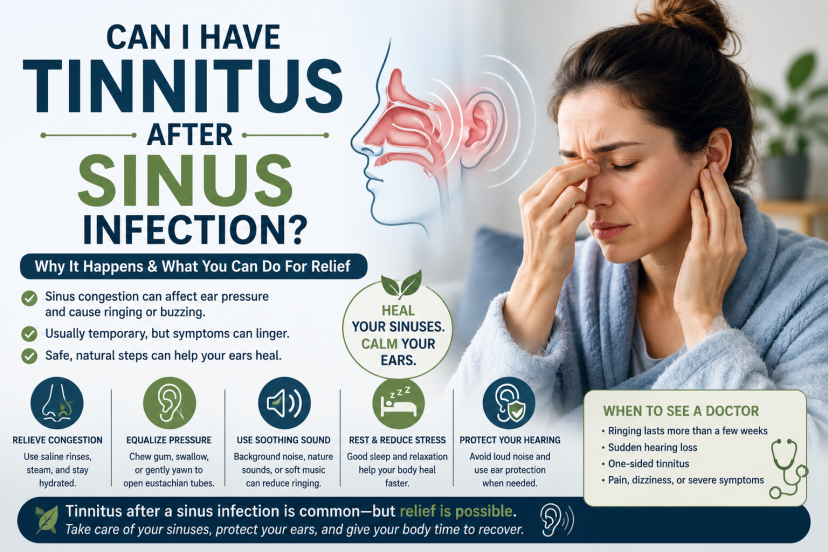
A sinus infection is uncomfortable enough on its own—pressure around your face, congestion, headaches, and trouble sleeping can leave you exhausted. Then you notice something new: ringing, buzzing, humming, or even a whooshing sensation in your ears. It can be especially unsettling at night when everything becomes quiet and the sound suddenly seems impossible to ignore. If you’re wondering, can I have tinnitus after sinus infection, the answer is yes. Sinus inflammation and congestion can sometimes affect pressure and ventilation in the middle ear, particularly through the Eustachian tubes. This may lead to temporary ear fullness, muffled hearing, popping, and tinnitus.
For many people, these ear symptoms improve as the infection and congestion resolve. However, tinnitus shouldn’t automatically be blamed on your sinuses—especially if it persists, affects only one ear, or occurs with sudden hearing loss.
Here’s how sinus problems and tinnitus may be connected and what you can safely do while your body recovers.
🔎 Quick Answer: Can I Have Tinnitus After Sinus Infection?
Yes, you can have tinnitus after a sinus infection. Inflammation and congestion around the nose and sinuses may interfere with normal Eustachian tube function, affecting pressure in the middle ear. This can cause fullness, popping, muffled hearing, and temporary ringing or buzzing. Symptoms often improve as congestion clears, but persistent or unusual tinnitus should be evaluated by an audiologist, ENT, or other healthcare professional.
Key Takeaways
Most likely cause: Sinus congestion and inflammation may temporarily interfere with Eustachian tube function, creating pressure changes and muffled hearing that can accompany tinnitus.
Usually serious? Usually not when symptoms occur with congestion and gradually improve. Certain tinnitus symptoms, however, require medical evaluation.
First thing to check: Notice whether you also have ear fullness, popping, muffled hearing, nasal congestion, facial pressure, or other sinus symptoms.
Best solution: If you’re asking, “Can I have tinnitus after a sinus infection?” focus on recovering from the underlying illness, staying hydrated, managing congestion safely, and having persistent hearing or tinnitus symptoms professionally evaluated.
👂 How Can A Sinus Infection Affect Your Ears?
Your sinuses aren’t located inside your ears, but your nose, throat, and middle-ear system are closely connected.
The Eustachian tubes are small passages that connect each middle ear with the upper throat behind the nose. They help regulate middle-ear pressure and allow fluid to drain.
When you have a respiratory illness or significant nasal inflammation, the tissue around these tubes can become swollen.
The tubes may not open and close as efficiently.
That can leave you feeling as though your ears are:
- Plugged
- Full
- Under pressure
- Popping
- Crackling
- Difficult to clear
Hearing may temporarily seem muffled as well.
When outside sounds become quieter because of middle-ear pressure or fluid, tinnitus may become more noticeable. Changes in the ear itself may also contribute to ringing or buzzing.
This is one reason someone might notice tinnitus during or shortly after a sinus infection.
🤧 Signs Your Tinnitus May Be Related To Sinus Congestion
No symptom can confirm the cause of tinnitus by itself. However, timing and accompanying symptoms can provide useful clues.
Sinus-related or congestion-associated tinnitus may be more likely if the ringing developed around the same time as:
- Nasal congestion
- Facial pressure
- Postnasal drainage
- Ear fullness
- Popping or crackling
- Temporary muffled hearing
- A recent cold or respiratory infection
The tinnitus may also fluctuate as congestion changes.
For example, your ear might feel particularly blocked in the morning and gradually open later in the day.
If your sinus symptoms disappear but tinnitus remains unchanged for weeks, another factor may be involved.
⏳ How Long Does Tinnitus After A Sinus Infection Last?
There isn’t a universal timeline.
Some people notice their ears return to normal relatively quickly as congestion improves. For others, ear fullness and pressure can linger after the worst nasal symptoms have passed because middle-ear pressure and Eustachian tube function may take additional time to normalize.
So, can I have tinnitus after sinus infection symptoms are otherwise gone?
Yes, that can happen.
However, persistent tinnitus shouldn’t simply be assumed to be leftover congestion indefinitely.
If your hearing remains muffled, your ear continues to feel blocked, or the tinnitus doesn’t improve, schedule an evaluation.
A healthcare professional can examine your ears and determine whether middle-ear fluid, earwax, hearing loss, or another problem might be contributing.
💧 Gentle Home Care While Your Sinuses Recover
When tinnitus appears with sinus congestion, treating the tinnitus directly isn’t always the first priority.
Supporting recovery from the underlying respiratory problem may be more useful.
Stay Well Hydrated
Drink adequate fluids throughout the day.
Hydration supports normal body function and can help keep respiratory secretions from becoming overly thick.
Water, soup, and other nonalcoholic fluids are reasonable options.
Hydration isn’t a tinnitus cure, but it can be part of sensible care while recovering from illness.
Consider Saline Nasal Care
Saline nasal sprays can help moisturize nasal passages and may help with congestion.
Some people also use saline irrigation.
If you use a nasal-rinsing device, follow proper hygiene and use only water that is distilled, sterile, or has been previously boiled and cooled according to appropriate safety guidance. Don’t use untreated tap water for nasal irrigation.
Try Warm Steam For Comfort
A warm shower or humidified air may temporarily make nasal congestion feel more comfortable.
Avoid extremely hot steam, which can cause burns.
Again, steam doesn’t directly cure tinnitus. The purpose is simply to make congestion easier to tolerate while your body recovers.

💊 Be Careful With Decongestants And Medications
Over-the-counter cold and sinus products are widely available in U.S. pharmacies, but that doesn’t mean every product is appropriate for everyone.
Oral and nasal decongestants can have side effects and may not be suitable for people with certain health conditions or those taking particular medications.
Nasal decongestant sprays also shouldn’t be used longer than directed because overuse can cause rebound congestion.
If you’re uncertain, ask your doctor or pharmacist which option is appropriate for your symptoms.
Antibiotics aren’t automatically needed for every sinus infection either. Many cases of acute sinusitis are viral and improve without antibiotics.
Use antibiotics only when prescribed for an appropriate reason.
🎧 Use Gentle Sound If The Ringing Bothers You
One frustrating part of tinnitus after a sinus infection is that it often becomes most obvious when you’re trying to rest.
Your bedroom becomes quiet, your ears still feel blocked, and suddenly the ringing dominates your attention.
Sound enrichment can help.
Try:
- A quiet fan
- White or pink noise
- Rainfall
- Ocean sounds
- Soft instrumental music
- Nature recordings
- A bedside sound machine
Apps such as myNoise, Calm, Headspace, and Insight Timer provide background sounds and relaxation options.
Keep the sound low and comfortable.
The goal isn’t to overpower tinnitus with loud noise. You simply want enough environmental sound to reduce the contrast between the ringing and silence.
🧘 Reduce Stress While Your Ears Recover
When tinnitus appears unexpectedly, it’s easy to monitor it constantly.
“Is it louder now?”
“Why hasn’t it stopped?”
“What if it’s permanent?”
This understandable worry can keep your nervous system alert and make tinnitus seem even more intrusive.
Try shifting your focus toward recovery rather than repeatedly testing the sound.
Slow breathing is a good place to start.
Inhale gently through your nose if you’re able to do so comfortably, then exhale slowly. Relax your shoulders, forehead, hands, and jaw.
You can also try:
- Meditation
- Progressive muscle relaxation
- Gentle stretching
- Light walking as you recover
- Guided relaxation
- Mindfulness
Stress reduction doesn’t mean the tinnitus is psychological. It simply helps reduce the body’s reaction to an already frustrating symptom.
💤 Protect Your Sleep
Sinus congestion and tinnitus can both interfere with sleep.
That combination can leave you tired and more sensitive to tinnitus the next day.
Create a calm nighttime environment.
Use gentle background sound if silence bothers you. Keep your bedroom comfortable and maintain a regular wake-up time when possible.
Avoid repeatedly checking your phone or clock if tinnitus wakes you.
If congestion makes lying down uncomfortable, ask your healthcare provider about safe strategies appropriate for your particular symptoms rather than improvising with medications.
Good sleep won’t necessarily eliminate tinnitus, but better rest can make it easier to cope with while your ears recover.
💊 Can Supplements Help Tinnitus After A Sinus Infection?
Ginkgo biloba, magnesium, and vitamin B12 frequently appear in online searches for tinnitus remedies.
However, none should be viewed as a proven treatment for tinnitus caused by sinus congestion.
Ginkgo Biloba
Ginkgo has been studied for tinnitus, but evidence hasn’t consistently shown meaningful benefit for most people.
It can also interact with certain medications.
Magnesium
Magnesium is important for normal nerve and muscle function, but supplementation hasn’t been proven to eliminate sinus-related tinnitus.
Vitamin B12
Vitamin B12 is essential for neurological health. If you have a genuine deficiency, treating it is important.
That doesn’t mean extra B12 will stop tinnitus when your B12 level is already adequate.
If you’re considering supplements, talk with your physician or pharmacist first.
For congestion-related tinnitus, identifying and addressing the underlying ear or sinus problem is generally more useful than experimenting with supplements.
🔊 Protect Your Hearing During Recovery
When your ears feel blocked, you may be tempted to increase the volume on your television or headphones.
Be careful.
Muffled hearing doesn’t necessarily mean your ears need louder sound.
Keep headphone and entertainment volumes moderate while your symptoms resolve.
Also use appropriate hearing protection around genuinely loud environments such as concerts, power tools, firearms, and machinery.
Avoid wearing earplugs constantly in ordinary quiet environments unless advised by a healthcare professional, since excessive protection may make tinnitus more noticeable.
🩺 When To See An ENT Or Audiologist
If tinnitus appeared during a sinus infection and gradually improves along with your congestion, it may resolve without specialized tinnitus treatment.
However, get evaluated if tinnitus persists or if you’re unsure whether your hearing has returned to normal.
An audiologist can test your hearing, while an ENT can evaluate ear and upper-airway conditions when appropriate.
Seek prompt medical attention if tinnitus:
- Appears with sudden hearing loss
- Develops persistently in only one ear
- Pulses in time with your heartbeat
- Occurs with severe dizziness
- Follows a significant head injury
- Is accompanied by neurological symptoms
- Suddenly becomes dramatically different
Sudden hearing loss accompanied by tinnitus needs urgent medical assessment because treatment may be time-sensitive.
❓ Frequently Asked Questions
Can A Sinus Infection Cause Ringing In The Ears?
Yes. Sinus and nasal inflammation can interfere with Eustachian tube function, contributing to pressure changes, muffled hearing, ear fullness, and sometimes tinnitus.
How Long Does Tinnitus Last After A Sinus Infection?
There is no exact timeline. It may improve as congestion resolves, although ear pressure or fullness can sometimes persist longer. Tinnitus that continues without improvement should be professionally evaluated.
Will Sinus-Related Tinnitus Go Away?
It may. If temporary congestion or middle-ear pressure is contributing, tinnitus may improve as normal ear function returns. However, other causes of tinnitus are possible.
Can Blocked Sinuses Make Tinnitus Louder?
Congestion may make hearing feel muffled and reduce environmental sound, which can make existing tinnitus seem more prominent. Pressure changes around the middle ear may also contribute to symptoms.
Can Eustachian Tube Dysfunction Cause Tinnitus?
Yes. Eustachian tube dysfunction can be associated with ear pressure, popping, muffled hearing, and tinnitus in some people.
Should I See An ENT For Tinnitus After A Sinus Infection?
Consider seeing an ENT or audiologist if tinnitus persists, your hearing remains reduced, your ear feels chronically blocked, or symptoms are unusual. Sudden hearing loss or pulsatile tinnitus requires more urgent evaluation.
How Can I Calm Tinnitus While My Sinuses Recover?
Use gentle background sound, protect your sleep, manage stress, stay appropriately hydrated, and follow safe treatment recommendations for your sinus symptoms. Avoid loud headphone use and unproven tinnitus remedies.
🌿 Final Thoughts: Give Your Ears Time, But Pay Attention To Changes
So, can I have tinnitus after sinus infection? Yes. Nasal and sinus inflammation can affect Eustachian tube function and middle-ear pressure, sometimes leaving you with fullness, muffled hearing, popping, and tinnitus.
For many people, these symptoms improve as the underlying illness and congestion settle.
While you’re recovering, focus on simple steps: stay hydrated, use nasal care safely, protect your ears from excessive noise, create gentle background sound when tinnitus becomes distracting, manage stress, and prioritize sleep.
Most importantly, don’t panic if your ears don’t feel completely normal the moment your sinus symptoms improve.
Give your body reasonable time to recover—but don’t ignore persistent or concerning changes.
If the tinnitus continues, your hearing feels different, or you develop warning signs such as sudden hearing loss, one-sided symptoms, or pulsatile tinnitus, get professional advice.
Consistent self-care combined with appropriate medical evaluation can make the recovery period much easier to navigate.
Medical Disclaimer: This article is for general educational purposes only and isn’t a substitute for professional medical advice, diagnosis, or treatment. Consult a qualified healthcare professional about persistent, sudden, pulsatile, one-sided, or otherwise concerning tinnitus.
 Explore more:
- How Can I Stop Tinnitus Naturally?
- Does Tinnitus Go Away? What’s New In 2026
- Can I Have Tinnitus After Wisdom Tooth Removal?