Can Sinus Pressure Cause Tinnitus? Understanding The Connection And Finding Relief
Living with tinnitus can be frustrating. The constant ringing, buzzing, humming, or whooshing may make it difficult to concentrate, sleep well, or simply enjoy quiet moments. For many people, tinnitus also seems to change from day to day. Some mornings it’s barely noticeable, while other times it suddenly becomes louder during a cold, allergy season, or a sinus infection.
This leads many people to ask: Can sinus pressure cause tinnitus?
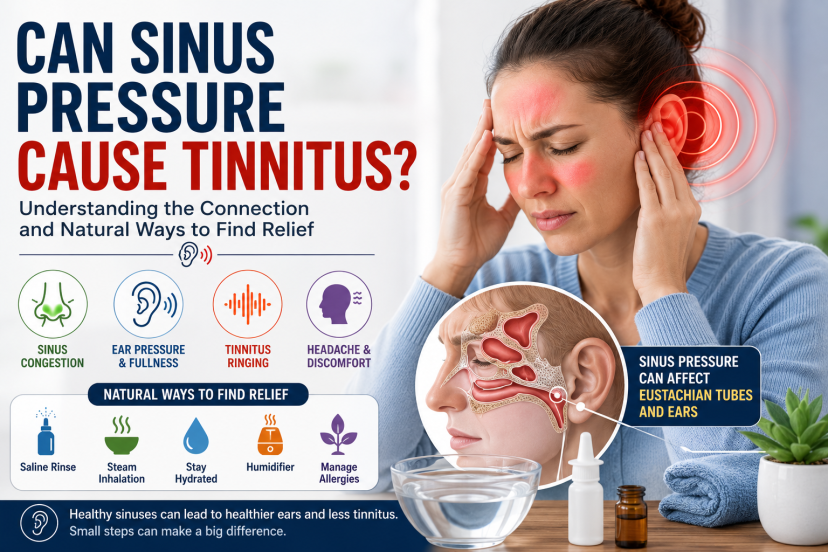
The answer is yes—sinus pressure can sometimes contribute to temporary tinnitus or make existing tinnitus feel worse. Although sinus pressure isn’t usually the underlying cause of chronic tinnitus, congestion and inflammation can affect the ears in ways that increase ringing or other unusual sounds.
If you’ve noticed ear pressure, muffled hearing, or louder ringing when your sinuses are blocked, understanding the connection may help you find relief faster.
⭐ Quick Answer
Sinus pressure can contribute to temporary tinnitus by affecting the Eustachian tubes, increasing pressure in the middle ear, and disrupting normal hearing. Once the sinus congestion improves, tinnitus often becomes less noticeable. However, persistent tinnitus should always be evaluated by an ENT specialist or audiologist to rule out other causes.
👂 How Sinus Pressure Can Affect Your Ears
Your ears, nose, and throat are closely connected.
The Eustachian tubes are small passages that connect the middle ear to the back of the nose and upper throat. Their job is to:
- Equalize ear pressure
- Drain fluid from the middle ear
- Maintain healthy hearing
When your sinuses become inflamed because of allergies, a cold, or a sinus infection, swelling can block the Eustachian tubes.
This may lead to:
- Ear fullness
- Pressure inside the ears
- Muffled hearing
- Clicking or popping
- Temporary tinnitus
As pressure builds, your brain may become more aware of internal sounds, making ringing seem louder.
🌿 Common Causes Of Sinus Pressure That May Trigger Tinnitus
Several conditions can cause sinus inflammation and congestion.
These include:
Seasonal Allergies
Pollen, dust mites, mold, and pet dander commonly trigger nasal swelling.
The Common Cold
Viral infections often cause congestion that temporarily affects the ears.
Sinus Infections
Bacterial or viral sinus infections may increase inflammation and pressure around the Eustachian tubes.
Nasal Polyps
Growths inside the nasal passages can block airflow and drainage.
Deviated Septum
Structural differences inside the nose may contribute to chronic congestion.
Treating the underlying sinus condition often improves ear symptoms as well.
🔍 Can Sinus Pressure Cause Tinnitus Or Make Existing Tinnitus Worse?
In many cases, sinus pressure doesn’t create tinnitus from scratch.
Instead, it often makes existing tinnitus more noticeable because of changes in hearing and ear pressure.
Blocked Eustachian tubes can reduce outside sounds reaching the brain.
When external sounds become quieter, internal sounds like tinnitus often seem louder.
This explains why many people notice increased ringing during allergy season or while recovering from a cold.
⚠️ Symptoms That May Suggest Sinus Pressure Is Affecting Your Tinnitus
You may notice:
- Ringing in one or both ears
- Ear fullness
- Facial pressure
- Nasal congestion
- Headache
- Reduced sense of smell
- Muffled hearing
- Clicking or popping ears
- Postnasal drip
- Increased ringing when bending over
If these symptoms improve as your congestion clears, sinus pressure may have been contributing.
💊 Treating Sinus Pressure May Help Reduce Tinnitus
Managing the underlying congestion is often the first step.
Treatment options may include:
Saline Nasal Spray
Saline rinses help moisturize nasal passages and remove mucus without medication.
Nasal Steroid Sprays
These reduce inflammation, particularly for allergies.
Examples available in the U.S. include:
- Fluticasone
- Triamcinolone
- Budesonide
Use them only as directed.
Allergy Medications
If allergies are responsible, antihistamines may reduce congestion and sinus swelling.
Steam Inhalation
Warm steam may temporarily loosen mucus and improve comfort.
Hydration
Drinking enough fluids helps thin mucus, making drainage easier.
🌬️ Home Remedies That May Help
Many simple home strategies may reduce sinus pressure naturally.
Consider trying:

- ✔ Warm compresses over the sinuses
- ✔ Saline nasal irrigation using sterile or distilled water
- ✔ Drinking plenty of water
- ✔ Using a cool-mist humidifier
- ✔ Sleeping with your head slightly elevated
- ✔ Avoiding cigarette smoke
- ✔ Managing seasonal allergies
These approaches won’t cure tinnitus but may improve congestion that contributes to ear symptoms.
🎵 Sound Therapy Can Help During Sinus Flare-Ups
When congestion makes tinnitus seem louder, background sound often becomes especially helpful.
Many people use:
- White noise
- Ocean waves
- Rain sounds
- Nature recordings
- Soft instrumental music
Popular apps include:
- ReSound Relief
- Widex Zen
- BetterSleep
- myNoise
People with hearing loss may also benefit from hearing aids with built-in tinnitus masking features.
💚 Supplements Sometimes Discussed For Tinnitus
Although no supplement cures tinnitus, several are commonly discussed.
Always speak with your healthcare provider before beginning supplements.
Magnesium
Magnesium supports nerve function and muscle health.
People with a deficiency may benefit from correcting low levels.
Vitamin B12
Vitamin B12 deficiency has been associated with tinnitus in some individuals.
Testing may be appropriate if deficiency is suspected.
Ginkgo Biloba
Ginkgo biloba is one of the most researched herbal supplements for tinnitus.
Clinical studies have produced mixed results, and benefits appear to vary between individuals.
🧘 Relaxation Techniques May Reduce Tinnitus Awareness
Sinus congestion often disrupts sleep and increases stress.
Stress itself can make tinnitus feel louder.
Helpful relaxation techniques include:
- Deep breathing
- Mindfulness meditation
- Progressive muscle relaxation
- Gentle stretching
- Yoga
- Walking outdoors
Even practicing for 10 minutes daily may improve your ability to cope with tinnitus.
🥗 Lifestyle Habits That Support Healthy Ears
Healthy daily habits may reduce inflammation and support hearing health.
Focus on:
- Staying hydrated
- Eating fruits and vegetables
- Getting enough sleep
- Exercising regularly
- Avoiding loud noise
- Managing allergies
- Not smoking
- Limiting excessive alcohol
These habits support overall wellness and may reduce tinnitus flare-ups over time.
🚨 When To See A Doctor
While temporary tinnitus during sinus congestion is common, you should seek medical evaluation if:
- Ringing lasts longer than two weeks after congestion clears.
- Tinnitus occurs in only one ear.
- You experience sudden hearing loss.
- Tinnitus pulses with your heartbeat.
- Severe dizziness develops.
- Ear pain becomes severe.
- Fluid drains from the ear.
- Sinus symptoms last longer than 10 days or worsen after initially improving.
An ENT specialist or audiologist can determine whether another condition is contributing to your symptoms.
❓ FAQs: Can Sinus Pressure Cause Tinnitus?
1. Can a sinus infection cause tinnitus?
Yes. Sinus infections can increase inflammation and block the Eustachian tubes, leading to temporary ringing or buzzing in the ears.
2. Does tinnitus go away after sinus pressure improves?
In many people, tinnitus becomes less noticeable once congestion and pressure resolve. Persistent tinnitus should be evaluated by a healthcare professional.
3. Why do my ears ring more during allergy season?
Seasonal allergies can cause nasal swelling and Eustachian tube dysfunction, increasing ear pressure and making tinnitus seem louder.
4. Can blocked sinuses affect hearing?
Yes. Congestion can temporarily reduce hearing by interfering with normal middle ear pressure regulation.
5. Will nasal spray help tinnitus?
If tinnitus is related to sinus congestion or allergies, reducing nasal inflammation may help improve ear pressure and decrease symptoms.
6. Is sinus-related tinnitus permanent?
Most sinus-related tinnitus is temporary and improves as congestion resolves. Chronic tinnitus often has another underlying cause.
7. Should I see an ENT for sinus pressure and tinnitus?
Yes. If tinnitus persists, worsens, or occurs with hearing loss, an ENT specialist can evaluate both your sinuses and hearing.
📌 Final Thoughts
So, can sinus pressure cause tinnitus? Yes—it can. Congestion, inflammation, and blocked Eustachian tubes may temporarily increase ear pressure and make tinnitus more noticeable. Fortunately, for many people, these symptoms improve once the underlying sinus problem is treated.
The key is to address both your sinus health and your tinnitus management. Staying hydrated, controlling allergies, using sound therapy, getting quality sleep, and practicing stress reduction can all help reduce the impact of tinnitus on your daily life.
If your ringing continues after your sinus symptoms have resolved or becomes severe, don’t ignore it. An evaluation by an ENT specialist or audiologist can help identify the underlying cause and guide you toward the most effective treatment plan.
With patience, consistent self-care, and appropriate medical support, many people find their tinnitus becomes much easier to manage.
Medical Disclaimer: This article is for educational purposes only and should not replace professional medical advice, diagnosis, or treatment. If you experience persistent tinnitus, sudden hearing loss, severe ear pain, or worsening sinus symptoms, seek evaluation from your healthcare provider, ENT specialist, or audiologist promptly.
 Explore more: