Can Poor Posture Cause Tinnitus? What You Need To Know About The Connection
Living with tinnitus can be challenging. The constant ringing, buzzing, humming, or whooshing can make it difficult to focus, sleep, or enjoy quiet moments. Many people notice that their tinnitus changes throughout the day. Sometimes it’s barely noticeable, while other times it becomes louder after sitting at a desk, using a smartphone, or working on a computer for hours.
This has led many people to ask: Can poor posture cause tinnitus?
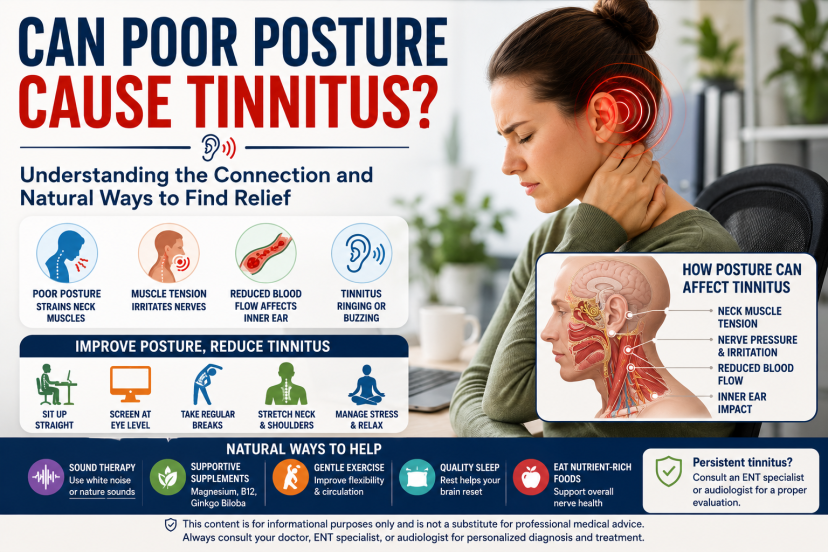
The answer is possibly. Poor posture doesn’t directly damage your hearing, but it can contribute to muscle tension, neck stiffness, jaw strain, and nerve irritation that may influence tinnitus in some individuals. This is especially true for people with somatic tinnitus, where movements of the head, neck, or jaw change the loudness or pitch of the ringing.
If you’ve noticed your tinnitus gets worse after a long day at the computer or improves when you stretch your neck, posture may be one factor worth addressing.
Quick Answer
Can poor posture cause tinnitus?
Yes, poor posture may contribute to or worsen tinnitus in some people. Poor posture can increase tension in the neck, shoulders, jaw, and upper back, potentially affecting muscles, nerves, and blood flow connected to the hearing system. Improving posture won’t cure tinnitus for everyone, but it may reduce symptoms if musculoskeletal problems are contributing.

🧍 How Poor Posture Can Affect Your Ears
Your ears don’t work in isolation.
The muscles, joints, nerves, and blood vessels in your neck and jaw are closely connected to the hearing system.
Poor posture can lead to:
- Tight neck muscles
- Shoulder tension
- Jaw misalignment
- Reduced neck mobility
- Increased muscle strain
- Pressure on nearby nerves
For some individuals, these changes may increase awareness of tinnitus or temporarily make it louder.
👂 What Is Somatic Tinnitus?
Somatic tinnitus is a type of tinnitus influenced by the body’s muscles, joints, or nerves rather than hearing loss alone.
People with somatic tinnitus often notice that the ringing changes when they:
- Turn their head
- Clench their jaw
- Stretch their neck
- Press on facial muscles
- Move their shoulders
This suggests that signals from the neck or jaw may interact with the brain’s hearing pathways.
Poor posture can contribute to this type of muscle tension.
💻 Everyday Habits That Lead To Poor Posture
Modern lifestyles encourage prolonged sitting.
Common posture-related habits include:
Computer Work
Leaning toward a monitor places extra strain on the neck.
Smartphone Use
“Text neck” forces the head forward, increasing muscle tension.
Poor Desk Ergonomics
A chair that’s too low or a monitor that’s too high can affect spinal alignment.
Driving For Long Periods
Long commutes often cause shoulder and neck stiffness.
Watching TV In Bed
Poor neck positioning may contribute to muscle tightness.
Over time, these habits can increase discomfort and possibly influence tinnitus.
⚠️ Signs Your Tinnitus May Be Related To Posture
Some clues include:
- Ringing changes when you move your neck.
- Turning your head affects tinnitus.
- Jaw movement changes the sound.
- Neck pain occurs with ear ringing.
- Shoulder tension accompanies tinnitus.
- Symptoms worsen after computer work.
- Stretching temporarily improves ringing.
If these patterns sound familiar, posture may be contributing.
💆 Neck And Muscle Tension May Play A Role
Tight muscles can influence nearby nerves that communicate with the auditory system.
Common areas include:
- Upper trapezius
- Sternocleidomastoid (SCM)
- Suboccipital muscles
- Jaw muscles
- Upper back muscles
Muscle tightness doesn’t directly damage hearing, but it may increase sensory signals that affect tinnitus perception.
🪑 How To Improve Your Posture
Improving posture doesn’t happen overnight, but small adjustments can make a noticeable difference.
Try these strategies:
Keep Your Monitor At Eye Level
Your head should stay upright rather than leaning forward.
Sit With Both Feet Flat
Good lower-body support helps maintain spinal alignment.
Relax Your Shoulders
Avoid shrugging or hunching while typing.
Keep Your Chin Neutral
Avoid pushing your head forward.
Take Frequent Breaks
Stand up every 30 to 60 minutes.
Simple movement throughout the day often reduces muscle tension.
🤸 Gentle Exercises That May Help
If your healthcare provider approves, gentle stretching may help reduce neck tension.

Examples include:
- Chin tucks
- Shoulder rolls
- Neck side stretches
- Chest stretches
- Upper back mobility exercises
Avoid aggressive neck manipulation or forceful stretching without professional guidance.
🎵 Sound Therapy Can Help Manage Tinnitus
Whether posture contributes or not, sound therapy remains one of the most effective coping strategies.
Many people benefit from:
- White noise
- Ocean waves
- Rain sounds
- Soft instrumental music
- Nature recordings
Popular U.S. apps include:
- ReSound Relief
- Widex Zen
- BetterSleep
- myNoise
Many hearing aids also include tinnitus masking programs for individuals with hearing loss.
🌿 Supplements Commonly Discussed For Tinnitus
No supplement has been proven to cure tinnitus.
However, several nutrients have been studied.
Always consult your healthcare provider before taking supplements.
Magnesium
Supports healthy nerve and muscle function.
Vitamin B12
Deficiency may contribute to neurological symptoms, including tinnitus in some people.
Ginkgo Biloba
One of the most widely studied herbal supplements for tinnitus.
Research results remain mixed.
🧘 Relaxation Techniques May Reduce Muscle Tension
Stress often increases muscle tightness, especially in the neck and shoulders.
Helpful relaxation techniques include:
- Deep breathing
- Meditation
- Progressive muscle relaxation
- Gentle yoga
- Walking
- Mindfulness
Reducing muscle tension may indirectly make tinnitus less noticeable.
💚 Lifestyle Habits That Support Healthy Hearing
Healthy routines support both your ears and your musculoskeletal system.
Try to:
- ✔ Exercise regularly.
- ✔ Maintain good posture.
- ✔ Stay hydrated.
- ✔ Sleep 7–9 hours each night.
- ✔ Protect your hearing from loud noise.
- ✔ Manage stress.
- ✔ Avoid smoking.
- ✔ Eat a balanced diet.
These habits support overall health and may reduce tinnitus flare-ups.
🚨 When To See A Doctor
You should schedule an evaluation with an ENT specialist, audiologist, or healthcare provider if:
- Tinnitus lasts longer than one to two weeks.
- Ringing occurs in only one ear.
- You experience sudden hearing loss.
- Tinnitus pulses with your heartbeat.
- Neck pain becomes severe.
- You have numbness or weakness.
- Symptoms interfere with daily life or sleep.
- Posture changes do not improve symptoms.
A healthcare provider can determine whether hearing loss, TMJ dysfunction, cervical spine problems, or another condition is contributing.
❓ FAQs: Can Poor Posture Cause Tinnitus?
1. Can sitting too long make tinnitus worse?
Possibly. Long periods of sitting may increase neck and shoulder tension, which can worsen somatic tinnitus in some individuals.
2. Can fixing posture reduce tinnitus?
If poor posture contributes to muscle tension affecting tinnitus, improving posture may help reduce symptoms over time.
3. What is text neck, and can it affect tinnitus?
Text neck refers to forward head posture caused by looking down at phones or tablets. It may increase neck strain that contributes to tinnitus in susceptible individuals.
4. Can neck exercises stop tinnitus?
Neck exercises won’t cure tinnitus, but gentle stretching and strengthening may reduce symptoms if muscle tension is involved.
5. Is posture-related tinnitus permanent?
Usually not. If posture contributes to tinnitus, improving body mechanics and reducing muscle tension may lessen symptoms.
6. Should I see a physical therapist?
If neck pain, posture problems, or muscle tension appear related to your tinnitus, a physical therapist may help develop a personalized treatment plan.
7. Can TMJ and poor posture both contribute to tinnitus?
Yes. Poor posture can affect jaw alignment, and TMJ disorders are known to contribute to tinnitus in some individuals.
🌟 Final Thoughts
So, can poor posture cause tinnitus? While poor posture is not usually the primary cause of tinnitus, it can contribute to muscle tension, neck stiffness, jaw dysfunction, and somatic tinnitus in certain individuals.
The encouraging news is that posture is one factor you can improve. Simple changes such as setting up an ergonomic workstation, stretching regularly, strengthening your neck and upper back, managing stress, and taking frequent movement breaks may help reduce both muscle discomfort and tinnitus flare-ups.
Remember that tinnitus is often influenced by multiple factors rather than a single cause. Combining healthy posture with hearing protection, sound therapy, stress management, quality sleep, and professional medical care offers the best opportunity for long-term improvement.
If your tinnitus persists, worsens, or is accompanied by hearing loss or severe pain, don’t hesitate to consult an ENT specialist or audiologist. Early evaluation can identify treatable causes and help you develop a personalized management plan.
Medical Disclaimer: This article is for educational purposes only and should not replace professional medical advice, diagnosis, or treatment. If you experience persistent tinnitus, sudden hearing loss, severe neck pain, numbness, or worsening symptoms, seek evaluation from your healthcare provider, ENT specialist, or audiologist.
 Explore more: