Tinnitus After Anxiety Attack: Why It Happens, How To Calm It, And When To Seek Help
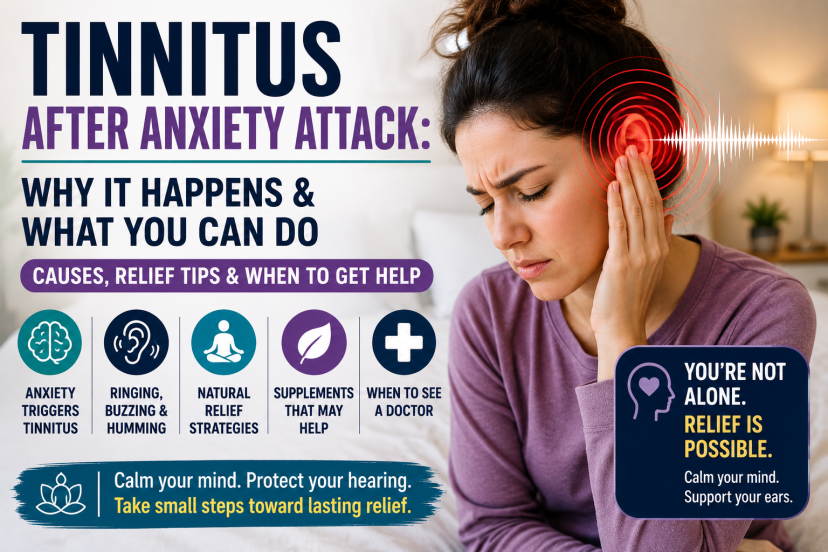
Experiencing ringing, buzzing, humming, or whooshing in your ears after an anxiety attack can be frightening. You may wonder if something is seriously wrong or whether the sound will ever go away. The good news is that tinnitus after anxiety attack is a fairly common experience, and for many people, it improves as the body and nervous system calm down.
Anxiety doesn’t directly damage your ears, but it can make your brain much more aware of internal sounds. Stress hormones, muscle tension, changes in breathing, and heightened alertness can all contribute to temporary tinnitus or make existing tinnitus seem louder.
This guide explains why tinnitus after an anxiety attack happens, practical ways to reduce symptoms naturally, and when it’s important to seek professional evaluation.
⭐ Quick Answer: Tinnitus After Anxiety Attack
Tinnitus after anxiety attack is often linked to the body’s stress response. Anxiety can increase muscle tension, change breathing patterns, raise awareness of internal sounds, and temporarily make tinnitus seem louder. Most cases improve as anxiety settles, but persistent tinnitus or hearing loss should be evaluated by an ENT or audiologist.
Key Takeaways
Most likely cause: Tinnitus after an anxiety attack is often related to the body’s heightened stress response, which can increase muscle tension, alter breathing, and make the brain more attentive to ringing or other internal sounds.
Usually serious? Usually not. Tinnitus that becomes noticeable during or shortly after intense anxiety may improve as your nervous system settles. However, persistent, worsening, or one-sided tinnitus deserves medical evaluation.
First thing to check: Notice whether the tinnitus decreases as your anxiety and physical tension improve. Also pay attention to hearing changes, dizziness, ear pain, or whether the sound seems to pulse with your heartbeat.
Best solution: Focus on calming the stress response with slow breathing, relaxation, adequate sleep, gentle movement, and background sound if silence makes the tinnitus more noticeable. If symptoms persist or are accompanied by hearing loss or other concerning symptoms, consult an audiologist, ENT, or healthcare professional.
😟 Why Does Tinnitus After Anxiety Attack Happen?
During an anxiety or panic attack, your body activates its “fight-or-flight” response.
Stress hormones like adrenaline increase your heart rate, breathing, and muscle tension. These changes can temporarily affect how your brain processes sound.

Common reasons tinnitus after anxiety attack occurs include:
- Increased stress hormone levels
- Muscle tension in the neck and jaw
- Hyperventilation during panic attacks
- Heightened awareness of internal body sensations
- Poor sleep caused by anxiety
- Existing tinnitus becoming more noticeable
- Jaw clenching or teeth grinding
Importantly, anxiety itself doesn’t usually damage hearing. Instead, it often changes how your brain interprets and reacts to sounds.
👂 Symptoms That May Occur With Tinnitus After Anxiety Attack
People experience anxiety-related tinnitus differently.
Common symptoms include:
- Ringing
- Buzzing
- Humming
- Hissing
- High-pitched tones
- Ear fullness
- Mild dizziness
- Difficulty concentrating
- Increased sensitivity to sound
- Trouble sleeping
Many people notice the ringing becomes louder immediately after an anxiety attack and gradually improves over the following hours.
🧠 How Anxiety And Tinnitus Affect Each Other
Anxiety and tinnitus often create a frustrating cycle.
Here’s how it works:
- Anxiety increases awareness of tinnitus.
- Tinnitus creates worry and stress.
- More stress makes tinnitus seem louder.
- Louder tinnitus increases anxiety again.
Breaking this cycle is one of the most effective ways to reduce the emotional impact of tinnitus.
Fortunately, many people experience improvement once they learn healthy stress management techniques.
🌿 Natural Ways To Calm Tinnitus After Anxiety Attack
There isn’t an instant cure, but several simple strategies may help calm both anxiety and tinnitus.
Practice Slow Breathing
Deep breathing helps activate your body’s relaxation response.
Try breathing in for four seconds and breathing out for six seconds for several minutes.
Use Sound Therapy
Complete silence often makes tinnitus more noticeable.
Helpful background sounds include:
- Rain
- Ocean waves
- White noise
- Soft music
- Nature sounds
Popular U.S. apps include:
- ReSound Relief
- BetterSleep
- myNoise
- White Noise Lite
These can be especially helpful at bedtime.
Stay Hydrated
Dehydration may worsen fatigue and make stress symptoms feel more intense.
Drink water consistently throughout the day.
Prioritize Quality Sleep
Poor sleep increases both anxiety and tinnitus awareness.
Aim for seven to nine hours of sleep each night whenever possible.
💊 Supplements That May Support Ear And Nerve Health
Some people explore supplements as part of a broader tinnitus management plan.
Scientific evidence varies, so always consult your healthcare provider first.
Magnesium
Magnesium supports healthy nerve and muscle function and may help reduce muscle tension associated with stress.
Vitamin B12
Vitamin B12 supports healthy nerve function.
People with deficiencies sometimes experience neurological or hearing-related symptoms.
Ginkgo Biloba
Ginkgo biloba is commonly used for tinnitus support.
Research findings remain mixed, although some individuals report symptom improvement.
Supplements should be viewed as supportive tools—not cures.
🧘 Relaxation Techniques That May Reduce Anxiety-Related Tinnitus
Managing anxiety often reduces how noticeable tinnitus feels.
Helpful techniques include:

- Mindfulness meditation
- Progressive muscle relaxation
- Gentle yoga
- Guided imagery
- Daily stretching
- Journaling
- Spending time outdoors
Regular practice is usually more effective than occasional sessions.
💚 Lifestyle Habits That Support Recovery
Healthy daily habits benefit both your ears and your nervous system.
Helpful strategies include:
- Exercise Regularly
- Limit Excessive Caffeine If It Worsens Symptoms
- Reduce Alcohol If It Triggers Ringing
- Eat Balanced Meals
- Stay Hydrated
- Protect Your Hearing From Loud Noise
- Avoid Smoking
- Take Breaks From Stressful Situations
Even small improvements in daily habits can reduce anxiety and make tinnitus easier to manage.
🎧 Can Anxiety Cause Permanent Tinnitus?
Anxiety alone does not typically cause permanent hearing damage.
However, chronic stress may increase your awareness of existing tinnitus and make symptoms seem more severe.
If tinnitus began after an anxiety attack but continues for weeks or is accompanied by hearing loss, dizziness, or ear pain, another underlying condition may also be contributing.
A hearing evaluation can help identify the cause.
🚨 When To See A Doctor
Temporary tinnitus after anxiety attack often improves as your body calms down.
However, you should schedule an appointment with an ENT or audiologist if:
- Ringing lasts longer than one to two weeks.
- Hearing loss develops.
- One ear rings much louder than the other.
- You experience severe dizziness or balance problems.
- Ear pain or drainage occurs.
- Tinnitus significantly interferes with sleep or daily activities.
Seek immediate medical care if tinnitus begins suddenly along with sudden hearing loss, facial weakness, severe vertigo, or neurological symptoms.
❓ FAQs: Tinnitus After Anxiety Attack
1. Can anxiety attacks cause ringing in the ears?
Yes. Anxiety attacks can temporarily make tinnitus more noticeable due to stress hormones, muscle tension, and increased awareness of internal sounds.
2. Will tinnitus go away after an anxiety attack?
For many people, the ringing gradually improves as anxiety decreases. Recovery time varies from person to person.
3. Can stress make existing tinnitus worse?
Yes. Stress and anxiety are among the most common factors that increase the perception of tinnitus.
4. How do I calm tinnitus caused by anxiety?
Deep breathing, relaxation exercises, sound therapy, adequate sleep, and stress management often help reduce symptoms.
5. Can panic attacks permanently damage hearing?
Panic attacks themselves do not usually damage hearing, but persistent symptoms should still be evaluated if they continue.
6. Is meditation good for tinnitus?
Many people find meditation helpful because it reduces stress and changes how the brain responds to tinnitus.
7. Should I see a doctor if tinnitus starts after anxiety?
Yes, especially if symptoms persist, worsen, occur with hearing loss, or affect only one ear.
📌 Final Thoughts
Experiencing tinnitus after anxiety attack can feel overwhelming, but it doesn’t necessarily mean something is seriously wrong with your ears. In many cases, anxiety temporarily increases your awareness of internal sounds, making tinnitus seem louder than usual.
The key is to calm both your body and your mind. Healthy sleep, stress management, sound therapy, regular exercise, and hearing protection can all play an important role in reducing symptoms over time.
If your ringing persists, worsens, or is accompanied by hearing changes or dizziness, don’t hesitate to seek professional evaluation. With patience, consistent self-care, and the right support, many people successfully manage tinnitus and regain confidence in their daily lives.
Medical Disclaimer: This article is for educational purposes only and should not replace professional medical advice, diagnosis, or treatment. Always consult a qualified healthcare provider, ENT specialist, or audiologist if you experience persistent tinnitus, hearing loss, dizziness, or other concerns about your hearing health.
 Explore more: