Why Does My Ear Ring Randomly? Understanding the Causes and Solutions

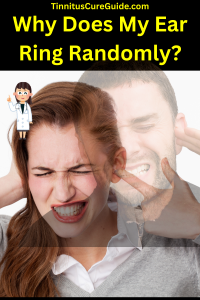
You might be sitting quietly, working at your computer, or getting ready for bed when a high-pitched sound suddenly appears in one ear. Sometimes it disappears within seconds. Other times, it lasts several minutes or returns throughout the day.
The unpredictability can feel unsettling, especially when you cannot identify an obvious trigger.
Fortunately, understanding the possible causes, recognizing warning signs, and developing simple hearing-friendly habits can help you respond calmly and manage occasional tinnitus more effectively.
👂 Why Does My Ear Ring Randomly For A Few Seconds?
A sudden ringing sound that lasts only a few seconds may be a brief, spontaneous tinnitus episode.
Sometimes called sudden brief unilateral tapering tinnitus, this experience typically involves a high-pitched tone in one ear that fades quickly.
It may also occur with a temporary feeling of muffled hearing.
Researchers do not fully understand why these brief episodes happen. They may involve short-lived changes in auditory nerve activity or how the brain processes hearing signals.
An occasional episode that disappears completely, without other symptoms, is generally less concerning than persistent tinnitus.
However, frequent episodes, new hearing difficulties, or ringing that becomes more noticeable over time should be discussed with a healthcare professional.
🔍 9 Possible Causes Of Random Ear Ringing
1. Exposure To Loud Sounds
Loud music, headphones, concerts, and power tools can stress the sensitive structures inside your inner ear.
Even when ringing does not begin immediately, recent noise exposure may contribute to temporary or persistent tinnitus.
Repeated exposure can also damage hearing over time.
If you frequently listen to music through headphones, reduce the volume and take regular listening breaks.
2. Earwax Buildup
Earwax normally protects your ears, but excessive buildup can sometimes block the ear canal.
This may cause:
-
Muffled Hearing
-
Ear Fullness
-
Ringing Or Buzzing
-
Reduced Hearing Clarity
Avoid cotton swabs or other objects that push wax deeper into the ear.
A healthcare professional can examine your ear and recommend safe removal when necessary.
3. Stress And Anxiety
Stress does not necessarily create tinnitus, but it can make existing sounds more noticeable.
When you’re anxious, your brain may become more alert to unfamiliar sensations.
This can create a frustrating cycle: you notice ringing, become worried, and then pay even more attention to it.
Relaxation exercises and stress-management strategies may help reduce tinnitus-related distress.
4. Temporary Changes In Ear Pressure
The Eustachian tubes connect your middle ears to the back of your nose and help regulate pressure.
When they do not function properly, you may notice popping, fullness, muffled hearing, or tinnitus.
Possible triggers include allergies, colds, sinus inflammation, and changes in altitude.
Gentle swallowing or yawning may help with pressure discomfort, but persistent symptoms require evaluation.
5. Hearing Loss
Tinnitus is commonly associated with hearing loss, including age-related and noise-induced hearing changes.
When the brain receives less sound information from the ears, changes in auditory processing may contribute to tinnitus.
You may have mild hearing loss without realizing it.
A hearing test can identify changes that are not obvious during everyday conversations.
6. Jaw Tension Or TMJ Problems
The temporomandibular joint connects your jaw to your skull.
Jaw clenching, teeth grinding, and certain TMJ disorders can sometimes influence tinnitus.
You might notice that ringing changes when you chew, move your jaw, or tighten facial muscles.
If jaw discomfort accompanies ear ringing, a dentist or healthcare professional may help identify contributing problems.
7. Certain Medications
Some medications can cause or worsen tinnitus, particularly at higher doses.
Examples include certain antibiotics, chemotherapy drugs, and high doses of aspirin or other medications.
Not everyone taking these medicines develops tinnitus.
If ringing begins after a medication change, speak with your pharmacist or prescribing clinician.
Never stop prescribed medication without medical guidance.
8. Poor Sleep And Fatigue
Lack of sleep may increase your sensitivity to tinnitus.
When you’re tired, ordinary sounds and physical sensations can feel more distracting.
Poor sleep can also increase stress, making it harder to ignore ringing.
Maintaining consistent sleep habits may improve your ability to cope, even if it does not eliminate the sound itself.
9. Inner-Ear Or Other Medical Conditions
Less commonly, recurring tinnitus may be associated with conditions such as Ménière’s disease, ear infections, or other disorders affecting hearing.
Ménière’s disease typically involves episodes of vertigo, hearing changes, and ear fullness.
Tinnitus that pulses with your heartbeat may have a vascular cause and needs medical assessment.
These possibilities are reasons to seek appropriate evaluation, not to assume that occasional ringing indicates a serious condition.
⏱️ Is Random Ear Ringing Normal Or Something To Worry About?
Occasional ringing that disappears within seconds is often less concerning than continuous tinnitus.
However, the pattern and accompanying symptoms matter.
| Symptom Pattern | What To Consider |
|---|---|
| Ringing For A Few Seconds | Often a brief tinnitus episode |
| Ringing After Loud Noise | Possible noise-related hearing injury |
| Ringing With Ear Fullness | Possible wax buildup or pressure problem |
| Ringing In One Ear Repeatedly | Hearing evaluation recommended |
| Ringing With Hearing Loss | Prompt medical assessment needed |
| Ringing In Time With Heartbeat | Medical evaluation recommended |
There is no reliable way to diagnose the cause based only on how the ringing sounds.
If you’re repeatedly asking yourself, “why does my ear ring randomly?” and the episodes are becoming more frequent, arranging a hearing assessment is a sensible next step.
🌿 How To Manage Random Ear Ringing Naturally
Although there is no universal cure for tinnitus, practical lifestyle strategies can make occasional ringing less disruptive.
Protect Your Ears From Excessive Noise
Use hearing protection around loud equipment, concerts, or other high-volume environments.
The National Institute on Deafness and Other Communication Disorders (NIDCD) warns that repeated exposure to sounds at or above 85 decibels can damage hearing over time.
For everyday headphone use, choose comfortable volume levels and avoid prolonged loud listening.
Use Gentle Background Sounds
Tinnitus may seem louder in quiet environments because there is less competing sound.
Soft background audio can make ringing less noticeable.
Try:
-
White Noise: A bedside sound machine or fan.
-
Nature Sounds: Gentle rain, ocean waves, or flowing water.
-
Soft Music: Quiet instrumental music during relaxing activities.
-
Sound Apps: ReSound Relief or myNoise for customizable background sounds.
Keep audio at a safe, comfortable volume rather than trying to overpower the ringing.
Practice A Short Relaxation Routine
When ringing appears unexpectedly, try not to monitor it constantly.
Instead, spend a few minutes breathing slowly.
Inhale gently for four seconds, then exhale for six seconds.
Relax your shoulders, unclench your jaw, and return your attention to a comfortable activity.
This technique does not directly treat the cause of tinnitus, but it may reduce the anxiety surrounding an episode.
Maintain Healthy Sleep Habits
Consistent sleep can improve your ability to handle everyday stress and sound sensitivity.
Try maintaining a regular bedtime, reducing stimulating activities before sleep, and keeping your bedroom comfortable.
If silence makes tinnitus more noticeable, low-volume background sound may help.
💊 Do Supplements Or Home Remedies Help Random Tinnitus?
Many products claim to reduce ringing naturally, including magnesium, zinc, vitamin B12, and ginkgo biloba.
However, current research does not support these supplements as reliable treatments for tinnitus in people without a relevant deficiency.
Correcting a confirmed vitamin deficiency may benefit general health, but taking extra supplements is not a proven tinnitus cure.
Ginkgo biloba has not demonstrated consistent benefits and can interact with medications, including blood thinners.
Avoid placing essential oils, herbal drops, or unprescribed substances inside your ears.
For persistent tinnitus, evidence-based approaches such as cognitive behavioral therapy (CBT), hearing aids when appropriate, and sound enrichment may provide more meaningful relief.
📝 How To Identify Your Personal Tinnitus Triggers
If ringing happens repeatedly, keeping a simple symptom diary may reveal useful patterns.
Record the time, duration, affected ear, recent noise exposure, sleep quality, and any associated symptoms.
For example, you might notice ringing after using headphones at high volume or during periods of poor sleep.
However, a pattern does not always prove that a particular activity caused tinnitus.
Avoid unnecessarily restricting foods, exercise, or everyday activities without a clear reason.
A symptom diary is most useful when it helps you communicate changes to a healthcare professional.
🩺 When To See An ENT Or Audiologist
Occasional brief ringing may not require immediate treatment, but certain symptoms should never be ignored.
Seek urgent medical attention if you experience:
-
Sudden Hearing Loss: Especially when accompanied by new ringing or ear fullness.
-
Severe Dizziness: Particularly with new hearing changes.
-
Facial Weakness Or Neurological Symptoms: These may require emergency care.
-
Significant Ear Injury: Especially after head trauma or loud noise exposure.
Sudden hearing loss is a time-sensitive medical condition and should be assessed urgently, ideally within 24 hours.
Arrange a non-emergency evaluation if tinnitus repeatedly affects one ear, persists, becomes more frequent, or interferes with sleep and concentration.
Tinnitus that follows your heartbeat also warrants prompt medical assessment.
An audiologist can perform hearing tests, while an ENT specialist can investigate possible ear-related or medical causes.
❓ Frequently Asked Questions About Random Ear Ringing
Why Does My Ear Ring Randomly For 5 Seconds?
Brief ringing lasting a few seconds may be a spontaneous tinnitus episode. These events are often harmless when they occur occasionally and disappear completely, but frequent episodes or associated hearing changes should be evaluated.
Why Does Only One Ear Ring Randomly?
One-sided ringing can occur during brief tinnitus episodes, but it may also be associated with earwax, hearing differences, or other conditions. Persistent or repeatedly recurring one-sided tinnitus deserves a hearing evaluation.
Can Stress Cause Random Ringing In The Ears?
Stress can make tinnitus more noticeable and increase distress associated with ringing. However, it is not always the underlying cause.
Why Do My Ears Ring Randomly At Night?
Tinnitus often becomes more noticeable at night because the surrounding environment is quieter. Fatigue and stress may also make the sound more noticeable.
Can Dehydration Cause Random Ear Ringing?
There is limited evidence that ordinary mild dehydration directly causes tinnitus. Staying adequately hydrated supports general health, but persistent ringing should not automatically be blamed on dehydration.
Does Random Ear Ringing Mean Hearing Loss?
Not necessarily. Brief ringing can occur without noticeable hearing loss. However, tinnitus often accompanies hearing changes, so a hearing test may help if symptoms persist or recur.
📌 Conclusion: Understanding Random Ear Ringing And Finding Peace Of Mind
Random ear ringing can be surprising, particularly when it appears without an obvious explanation.
Fortunately, occasional brief episodes are often less concerning than persistent tinnitus, and many people learn to manage symptoms effectively.
Start by protecting your hearing, improving sleep, reducing unnecessary stress, and noticing meaningful changes in your symptoms.
If ringing becomes frequent, affects one ear repeatedly, or comes with hearing difficulties, seek professional advice.
With consistent self-care, realistic expectations, and appropriate medical support, tinnitus can often become less distracting and easier to live with.
Medical Disclaimer: This article is intended for educational purposes only and does not replace professional medical advice, diagnosis, or treatment. Consult a qualified healthcare professional for persistent tinnitus, hearing changes, or other concerning symptoms. Sudden hearing loss requires urgent medical attention.
Explore more: