Common Tinnitus Triggers: 30 Things That Can Make Ear Ringing More Noticeable
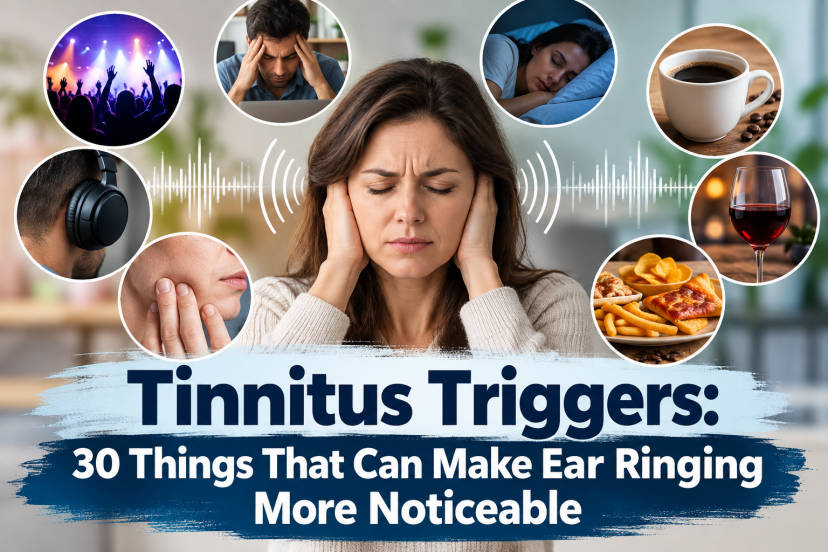
What Can Make Ear Ringing Suddenly Seem Louder?
If you live with tinnitus, you may have noticed something frustrating: the sound does not always stay the same. One morning, the ringing may barely register, while later that day it can seem louder, sharper, or much harder to ignore. You might notice a change after a stressful afternoon, a poor night’s sleep, a noisy restaurant, a workout, or seemingly for no reason at all. Understanding common tinnitus triggers can help you recognize patterns in your daily life and identify the factors that may be making your ear ringing more noticeable.
Naturally, this can lead to an important question:
What triggered my tinnitus?
Understanding possible common tinnitus triggers can be useful, but there is an important distinction to make from the beginning. A trigger is not necessarily the original cause of your tinnitus. Instead, it may be something that temporarily changes how noticeable, intrusive, or bothersome your existing tinnitus feels.
Tinnitus itself is the perception of sound without an outside source. It can sound like ringing, buzzing, hissing, humming, roaring, clicking, or even a pulsing or whooshing noise. The National Institute on Deafness and Other Communication Disorders (NIDCD) notes that tinnitus is commonly associated with hearing loss, noise exposure, certain medications, earwax or ear infections, head or neck injuries, and several other conditions.
But tinnitus can also fluctuate.

Stress, sleep, sound exposure, jaw tension, illness, medication changes, and everyday habits may coincide with changes in how tinnitus is perceived.
That does not mean you need to eliminate dozens of foods, activities, and enjoyable parts of your life.
A better approach is to look for your own repeatable patterns.
This guide covers 30 potential tinnitus triggers, how to identify which ones actually matter to you, what to record in a tinnitus trigger diary, and when a change in tinnitus deserves medical evaluation.
Quick Answer: What Are The Most Common Tinnitus Triggers?
Commonly reported or medically recognized factors that can cause or make tinnitus more noticeable include loud noise exposure, stress, poor sleep, hearing changes, earwax blockage, ear infections, certain medications, jaw clenching or grinding, head or neck problems, and changes in the surrounding sound environment.
Some people also report changes associated with caffeine, alcohol, nicotine, diet, exercise, dehydration, or allergies, but these effects can vary substantially from person to person.
Instead of assuming that every possible trigger affects you, track your tinnitus alongside your daily activities for several weeks. Look for a factor that repeatedly appears before a noticeable change.
Most importantly, a significant new change, particularly sudden hearing loss, tinnitus following a head injury, pulsatile tinnitus, or tinnitus accompanied by neurological or severe balance symptoms—should be medically evaluated rather than treated simply as another “trigger.”
Key Takeaways
Most likely trigger: There isn’t one universal trigger. Loud noise, stress, poor sleep, changes in hearing, jaw tension, and certain ear-related problems are among the factors worth investigating.
Usually serious? Temporary fluctuations in tinnitus are not necessarily a sign of something dangerous. However, new or significantly changing tinnitus sometimes deserves medical evaluation.
First thing to check: Think about what changed during the previous several hours or days—noise exposure, sleep, stress, illness, medications, jaw tension, or your listening environment.
Best solution: Instead of trying to avoid every possible common tinnitus trigger, keep a simple diary for several weeks and look for patterns that repeat consistently.
Understanding Tinnitus Triggers
Before going through the list, it helps to understand what the word “trigger” actually means.
People sometimes use cause and trigger interchangeably, but they are not necessarily the same.
A Cause May Help Explain Why Tinnitus Exists
Tinnitus has been linked with factors and conditions including:
- Hearing loss
- Loud-noise exposure
- Earwax blockage
- Ear infections
- Certain medications
- Head or neck injuries
- Jaw-joint problems
- Ménière’s disease
- Some blood-vessel conditions
In many people, however, no single precise cause can be identified.
A Trigger May Change How Noticeable Tinnitus Feels
Imagine that you already have mild tinnitus.
Most afternoons, you barely notice it.
Then you spend several hours around loud music and come home to a quiet bedroom. Suddenly, the ringing seems much stronger.
The noise exposure may have affected your auditory system, while the quiet room also makes the contrast between tinnitus and your environment more obvious.
Likewise, after a stressful day, you may pay much more attention to the sound.
These are the types of patterns worth tracking.
Not Every Fluctuation Has An Obvious Explanation
This point is important.
Tinnitus can fluctuate even when you have done nothing obviously different.
If you try to find an explanation for every louder day, you may eventually blame coffee, chocolate, exercise, weather, salt, your pillow, your phone, or practically anything else you happened to encounter that day.
One coincidence does not establish a trigger.
Look for repeatable patterns instead.
30 Potential Tinnitus Triggers
The following factors are grouped into categories to make them easier to investigate.
Remember that not every item on this list will affect every person.
Sound And Hearing-Related Tinnitus Triggers
1. Loud Noise Exposure
Loud sound is one of the most important factors to consider.
Concerts, power tools, machinery, sporting events, clubs, fireworks, and other intense sounds can contribute to noise-related hearing damage and tinnitus. NIDCD specifically identifies loud-noise exposure as an established tinnitus-related factor.
If your tinnitus repeatedly becomes more noticeable after noisy activities, take that pattern seriously.
Protect your hearing around genuinely hazardous noise and reduce unnecessarily high listening volumes.
2. High Headphone Or Earbud Volume
Headphones themselves are not automatically harmful.

Volume and duration matter.
Listening to amplified music at very high levels can contribute to hearing damage and tinnitus. Mayo Clinic recommends lowering headphone volume as part of protecting hearing.
If your ears feel uncomfortable or your tinnitus becomes noticeably stronger after listening, consider reducing the volume and giving your ears a break.
3. Concerts And Live Events
A concert combines several potential factors:
- High sound levels
- Long exposure
- Crowds
- Fatigue
- Alcohol
- Late nights
You might therefore notice stronger tinnitus afterward.
Appropriate hearing protection at loud events can reduce noise exposure without requiring you to stop enjoying live music altogether.
4. Power Tools And Machinery
Lawn equipment, saws, drills, shop tools, motorcycles, construction machinery, and similar equipment can generate substantial sound levels.
Repeated exposure without appropriate hearing protection can affect hearing.
Don’t wait until your ears ring afterward to think about protection.
5. Sudden Extremely Loud Sounds
A single intense sound can sometimes produce immediate ringing or a noticeable tinnitus change.
Explosions, fireworks, amplified speakers at close range, or other extremely loud sounds deserve particular caution.
If a sudden loud sound is followed by persistent tinnitus or an obvious change in hearing, consider having your hearing evaluated.
6. An Extremely Quiet Environment
Interestingly, sometimes the environment doesn’t make tinnitus physically louder—it simply makes it easier to hear.
In a quiet bedroom, there may be almost no external sound competing with tinnitus.
This is why some people say: “My tinnitus is always worse at night.”
The tinnitus may not necessarily have intensified. Your auditory environment has changed.
Soft background sound, such as a fan, nature sounds, or low-level sound enrichment, can make tinnitus less prominent for some people. Both NIDCD and Mayo Clinic discuss sound generators or environmental sounds as strategies that can reduce tinnitus awareness.
Learn more: Ringing In Ears At Night
Stress, Sleep And Emotional Triggers
7. Stress
Stress is one of the most commonly discussed tinnitus aggravators.
A difficult workday, family problem, financial worry, travel disruption, or other stressful event may make tinnitus much harder to ignore.
Mayo Clinic specifically notes that stress can make tinnitus worse and discusses stress-management approaches as part of coping with tinnitus.
This can become a cycle:
Tinnitus → worry → increased attention → more stress → greater tinnitus awareness.
Breaking that cycle can sometimes be more useful than trying to eliminate every external trigger.
8. Anxiety
Anxiety and tinnitus can interact closely.
When you’re anxious, your attention naturally becomes more focused on possible threats or uncomfortable sensations.
That can include tinnitus.
You may start checking:
“Is it louder?”
“Did the pitch change?”
“Why is it happening?”
Frequent monitoring can make the sound occupy even more of your attention.
Learn more: Can Anxiety Cause Tinnitus?
9. Poor Sleep
After a bad night’s sleep, many things can feel harder to tolerate—including tinnitus.
Fatigue can affect concentration, mood, stress tolerance, and how strongly you react to unwanted sensations.
Sleep problems are also commonly reported by people who find tinnitus bothersome.
If your tinnitus consistently feels worse after poor sleep, improving your sleep routine may be more useful than searching for a mysterious dietary trigger.
Learn more: Sleep Quality Tinnitus Severity
10. Fatigue
You don’t necessarily need to have insomnia to experience this effect.
Long workdays, travel, caregiving, strenuous schedules, or simply being awake too long can leave you exhausted.
When you’re mentally and physically depleted, tinnitus may feel more intrusive.
Try comparing your tinnitus ratings with your energy level in your trigger diary.
11. Focusing On The Tinnitus
Attention itself matters.
You may barely notice your tinnitus while talking with friends, gardening, cooking, walking, or watching an interesting movie.
Then you lie down and deliberately listen for it.
Suddenly it seems much louder.
The NHS specifically advises people not to continually focus on tinnitus and notes that activities and hobbies can help direct attention elsewhere.
Ear, Sinus And Hearing Changes
12. Earwax Buildup
Earwax is normal and protective.
But excessive wax can block the ear canal and sometimes contribute to tinnitus or changes in hearing. Both NIDCD and Mayo Clinic list earwax blockage as a possible tinnitus-related problem.
If tinnitus changes along with ear fullness or reduced hearing, don’t automatically assume it is just your usual tinnitus.
Have the ear appropriately examined.
13. Ear Infections
Fluid or infection affecting the ear can sometimes cause or worsen tinnitus.
You may also experience:
- Ear discomfort
- Fullness
- Hearing changes
- Discharge
- Pressure
These symptoms deserve appropriate evaluation rather than simply being logged indefinitely as a lifestyle trigger.
14. Colds And Respiratory Infections
A cold may temporarily change pressure or congestion around the ears.
Some people notice that their tinnitus changes during or following respiratory illnesses.
If tinnitus appears following an upper respiratory infection and persists, Mayo Clinic recommends discussing it with a healthcare professional.
15. Nasal Congestion Or Allergies
Seasonal allergies or congestion can coincide with ear pressure and hearing changes in some people.
If you repeatedly notice tinnitus changes during allergy season, track the pattern alongside congestion, ear pressure, and hearing symptoms.
But don’t assume allergies are automatically responsible for persistent or significant tinnitus changes.
16. Hearing Changes
Tinnitus and hearing loss are strongly associated.
NIDCD notes that most people with tinnitus have some degree of hearing loss, although not everyone with hearing loss develops tinnitus.
If tinnitus suddenly becomes different and your hearing also seems reduced, muffled, or uneven between ears, the hearing change itself may be more important than whatever you ate or drank that day.
Learn more: Tinnitus And Hearing Loss
Jaw, Neck And Physical Triggers
17. Jaw Clenching
Do you catch yourself clenching your teeth while working, driving, concentrating, or feeling stressed?
Jaw-joint problems can be associated with tinnitus, and NIDCD notes that jaw clenching or tooth grinding can damage surrounding tissues and cause or worsen tinnitus.
Track whether your tinnitus changes on days when your jaw feels particularly tight.
18. Teeth Grinding
Nighttime grinding can be harder to recognize.
Possible clues include:
- Morning jaw soreness
- Facial tension
- Tooth sensitivity
- Headaches
- Jaw clicking
If you suspect grinding, consider discussing it with an appropriate dental or healthcare professional rather than attempting to diagnose the problem yourself.
19. Jaw Movement
Some people notice that opening their mouth, moving their jaw sideways, or biting down changes the pitch or loudness of their tinnitus.
This can suggest that sensory input from areas around the auditory system is influencing tinnitus perception.
Mention this pattern during a professional tinnitus evaluation because it can provide useful information.
20. Neck Tension
Long periods at a computer, driving, poor ergonomics, or stress can leave the neck and shoulders tense.
Some people report changes in tinnitus associated with neck movement or muscle tension.
If this happens consistently, write it down.
The pattern may be more informative than one isolated episode.
21. Head Or Neck Injury
This belongs in a different category from an ordinary lifestyle trigger.
Head and neck injuries can cause tinnitus by affecting structures involved in hearing or auditory processing.
New tinnitus after an injury deserves medical attention, particularly when accompanied by other symptoms.
Food, Drinks And Lifestyle Factors
22. Caffeine
Coffee often gets blamed for tinnitus.
The relationship, however, is not as simple as “caffeine causes tinnitus.”
Some people report that large amounts of caffeine make their tinnitus more noticeable, while research has not established caffeine as a universal tinnitus trigger. Mayo Clinic notes that some research has even found higher caffeine intake associated with a lower risk of tinnitus, while emphasizing that more study is needed.
So don’t automatically give up your morning coffee.
Instead, ask: Does caffeine repeatedly change my tinnitus?
Track your intake and symptoms before deciding.
23. Alcohol
Some people notice tinnitus changes after drinking alcohol.
Alcohol can influence sleep, hydration, circulation, and how you feel the following day, making it difficult to identify exactly which factor matters.
Mayo Clinic advises limiting alcohol, caffeine, and nicotine when they appear to worsen symptoms, particularly in excess.
The key word is your symptoms.
24. Nicotine And Tobacco
Smoking and nicotine deserve consideration for broader health reasons as well as their possible relationship with tinnitus.
Mayo Clinic identifies tobacco use as a tinnitus risk factor and notes that nicotine may worsen tinnitus for some people.
If you use nicotine and notice tinnitus fluctuations, include it in your diary.
Learn more: Nicotine Tinnitus Risk Factor
25. Large Amounts Of Salt
Salt frequently appears on online lists of tinnitus triggers.
But that does not mean everyone with tinnitus needs a low-sodium diet.
Certain medical conditions may come with specific dietary recommendations, but unnecessarily restricting sodium simply because you have tinnitus may not be helpful.
If you suspect salty meals affect you, track the relationship rather than making a conclusion after one meal.
26. Dehydration
People sometimes associate dehydration with tinnitus spikes, headaches, fatigue, dizziness, or feeling generally unwell.
However, dehydration should not automatically be assumed to be the cause of a tinnitus change.
Maintaining normal hydration is sensible for overall health.
If you think hydration affects your tinnitus, record approximate fluid intake alongside other variables rather than forcing yourself to drink excessive amounts of water.
27. Skipping Meals Or Major Routine Changes
Sometimes what seems like a food trigger may actually be the result of a disrupted day.
Perhaps you:
- Skipped breakfast
- Drank extra coffee
- Slept poorly
- Worked through lunch
- Felt stressed
- Became tired
- Then noticed your tinnitus
Was hunger responsible?
Maybe.
But six other things changed too.
This illustrates why tracking context is more useful than immediately eliminating foods.
Medications And Health-Related Factors
28. Certain Medications
Some medications are associated with tinnitus.
NIDCD lists several categories, including:
- NSAIDs such as aspirin, ibuprofen, and naproxen
- Antibiotics
- Anti-cancer drugs
- Anti-malaria medicines
- Antidepressants
Dose can also matter.
However, do not stop a prescribed medication because your tinnitus changed without first speaking with your healthcare professional.
The health consequences of abruptly stopping certain medicines may be considerably more important than the tinnitus.
Instead, record:
- Medication name
- Dose
- When you started it
- Any dose changes
- When tinnitus changed
Bring that information to your healthcare professional or pharmacist.
29. Changes In Blood Pressure Or Circulation
Some cardiovascular and blood-vessel conditions are associated with tinnitus, particularly certain forms of pulsatile tinnitus. NIDCD lists high blood pressure, atherosclerosis, and blood-vessel abnormalities among possible tinnitus-related conditions.
Do not try to diagnose cardiovascular problems based on tinnitus alone.
But tinnitus that beats or pulses in time with your heartbeat deserves medical evaluation.
30. Illness Or Changes In Your General Health
Sometimes tinnitus changes during periods when your overall health changes.
NIDCD notes associations between tinnitus and several conditions, including diabetes, migraine, thyroid disorders, anemia, and some autoimmune disorders.
That does not mean louder tinnitus indicates you have one of these conditions.
It simply means that persistent or unexplained changes should not always be written off as “just another tinnitus spike.”
If something feels meaningfully different—especially when other symptoms appear—talk with a healthcare professional.
How To Identify Your Personal Tinnitus Triggers
After reading 30 possibilities, it may be tempting to start eliminating things immediately.
Don’t.
The goal isn’t to build a smaller and smaller life around tinnitus.
The goal is to identify meaningful patterns.
Start With Your Normal Baseline
For several days, simply observe your tinnitus without deliberately changing your routine.
You might rate tinnitus awareness from:
0 = barely noticeable
to
10 = extremely noticeable or intrusive
You are not trying to measure the actual acoustic loudness scientifically.
You’re simply creating a consistent personal reference.
Change One Thing At A Time When Possible
Suppose you suspect coffee.
If you simultaneously eliminate coffee, alcohol, chocolate, salt, and headphones while starting a new exercise program and going to bed two hours earlier, you won’t know which change mattered.
Instead, observe one factor at a time.
Even better, look at your existing daily variations before deliberately changing anything.
Look For Repetition
One episode isn’t very convincing.
Imagine:
Monday: Coffee → tinnitus louder.
You might conclude coffee is your trigger.
But then:
Tuesday: Coffee → no change.
Wednesday: Coffee → tinnitus quieter.
Thursday: No coffee → tinnitus louder.
Suddenly the relationship looks much less obvious.
This is why several weeks of observations are more informative than one bad afternoon.
Look At Delayed Effects
A trigger may not always seem immediate.
For example, a noisy evening might be followed by tinnitus that feels more intrusive later that night.
Alcohol might interfere with sleep, and tinnitus may feel harder to tolerate the following morning.
Stress may build throughout the week.
Record both the potential exposure and when you noticed the tinnitus change.
How To Use A Tinnitus Trigger Diary
A trigger diary doesn’t need to be complicated.
In fact, the simpler it is, the more likely you are to keep using it.
Record a few important details each day.
Date And Time
Note approximately when you checked your tinnitus.
Tinnitus Rating
Use a consistent scale such as 0–10.
You can separately rate:
- Noticeability
- Distress
- Interference with concentration
- Interference with sleep
This distinction can be useful because tinnitus may sound similar while bothering you much more on some days.
Sleep
Record:
- Approximate hours
- Sleep quality
- Nighttime awakenings
Stress
Give your stress level a simple rating.
For example:
Low / Moderate / High
Noise Exposure
Record unusual exposures such as:
- Concerts
- Machinery
- Power tools
- Loud restaurants
- Long headphone sessions
Food And Drinks
You don’t need to record every ingredient.
Focus on things you specifically want to investigate, such as:
- Coffee
- Alcohol
- Particularly salty meals
Medications
Record new medicines or dosage changes.
Again, never alter prescribed medication solely for a tinnitus experiment without discussing it with your healthcare professional.
Ear, Jaw And Neck Symptoms
Note things such as:
- Ear pressure
- Congestion
- Jaw soreness
- Teeth grinding
- Neck tension
- Headaches
What Was Different Today?
This may be the most useful question of all.
Sometimes the pattern becomes obvious only after several weeks.
Example Tinnitus Trigger Diary
Your diary might look something like this:
| Day | Tinnitus | Sleep | Stress | Noise | Other Notes |
|---|---|---|---|---|---|
| Monday | 4/10 | Good | Low | Normal | Regular routine |
| Tuesday | 7/10 | Poor | High | Normal | Deadline at work |
| Wednesday | 5/10 | Good | Moderate | Loud restaurant | Coffee as usual |
| Thursday | 3/10 | Good | Low | Normal | Walked after dinner |
| Friday | 8/10 | Poor | Moderate | Concert | Late night |
After several weeks, you may begin seeing useful patterns.
For example, perhaps coffee appears every day regardless of whether tinnitus is a 3 or an 8.
That makes coffee a less convincing explanation.
But perhaps every major tinnitus spike follows either poor sleep or significant noise exposure.
That pattern deserves more attention.
If your tinnitus changes from day to day, our Free Tinnitus Trigger Tracker And 30-Day Symptom Diary can help you record sounds, patterns, sleep, stress, noise exposure, and possible triggers without relying on memory.
What Not To Unnecessarily Avoid With Tinnitus
One of the downsides of reading long lists of tinnitus triggers online is that you can start feeling as though normal life is dangerous.
Suddenly you’re avoiding:
Coffee.
Chocolate.
Restaurants.
Exercise.
Travel.
Music.
Salt.
Social events.
Headphones.
Your favorite foods.
That can create unnecessary anxiety and make tinnitus an even bigger part of your daily life.
Don’t Eliminate Foods Without Evidence They Affect You
There is no universal “tinnitus diet.”
Unless you have another health reason to follow a specific diet, don’t assume every food mentioned on the internet must disappear from your kitchen.
Test suspected patterns carefully.
Don’t Automatically Give Up Coffee
Caffeine is a good example of why individualized tracking matters.
Although caffeine is frequently blamed for tinnitus, research does not establish it as a universal trigger.
If your normal morning coffee doesn’t appear to affect your tinnitus, there may be little reason to obsess over it solely because it appears on somebody else’s trigger list.
Don’t Avoid Normal Everyday Sound
Protecting your ears from hazardous noise is important.
Trying to live in silence is different.
The NHS specifically advises against total silence for people with tinnitus and suggests soft background sounds as one possible coping strategy.
Hearing protection is valuable when sound levels warrant it, but that does not mean your ears need to be protected from ordinary safe sounds throughout the day.
Don’t Stop Exercising Because Tinnitus Temporarily Seems Different
Exercise can temporarily change heart rate, breathing, circulation, and your awareness of bodily sensations.
If tinnitus seems temporarily different during or after exercise, that does not automatically mean exercise is damaging your ears.
Regular physical activity has broad health benefits.
A new pulsing sound synchronized with your heartbeat, persistent unusual changes, dizziness, chest symptoms, or other concerning symptoms should be medically evaluated rather than interpreted through an online trigger list.
Don’t Stop Medication On Your Own
This deserves repeating.
Some medicines are associated with tinnitus, but stopping medication without professional guidance can be dangerous.
If tinnitus began after starting or changing a medication, talk to your healthcare professional or pharmacist.
They can evaluate whether the medication may be involved and whether another option is appropriate.
When Tinnitus Changes Deserve Evaluation
Tracking tinnitus is useful.
But not every change belongs in a diary waiting for another week of observation.
Some changes deserve medical attention.
Tinnitus With Sudden Hearing Loss
A sudden change in hearing accompanied by tinnitus should be promptly medically evaluated.
Don’t assume your ear is simply blocked or that your tinnitus is having a bad day.
Tinnitus After A Head Injury
New tinnitus following a head injury should be medically assessed, particularly when there are additional neurological or balance symptoms.
Pulsatile Tinnitus
If your tinnitus beats, pulses, or whooshes in time with your heartbeat, speak with a healthcare professional.
Pulsatile tinnitus can sometimes have an identifiable physical cause that warrants investigation.
Tinnitus With Vertigo Or Neurological Symptoms
Seek prompt medical attention if tinnitus appears with symptoms such as sudden hearing loss, significant vertigo, facial weakness, or other new neurological symptoms.
Persistent One-Sided Changes
Tinnitus can occur in one or both ears.
However, persistent new tinnitus affecting one side—particularly when accompanied by asymmetric hearing changes—deserves professional evaluation rather than endless self-testing of lifestyle triggers.
Tinnitus That Keeps Getting Worse
Even without emergency symptoms, consider making an appointment if your tinnitus is regularly present, progressively worsening, disrupting sleep or concentration, or significantly affecting your quality of life.
A clinician may examine your ears for treatable problems such as earwax or infection and assess whether a hearing evaluation or specialist referral is appropriate.
Finding Patterns Without Letting Tinnitus Control Your Life
Understanding tinnitus triggers can give you useful information about your own symptoms.
But there is a balance.
You want to become observant without becoming hyper-focused.
If every meal, cup of coffee, workout, stressful conversation, and sound becomes a potential threat, your trigger diary may increase your attention to tinnitus instead of helping you manage it.
Try to think of tracking as a short-term experiment.
Record your normal routine for around 30 days.
Look for patterns.
Then ask: Which factors repeatedly coincide with a meaningful tinnitus change?
You may discover that two or three things matter to you while the other 27 do not.
Perhaps poor sleep is your biggest pattern.
Maybe loud environments consistently make tinnitus more noticeable.
Perhaps stress and jaw clenching tend to occur together.
Or you might discover that the coffee you’ve worried about for months doesn’t seem to make any difference at all.
That information can be reassuring too.
Frequently Asked Questions About Common Tinnitus Triggers
What Are The Most Common Tinnitus Triggers?
Some common tinnitus triggers include loud noise exposure, stress, poor sleep, jaw clenching or teeth grinding, earwax buildup, ear infections, and certain medications. Some people also report changes after caffeine, alcohol, nicotine, or particular foods, but these are not universal triggers. Keeping a diary can help you identify patterns that are specific to you.
Why Does My Tinnitus Suddenly Get Louder?
Tinnitus can fluctuate for many reasons. A temporary increase may occur after loud noise exposure, a stressful day, poor sleep, illness, jaw tension, or changes in your hearing environment. Sometimes tinnitus becomes more noticeable without an obvious trigger. If the change is sudden, persistent, or accompanied by hearing loss, dizziness, or other new symptoms, consider seeking medical evaluation.
Can Stress Trigger Tinnitus Or Make It Worse?
Stress may make existing tinnitus more noticeable or bothersome. When you’re stressed or anxious, you may become more aware of unwanted sounds and sensations, while muscle tension and disrupted sleep can add to the problem. This can create a cycle in which tinnitus causes stress, and increased stress makes the tinnitus harder to ignore.
Can Coffee Or Certain Foods Trigger Tinnitus?
Some people report that coffee, alcohol, salty foods, or other foods affect their tinnitus, but there isn’t one universal tinnitus diet or food trigger that applies to everyone. Rather than unnecessarily eliminating foods you enjoy, consider tracking what you eat and drink alongside your tinnitus for several weeks to see whether a consistent pattern develops.
How Can I Find Out What Triggers My Tinnitus?
A simple tinnitus trigger diary can help. Each day, record how noticeable your tinnitus is along with your sleep, stress level, noise exposure, caffeine or alcohol intake, medications, exercise, jaw or neck tension, and any unusual ear symptoms. Look for patterns that repeat over several weeks rather than assuming a single tinnitus spike proves that something is a trigger.
Final Thoughts On Common Tinnitus Triggers
There are many possible common tinnitus triggers, but there is no universal list that applies equally to everyone.
Loud noise, stress, poor sleep, ear problems, hearing changes, jaw tension, certain medications, and health changes are among the factors worth paying attention to. Other commonly discussed triggers—including caffeine, alcohol, salt, dehydration, and particular foods—may affect some people differently or may not be meaningful triggers for you at all.
Instead of trying to avoid everything, focus on patterns.
Keep a simple tinnitus diary.
Track tinnitus alongside sleep, stress, noise exposure, medications, ear symptoms, jaw tension, and the few lifestyle factors you genuinely suspect.
Give the pattern time to emerge.
Most importantly, remember that a significant change in tinnitus should not automatically be labeled a “trigger.” Sudden hearing changes, tinnitus following a head injury, pulsatile tinnitus, significant vertigo, neurological symptoms, or persistent concerning changes deserve appropriate medical evaluation.
The goal isn’t to organize your entire life around tinnitus.
It’s to understand your own patterns well enough that tinnitus can occupy less of your attention—not more.
Medical Disclaimer: The information in this guide is for general educational purposes only and does not substitute for professional medical advice, diagnosis, or treatment.
Explore more:
- Tinnitus Doctor Visit Checklist
- Tinnitus Trigger Tracker And 30-Day Symptom Diary
- The Complete Beginner’s Guide To Tinnitus
- Common Tinnitus Symptoms
- Common Tinnitus Causes