Can I Have Tinnitus After Wisdom Tooth Removal? Why Your Ears May Ring And What To Do
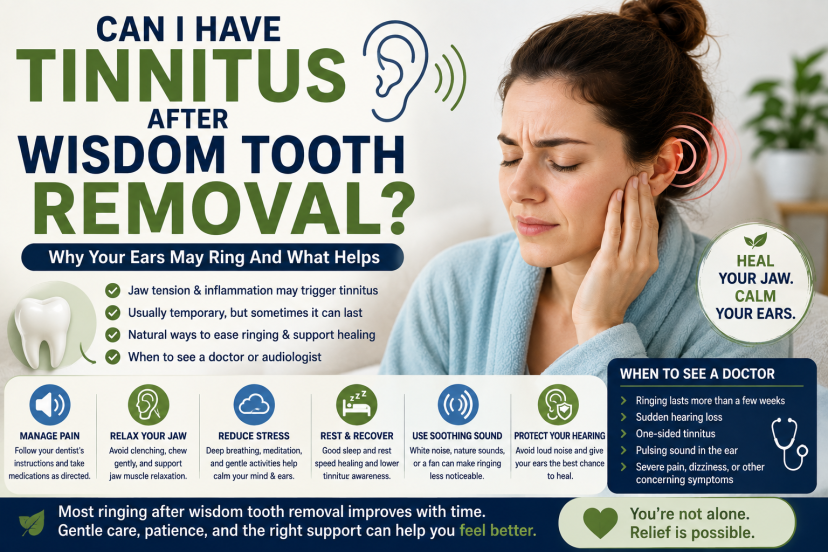
Recovering from wisdom tooth surgery can already mean dealing with jaw soreness, swelling, disrupted sleep, and difficulty eating. If ringing, buzzing, humming, or whooshing suddenly appears in your ear afterward, it’s understandable to feel concerned—especially when the noise becomes more noticeable in a quiet bedroom. If you’re asking, Can I have tinnitus after wisdom tooth removal? It is possible to notice tinnitus around the time of dental surgery, but wisdom tooth extraction is not considered a common direct cause of tinnitus. Jaw muscle tension, inflammation, changes in the way you hold or move your jaw, stress, and temporomandibular joint (TMJ) irritation may influence tinnitus in some people.
The timing can also be coincidental, so new tinnitus should not automatically be blamed on the extraction.
The encouraging news is that post-surgical jaw discomfort usually improves as healing progresses. Here’s how the jaw and ears may be connected, what you can safely do during recovery, and when tinnitus deserves professional evaluation.
🔎 Quick Answer: Can I Have Tinnitus After Wisdom Tooth Removal?
Yes, you can notice tinnitus after wisdom tooth removal, although the extraction itself is not a common established cause. Jaw inflammation, muscle tension, TMJ irritation, stress, and altered jaw movement during recovery may influence somatosensory tinnitus in susceptible people. Symptoms may improve as your jaw heals, but persistent tinnitus, sudden hearing loss, pulsatile tinnitus, or significant ear symptoms should be professionally evaluated.
Key Takeaways
Most likely cause: If tinnitus begins around wisdom tooth recovery, jaw muscle tension, swelling, TMJ irritation, stress, or an unrelated hearing issue may be contributing.
Usually serious? Usually not, particularly without hearing loss or other warning signs, but new tinnitus should be monitored rather than automatically attributed to dental surgery.
First thing to check: Notice whether your tinnitus changes when you gently open your mouth, move your jaw, clench your teeth, or as post-surgical swelling improves.
Best solution: If you’re wondering whether you can have tinnitus after wisdom tooth removal, follow your oral surgeon’s recovery instructions, avoid unnecessary jaw strain, manage stress, and have persistent or concerning tinnitus evaluated.
🦷 Why Could Tinnitus Appear After Wisdom Tooth Removal?
Your wisdom teeth and inner ear aren’t directly connected, so removing a tooth doesn’t normally create tinnitus through a simple tooth-to-ear pathway.
However, the jaw and auditory systems do interact through nearby muscles, joints, and nerve pathways.
The temporomandibular joints are located just in front of your ears. These joints connect your lower jaw to your skull and work every time you talk, chew, swallow, or yawn.
Wisdom tooth surgery can temporarily involve:
- Jaw muscle soreness
- Facial swelling
- Limited mouth opening
- Changes in chewing
- Muscle guarding
- Stress and poor sleep
For some people, sensory input from the jaw or neck can influence tinnitus. This is known as somatosensory or somatic tinnitus.
That doesn’t mean every case of tinnitus after dental work comes from the jaw. It simply provides one plausible explanation that may be considered.
👂 Signs Your Tinnitus May Have A Jaw Component
One clue is tinnitus that changes when you move your jaw.
Without forcing your recovering jaw, notice whether the ringing changes when you naturally:
- Open or close your mouth
- Move your jaw slightly sideways
- Swallow
- Tighten your jaw muscles
- Move your neck
You may notice the tinnitus temporarily becomes louder, softer, higher pitched, or lower pitched.
Other clues can include:
- Jaw stiffness
- Facial muscle soreness
- TMJ clicking or popping
- Tenderness around the temples
- Teeth clenching
- Ear-area pressure without an obvious ear problem
These symptoms don’t prove that wisdom tooth removal caused your tinnitus.
They simply suggest that jaw and muscle signals may be influencing what you’re hearing.
😬 Jaw Tension After Dental Surgery May Play A Role
Your mouth may need to remain open for a significant period during wisdom tooth extraction.
Afterward, jaw muscles can feel tired or sore.

You may also unconsciously protect the surgical area by holding your jaw differently or chewing primarily on one side.
For someone prone to jaw-related tinnitus, this temporary muscular tension could potentially change tinnitus perception.
Stress adds another factor.
Dental surgery, pain, disrupted sleep, and worry about recovery can cause people to clench their jaw without realizing it.
That may create a cycle:
Pain → jaw tension → increased tinnitus awareness → anxiety → more muscle tension.
Breaking that cycle can make recovery more comfortable.
⏳ How Long Can Tinnitus Last After Wisdom Tooth Extraction?
There isn’t a medically established timeline because tinnitus isn’t a routine expected complication of wisdom tooth removal.
If temporary jaw inflammation, muscle tension, or stress is contributing, tinnitus may improve as those issues settle.
However, don’t assume that ringing should simply be ignored until your mouth finishes healing.

If tinnitus persists, worsens, or is accompanied by hearing changes, an audiologist or ENT can help determine whether an unrelated ear or hearing problem is present.
This is particularly important because tinnitus has many causes.
The fact that it appeared shortly after dental surgery doesn’t necessarily prove that the procedure caused it.
🌿 Follow Your Post-Surgery Instructions Carefully
The best home care immediately after wisdom tooth removal is the recovery plan provided by your dentist or oral surgeon.
Follow their recommendations about:
- Food
- Oral hygiene
- Activity
- Prescribed medications
- Swelling management
- Follow-up appointments
Don’t introduce aggressive jaw exercises, massage directly over a surgical area, or other remedies without checking whether they’re appropriate for your stage of healing.
During early recovery, healing the extraction site takes priority.
As swelling and discomfort decrease, normal comfortable jaw movement generally returns gradually.
If jaw stiffness remains significant, ask your dental professional what movements are safe.
🧘 Reduce Jaw Clenching And Muscle Tension
If you’ve been cleared to resume normal jaw movement, begin paying attention to unnecessary tension.
At rest, your upper and lower teeth usually don’t need to remain tightly together.
Try allowing your:
- Lips to rest comfortably
- Teeth to remain slightly separated
- Jaw muscles to soften
- Shoulders to drop
- Forehead to relax
Check yourself during stressful activities such as driving, working on a computer, or scrolling through your phone.
Some people discover they’ve been clenching for hours without noticing.

Slow breathing can help as well.
Take a gentle breath, then exhale slowly while deliberately relaxing your shoulders and jaw.
Reducing muscle tension won’t guarantee tinnitus disappears, but it may help if your tinnitus has a somatosensory component.
🎧 Use Gentle Sound When Tinnitus Becomes Distracting
Whether tinnitus is related to your jaw or something else, it often becomes more noticeable in silence.
Sound enrichment can reduce the contrast between tinnitus and your environment.
Try:
- A bedside fan
- White or pink noise
- Rainfall
- Ocean waves
- Soft instrumental music
- Nature sounds
- A sound machine
Apps such as Calm, Headspace, myNoise, and Insight Timer also provide background and relaxation sounds.
Keep the volume low and comfortable.
You don’t need to blast sound loudly enough to completely cover the tinnitus.
Gentle environmental sound may be enough to shift your attention away from the ringing while you rest and recover.
💤 Protect Your Sleep During Recovery
Wisdom tooth discomfort and tinnitus can both interfere with sleep.
Unfortunately, poor sleep may increase stress and make tinnitus feel more intrusive the next day.
Follow your oral surgeon’s instructions regarding sleeping position after surgery.
Beyond that, create a calm sleep environment.
Use gentle background sound if silence makes tinnitus difficult to ignore. Dim the lights before bed and avoid repeatedly checking whether the tinnitus has changed.
Try to keep your wake-up time reasonably consistent.
If you’re lying awake worrying about the ringing, focus on slow breathing or a relaxing audio track rather than continually testing your ears.
💊 Could Medication After Wisdom Tooth Removal Cause Tinnitus?
Some medications can be associated with tinnitus, depending on the drug, dosage, and individual circumstances.
That does not mean you should stop prescribed pain medication or antibiotics on your own.
If tinnitus started soon after beginning a new medication, tell your dentist, oral surgeon, physician, or pharmacist.
Give them the exact medication name and dose.
They can determine whether tinnitus is a recognized possible adverse effect and whether any change is appropriate.
Stopping medication without professional advice can create unnecessary risks, particularly while you’re recovering from surgery.
💊 What About Magnesium, B12 And Ginkgo Biloba?
People looking for natural tinnitus relief often encounter supplements such as magnesium, vitamin B12, and ginkgo biloba.
None is a proven treatment specifically for tinnitus following wisdom tooth extraction.
Ginkgo biloba: Research hasn’t consistently demonstrated reliable tinnitus improvement for most people, and ginkgo can interact with medications.
Magnesium: Magnesium is essential for normal muscle and nerve function, but supplementation isn’t a proven treatment for post-dental tinnitus unless there is a specific medical reason for taking it.
Vitamin B12: Correcting a genuine B12 deficiency is important for neurological health, but extra B12 isn’t a universal tinnitus remedy.
Be particularly careful with supplements while recovering from surgery.
Some herbal products may affect bleeding or interact with medications. Ask your healthcare provider before adding them.
🔊 Avoid Loud Noise While Your Tinnitus Settles
If tinnitus suddenly appears, it’s tempting to repeatedly test your hearing with headphones or loud sounds.
Don’t.
Give your auditory system a normal, comfortable sound environment.
Keep music and headphones at moderate levels and use appropriate hearing protection around genuinely loud activities such as concerts, power tools, firearms, and machinery.
At the same time, you generally don’t need to sit in complete silence or wear earplugs around normal household sounds.
Ordinary environmental sound can actually make tinnitus less noticeable.
🩺 When To See An ENT Or Audiologist
If tinnitus begins after wisdom tooth removal and doesn’t improve, professional evaluation can help determine whether the timing is dental-related or coincidental.
An audiologist can perform a hearing test. An ENT can investigate medical causes when appropriate.
You should also contact your dentist or oral surgeon if you’re experiencing unusual or worsening dental recovery symptoms.
Seek prompt medical attention if tinnitus:
- Appears with sudden hearing loss
- Is accompanied by a sudden significant change in hearing
- Pulses in time with your heartbeat
- Occurs persistently in only one ear
- Is accompanied by severe dizziness
- Develops with neurological symptoms
- Changes dramatically without explanation
Sudden hearing loss accompanied by tinnitus needs urgent assessment because treatment may be time-sensitive.
❓ Frequently Asked Questions
Can Wisdom Tooth Removal Cause Ringing In The Ears?
Tinnitus isn’t considered a common direct complication of wisdom tooth extraction. However, temporary jaw tension, inflammation, TMJ irritation, stress, or other factors surrounding dental surgery may influence tinnitus in some people.
Is Tinnitus After Dental Work Temporary?
It can be temporary, especially if jaw muscle tension or stress contributes. However, tinnitus has many possible causes, so persistent symptoms should be evaluated rather than automatically blamed on dental work.
Can Jaw Inflammation Cause Tinnitus?
Jaw and TMJ problems can influence tinnitus in some people through sensory pathways involving the jaw, neck, and auditory system. Tinnitus that changes with jaw movement may suggest a somatosensory component.
Can An Impacted Wisdom Tooth Cause Tinnitus?
There isn’t strong evidence that an impacted wisdom tooth is a common direct cause of tinnitus. Jaw pain, muscle tension, or TMJ-related issues occurring around the same time may influence symptoms in some individuals.
Why Does My Ear Feel Strange After Wisdom Tooth Removal?
Jaw swelling, muscle soreness, referred sensations, and changes in jaw movement can sometimes create discomfort around the ear because the jaw joint is located nearby. Persistent hearing changes or ear symptoms should be evaluated.
Can Dental Anesthesia Cause Tinnitus?
Tinnitus isn’t a routine expected effect of dental anesthesia. If tinnitus begins after a procedure and persists, discuss the timing, medications, and anesthetic agents used with your dentist and healthcare provider.
When Should I Worry About Tinnitus After Dental Surgery?
Seek medical advice if tinnitus persists or worsens, and seek prompt evaluation if it occurs with sudden hearing loss, pulsates with your heartbeat, is strongly one-sided, or is accompanied by severe dizziness or neurological symptoms.
🌿 Final Thoughts: Give Your Jaw Time To Heal, But Don’t Ignore Your Ears
So, can I have tinnitus after wisdom tooth removal? You can certainly notice tinnitus during the recovery period, although wisdom tooth extraction isn’t considered a common direct cause.
Temporary jaw inflammation, muscle tension, altered chewing, TMJ irritation, stress, sleep disruption, medications, or an unrelated hearing issue may all need to be considered.
During recovery, focus on the basics.
Follow your oral surgeon’s instructions, avoid unnecessary jaw clenching, protect your sleep, use gentle background sound when tinnitus becomes distracting, and stay away from excessive noise.
Most importantly, don’t assume that every new symptom after dental surgery must have been caused by the procedure.
If the ringing persists, your hearing changes, or you’re concerned about what you’re experiencing, an audiologist or ENT can help clarify what’s happening.
With appropriate care, patience, and consistent self-care, you can support both your dental recovery and your ability to cope calmly with tinnitus while you determine its cause.
Medical Disclaimer: This article is for general educational purposes only and isn’t a substitute for professional medical or dental advice, diagnosis, or treatment. Consult a qualified healthcare professional about persistent, sudden, pulsatile, one-sided, or otherwise concerning tinnitus.
 Explore more:
- How Can I Stop Tinnitus Naturally?
- Does Tinnitus Go Away? What’s New In 2026
- Vascular Tinnitus Causes