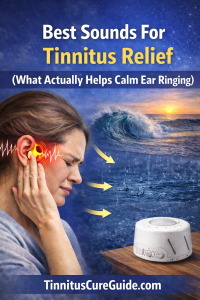
Best Sounds For Tinnitus Relief (What Actually Helps Calm Ear Ringing)
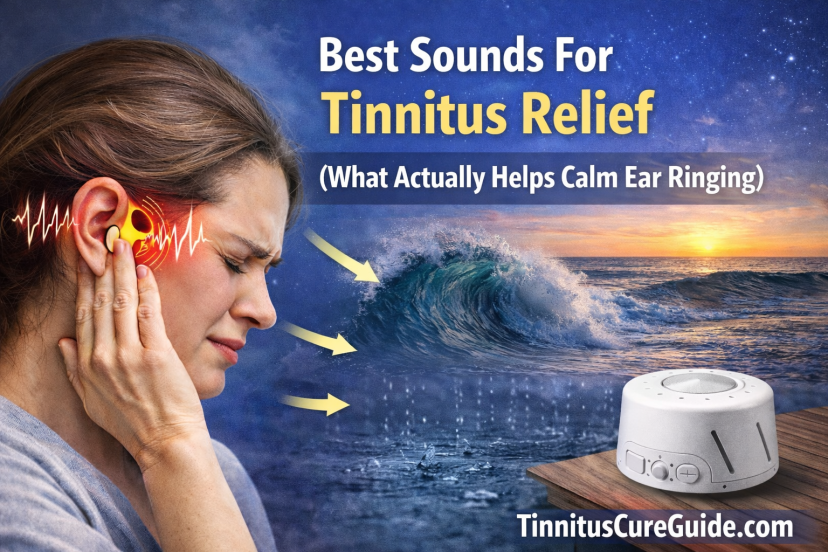
If you’ve ever tried to relax in complete silence — only to notice your tinnitus getting louder — you’re not alone.
For many people, ear ringing, buzzing, or hissing becomes most noticeable when the world around them goes quiet. This is especially common at night, during work breaks, or when trying to fall asleep.
That’s why one of the most widely recommended strategies is surprisingly simple:
👉 Use sound to reduce how noticeable tinnitus feels
But here’s where most people get it wrong…
Not all sounds work the same way. Some can actually make tinnitus more noticeable, while others can help your brain slowly tune it out.
In this guide, you’ll learn:
- Which sounds work best for tinnitus relief
- Why do they help from a brain-based perspective
- How to use them correctly (this is key)
- What many people in Germany and worldwide use daily
⚡ Quick Answer
The best sounds for tinnitus relief include white noise, pink noise, nature sounds (like rain or ocean waves), and soft background music. These sounds help reduce the contrast between silence and tinnitus, making the ringing less noticeable and easier to ignore.
🧠 Why Sound Helps With Tinnitus
To understand why sound works, you need to understand how tinnitus behaves.
Tinnitus is not just an ear problem — it’s also about how your brain processes sound.
When your environment is quiet:
- There are fewer external sounds
- Your brain has less input to process
- Internal signals (like tinnitus) become more noticeable
👉 This is why tinnitus often feels louder at night.
🔄 The Key Concept: “Sound Contrast”
Think of tinnitus like a small light in a dark room.
- In darkness → it looks very bright
- In a lit room → it becomes less noticeable
👉 Sound works the same way.
By adding background noise, you reduce contrast — and your brain stops focusing as much on tinnitus.
🔊 1. White Noise (Most Widely Used)
White noise is one of the most common tools for tinnitus relief.
It’s a consistent sound that contains all frequencies at equal intensity.
✔️ What It Sounds Like
- Soft static
- TV noise
- A steady “shhhh” sound
✔️ Why It Helps
- Covers a wide range of tinnitus tones
- Reduces silence completely
- Helps the brain shift attention
👍 Best For
- Sleeping
- Quiet rooms
- First-time users
⚠️ Tip
Keep the volume low.
👉 White noise should blend with tinnitus — not overpower it.
🌊 2. Nature Sounds (Most Relaxing Option)
Nature sounds are extremely popular in Germany and across Europe.
They are often preferred because they feel more natural and calming than artificial noise.
✔️ Common Options
- Rain
- Ocean waves
- Wind through trees
- Flowing water
✔️ Why They Work
- Reduce stress and tension
- Engage the brain gently
- Feel less repetitive than white noise
👍 Best For
- Evening relaxation
- Reducing stress-related tinnitus
- Falling asleep naturally
🎧 3. Pink Noise (Better For Long Listening)
Pink noise is similar to white noise — but softer and more balanced.
✔️ What It Sounds Like
- Deeper, smoother static
- Less sharp than white noise
✔️ Why It Helps
- Easier to listen to for long periods
- Less tiring on the ears
- Often preferred for sleep
👍 Best For
- Light sleepers
- Overnight use
- Continuous background sound
🎵 4. Soft Background Music
Some people find noise too “mechanical” — and prefer music instead.
✔️ Best Types Of Music
- Instrumental music
- Ambient tracks
- Lo-fi beats
- Slow piano or acoustic
✔️ Why It Helps
- Engages attention more than noise
- Improves mood
- Distracts from tinnitus
👍 Best For
- Work environments
- Relaxation during the day
- Reading or studying
⚠️ Important
Avoid fast or intense music — it can increase stimulation instead of reducing it.
🌬️ 5. Everyday Ambient Sounds (Simple But Effective)
You don’t always need apps or devices.
Simple sounds around your home can work just as well.
✔️ Examples
- A fan
- Air conditioner
- Humidifier
- Light background TV
✔️ Why It Helps
- Continuous and predictable
- Easy to use
- No setup required
👍 Best For
- Beginners
- Quick relief
- Daily background use
⚠️ How To Use Sound Correctly (Most People Get This Wrong)
Using sound incorrectly can reduce its effectiveness.
✅ Best Practices
- Keep volume low to moderate
- Use sound consistently
- Let tinnitus still be slightly audible
- Use sound as a background layer
👉 The goal is blending, not blocking.
❌ Common Mistakes
- Playing the sound too loudly
- Trying to completely “cover” tinnitus
- Switching sounds constantly
- Only using sound occasionally
👉 Consistency is more important than intensity.
😴 Best Sounds For Sleep (Quick Setup)
If tinnitus affects your sleep, try this:
🌙 Simple Night Routine
- Use pink noise or rain sounds
- Keep volume low and steady
- Start sound before going to bed
- Combine with a consistent sleep schedule
👉 This helps your brain relax faster and reduces nighttime tinnitus awareness.
🧩 Real-Life Scenario
Imagine this:
You go to bed in complete silence.
Within minutes, the ringing becomes dominant.
Now you add soft rain sounds in the background.
Your brain shifts focus…
and the tinnitus fades into the background.
👉 This is how sound therapy works in everyday life.

📊 Expectation vs Reality
- Expectation: Sound will eliminate tinnitus
- Reality: Sound makes it less noticeable
- Expectation: louder sound = better results
- Reality: Subtle sound works best
- Expectation: Instant results
- Reality: Improvement builds over time
🧠 Long-Term Benefit: Habituation
Over time, consistent sound use helps your brain:
- Pay less attention to tinnitus
- Reduce emotional reaction
- Treat it as “unimportant”
👉 This process is called habituation — and it’s a key goal in tinnitus management.
✅ Self-Assessment Checklist
- Do you notice tinnitus more in silence?
- Does background noise help reduce it?
- Do certain sounds feel more comfortable?
- Is your sleep affected?
👉 Your answers help guide the best sound choice for you.
❓ FAQs: Best Sounds For Tinnitus Relief
1. What is the best sound frequency for tinnitus relief?
There is no single best frequency. Broad sounds, such as white or pink noise, are commonly used because they cover a wide range of tones.
2. Should I use sound all night for tinnitus?
Many people benefit from continuous low-level sound during sleep, especially if tinnitus feels worse in silence.
3. Can music help tinnitus?
Yes, soft and calming music can help distract the brain and reduce tinnitus awareness.
4. Is white noise safe long-term?
Yes, as long as it is played at a safe, moderate volume.
5. Why does silence make tinnitus worse?
Silence removes external sounds, making tinnitus more noticeable and easier for the brain to focus on.
🏁 Conclusion – Best Sounds For Tinnitus Relief
The best sounds for tinnitus relief are not about eliminating the ringing — but about changing how your brain responds to it.
Most people find relief using:
- White noise
- Nature sounds
- Pink noise
- Soft background music
With consistent use, these sounds can make tinnitus feel much less intrusive over time.
⚠️ Disclaimer
This content is for informational purposes only and is not medical advice. If symptoms persist or worsen, consult a qualified healthcare professional.
 Explore more: