Can Iron Deficiency Cause Tinnitus? What Research Says And How To Find Relief
Living with tinnitus can be physically and emotionally draining. The constant ringing, buzzing, humming, or whooshing may interfere with work, conversations, relaxation, and sleep. While many people associate tinnitus with loud noise exposure or aging, nutritional deficiencies can sometimes play a role as well. One question that often comes up is: Can iron deficiency cause tinnitus?
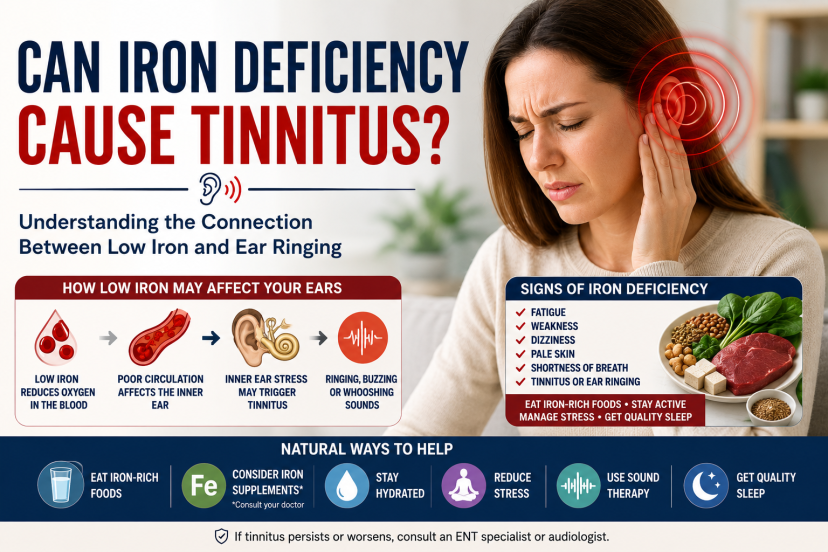
The answer is possibly. Iron deficiency—especially when it leads to iron deficiency anemia—may contribute to tinnitus in some individuals by reducing oxygen delivery throughout the body, including the delicate structures of the inner ear.
Although iron deficiency is not one of the most common causes of tinnitus, correcting low iron levels may improve symptoms if a deficiency is contributing to the problem.
Let’s take a closer look at the connection.
⭐ Quick Answer
Yes, iron deficiency may contribute to tinnitus in some people, particularly if it causes anemia. Low iron reduces the blood’s ability to carry oxygen efficiently, which may affect the inner ear and auditory nerves. If iron deficiency is identified and treated, tinnitus may improve, although not everyone experiences complete relief.
🩸 How Iron Supports Healthy Hearing
Iron is an essential mineral that helps your body produce hemoglobin, the protein in red blood cells that carries oxygen.
Every organ—including the tiny structures inside the inner ear—depends on a steady oxygen supply.
Healthy circulation supports:
- Hearing nerve function
- Inner ear cells
- Blood vessel health
- Energy production
- Brain function
When iron levels become too low, oxygen delivery decreases, which may contribute to hearing-related symptoms in some individuals.
👂 Can Iron Deficiency Cause Tinnitus?
Research suggests there may be a connection between iron deficiency anemia and tinnitus.
Low oxygen delivery may temporarily affect:
- The cochlea (inner ear)
- Auditory nerve pathways
- Blood circulation
- Overall nerve function
Some studies have found that people with anemia may have a higher risk of hearing problems, including tinnitus.
However, iron deficiency is not considered a common cause of tinnitus, and many people with tinnitus have completely normal iron levels.
🔍 Why Low Iron May Affect The Inner Ear
The cochlea is highly sensitive to changes in blood flow.
Because it requires a constant supply of oxygen-rich blood, even small changes in circulation may affect hearing.
Possible mechanisms include:
- Reduced oxygen delivery
- Decreased blood flow
- Increased fatigue affecting stress levels
- Changes in nerve signaling
These effects may increase awareness of ringing or make existing tinnitus seem louder.
⚠️ Symptoms Of Iron Deficiency That May Occur Alongside Tinnitus
If iron deficiency is contributing to your symptoms, you may also experience:
- Fatigue
- Weakness
- Pale skin
- Shortness of breath
- Dizziness
- Frequent headaches
- Cold hands and feet
- Brittle nails
- Restless legs
- Difficulty concentrating
- Rapid heartbeat
Some individuals also report:
- Ringing in the ears
- Pulsatile tinnitus
- Feeling lightheaded when standing
These symptoms warrant evaluation by a healthcare provider.
🩺 Common Causes Of Iron Deficiency
Iron deficiency develops for several reasons.
Common causes include:
Heavy Menstrual Bleeding
One of the most common causes among women of reproductive age.
Poor Dietary Intake
Low consumption of iron-rich foods increases risk.
Pregnancy
Iron requirements increase significantly during pregnancy.
Digestive Disorders
Conditions such as celiac disease or inflammatory bowel disease may reduce iron absorption.
Internal Bleeding
Ulcers, colon polyps, or gastrointestinal bleeding can gradually lower iron levels.
Because iron deficiency may indicate an underlying medical condition, it should never be ignored.
🍽️ Foods That Naturally Increase Iron Intake
Many people can improve their iron intake through diet.
Excellent sources include:
Animal Sources (Heme Iron)
- Lean beef
- Turkey
- Chicken
- Liver
- Tuna
- Sardines
Plant Sources (Non-Heme Iron)
- Lentils
- Beans
- Chickpeas
- Spinach
- Pumpkin seeds
- Tofu
- Fortified breakfast cereals
Eating vitamin C-rich foods alongside plant-based iron helps improve absorption.
Good choices include:
- Oranges
- Strawberries
- Bell peppers
- Broccoli
- Kiwi
💊 Should You Take Iron Supplements?
Iron supplements should only be taken if recommended by your healthcare provider.
Too much iron can be harmful.
Before starting supplements, your provider may order blood tests such as:
- Hemoglobin
- Ferritin
- Serum iron
- Total iron-binding capacity (TIBC)
If iron deficiency is confirmed, supplementation often improves energy and overall health.
Whether tinnitus improves depends on whether low iron was contributing to the symptoms.
🎵 Sound Therapy Can Help Regardless Of The Cause
Even if iron deficiency contributes to tinnitus, sound therapy remains one of the most effective coping tools.
Many people benefit from:
- White noise
- Ocean waves
- Rain sounds
- Nature recordings
- Soft music
Popular U.S. apps include:
- ReSound Relief
- Widex Zen
- BetterSleep
- myNoise
Modern hearing aids may also include built-in tinnitus masking programs.
🌿 Other Supplements Sometimes Discussed For Tinnitus
Although no supplement cures tinnitus, several nutrients have been studied.
Always consult your healthcare provider first.
Magnesium
Magnesium supports healthy nerve function and circulation.
Some people with low magnesium levels may benefit from supplementation.
Vitamin B12
Vitamin B12 deficiency has been associated with tinnitus in some individuals.
Correcting a deficiency may improve neurological health.
Ginkgo Biloba
Ginkgo biloba remains one of the most widely discussed herbal supplements for tinnitus.
Scientific evidence remains mixed, with benefits varying between individuals.
🧘 Relaxation Techniques May Reduce Tinnitus Awareness
Stress often makes tinnitus more noticeable.
Relaxation techniques can help calm the nervous system.
Helpful options include:
- Deep breathing
- Meditation
- Progressive muscle relaxation
- Gentle yoga
- Walking
- Mindfulness
Practicing regularly may reduce the emotional impact of tinnitus.
💚 Healthy Lifestyle Habits That Support Ear Health
Good overall health supports healthy hearing.
Consider these daily habits:
- ✔ Eat a balanced diet.
- ✔ Stay hydrated.
- ✔ Exercise regularly.
- ✔ Get enough sleep.
- ✔ Protect your ears from loud noise.
- ✔ Manage stress.
- ✔ Avoid smoking.
- ✔ Limit excessive alcohol.
These habits support circulation, which benefits the inner ear.
🚨 When To See A Doctor
Schedule an appointment with your healthcare provider, ENT specialist, or audiologist if:
- Tinnitus lasts longer than one to two weeks.
- Ringing occurs in only one ear.
- You experience sudden hearing loss.
- Tinnitus pulses with your heartbeat.
- You have ongoing fatigue or dizziness.
- You suspect iron deficiency.
- Symptoms interfere with sleep or daily life.
Your provider may recommend hearing tests along with blood work to check for anemia or nutritional deficiencies.
❓ FAQs: Can Iron Deficiency Cause Tinnitus?
1. Can low iron cause ringing in the ears?
Yes. Low iron, particularly when it causes anemia, may contribute to tinnitus by reducing oxygen delivery to the inner ear.
2. Will treating iron deficiency stop tinnitus?
If iron deficiency is contributing to tinnitus, correcting the deficiency may reduce symptoms. However, tinnitus often has multiple contributing factors.
3. Can anemia cause pulsatile tinnitus?
Yes. Some people with anemia experience pulsatile tinnitus because changes in blood flow become more noticeable.
4. How do I know if I have iron deficiency?
A blood test measuring ferritin, hemoglobin, and iron levels is the most reliable way to diagnose iron deficiency.
5. Which foods are highest in iron?
Lean red meat, liver, poultry, beans, lentils, spinach, fortified cereals, and pumpkin seeds are excellent sources.
6. Should everyone with tinnitus take iron supplements?
No. Iron supplements should only be taken after laboratory testing confirms a deficiency, as excess iron can be harmful.
7. Can vitamin deficiencies cause tinnitus?
Yes. Vitamin deficiencies in iron, vitamin B12, vitamin D, and magnesium have all been studied for possible links to tinnitus, although they are not the cause in most people.
🌟 Final Thoughts
So, can iron deficiency cause tinnitus? The answer is yes, it can in some cases, particularly when low iron leads to anemia and reduced oxygen delivery to the inner ear. While iron deficiency is not one of the most common causes of tinnitus, it is a treatable condition that should not be overlooked.
If you have tinnitus along with fatigue, dizziness, weakness, or other signs of low iron, it’s worth discussing blood testing with your healthcare provider. Correcting a deficiency may improve your overall health and, for some people, reduce the intensity of ear ringing.
Remember that successful tinnitus management often involves several strategies working together. Good nutrition, hearing protection, sound therapy, stress reduction, quality sleep, and regular medical care can all play an important role in helping you live well despite tinnitus.
Medical Disclaimer: This article is for educational purposes only and should not replace professional medical advice, diagnosis, or treatment. If you experience persistent tinnitus, sudden hearing loss, symptoms of anemia, or worsening ear-related symptoms, consult your healthcare provider, ENT specialist, or audiologist for a complete evaluation.
 Explore more:
- Can Poor Posture Cause Tinnitus?
- Can Vitamin D Deficiency Cause Tinnitus?
- Can Sinus Pressure Cause Tinnitus?