Why Tinnitus Gets Louder In Quiet Bedrooms At Night
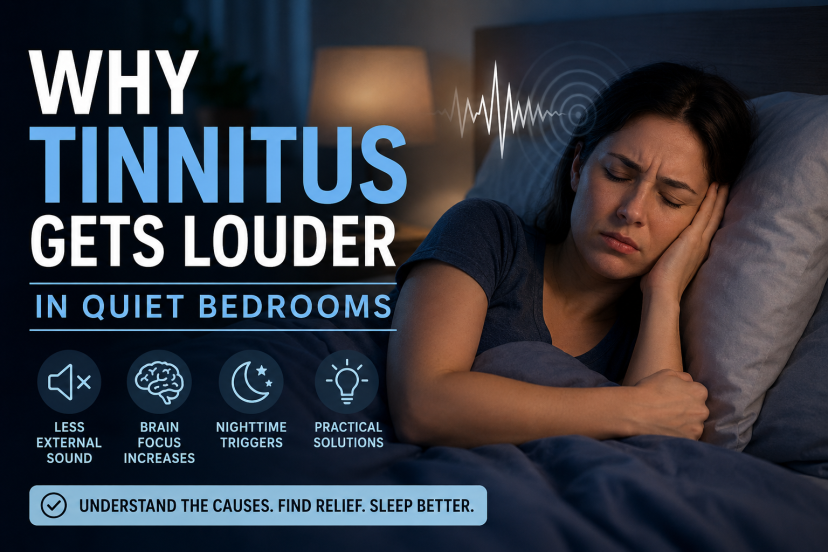
You finally crawl into bed after a long day, hoping for peace and quiet. But instead of silence, the ringing starts.
For many people with tinnitus, bedtime is when the buzzing, hissing, humming, or ringing suddenly feels impossible to ignore. During the day, work, conversations, traffic, TV, and everyday life help distract the brain. But in a quiet bedroom, tinnitus can seem louder than ever.
Some people describe it as a high-pitched whistle. Others hear crickets, static, or electrical sounds. And when the room becomes silent, the brain naturally focuses on that internal noise.
The frustrating part? The tinnitus itself may not actually be getting louder. Your brain is simply noticing it more.
The good news is that understanding why this happens can help you reduce nighttime stress and make sleep easier.
🔎 Quick Answer: Why Tinnitus Gets Louder In Quiet Bedrooms
Tinnitus often seems louder in quiet bedrooms because there are fewer external sounds competing for your brain’s attention. In silence, the auditory system becomes more sensitive, making internal ringing easier to notice.

Nighttime factors that may worsen tinnitus awareness include:
- Stress And Anxiety
- Fatigue
- Quiet Surroundings
- Poor Sleep
- Jaw Or Neck Tension
- Alcohol Or Caffeine Before Bed
- Sleeping In Total Silence
For many people, adding gentle background sound and improving nighttime habits can make tinnitus feel much less intense.
🧠 Why It Happens
Your Brain Hates Complete Silence
The brain constantly searches for sound input. During the day, environmental noise keeps the auditory system busy.
But in a silent bedroom:
- The Air Conditioner Stops
- Traffic Noise Fades
- Conversations End
- TV And Music Turn Off
Suddenly, the brain has very little external sound to process. As a result, it becomes more aware of internal sounds like tinnitus.
Many hearing experts compare this to seeing stars in the night sky. During daylight, the stars are still there — you just cannot see them because the sky is bright.
Tinnitus works similarly.
Stress And Hyperawareness Increase Tinnitus
Nighttime is also when people tend to overfocus on symptoms.
Common bedtime thoughts include:
- “Why Is It So Loud Tonight?”
- “What If I Can’t Sleep?”
- “Will This Ever Go Away?”
This stress response activates the nervous system, which can make tinnitus feel even stronger.
The more emotionally reactive the brain becomes, the harder it is to ignore the sound.
Fatigue Makes The Brain More Sensitive
Many tinnitus sufferers notice their ringing feels worse after exhausting days.
Why?
Because mental fatigue reduces the brain’s ability to filter unwanted signals. When you are tired, stressed, or emotionally drained, tinnitus may feel more intrusive.
Poor sleep can also create a vicious cycle:
- Tinnitus Makes Sleep Harder
- Poor Sleep Increases Stress
- Stress Makes Tinnitus Feel Louder
- The Cycle Repeats
Hearing Loss Can Play A Role
For some people, tinnitus becomes more noticeable at night because mild hearing loss reduces environmental sound input.
The brain may attempt to “fill in” missing sound signals, increasing tinnitus awareness.
This is one reason some people notice improvement when using hearing aids or sound therapy devices.
🛏️ Real-Life Triggers And Examples
Sleeping In A Completely Silent Room
Many people think total silence helps sleep. But for tinnitus sufferers, silence often makes ringing stand out more.
Example:
A person who falls asleep with the TV on may barely notice tinnitus. But once the room becomes silent at 2 a.m., the ringing suddenly feels overwhelming.
Stressful Evenings
Arguments, work stress, doomscrolling, or overstimulation before bed can increase nervous system activation.
People often notice louder tinnitus after:
- High-Stress Days
- Emotional Exhaustion
- Panic Attacks
- Long Work Hours
- Poor Sleep
Jaw Clenching And Neck Tension
Tension around the neck, shoulders, and jaw may worsen tinnitus for some individuals.
Common nighttime habits include:
- Clenching Teeth During Sleep
- Sleeping In Awkward Positions
- Using Poor Pillows
- Tight Shoulder Muscles
Some people even notice their tinnitus changes pitch when moving their jaw or neck.
Alcohol, Caffeine, And Late-Night Stimulation
Certain bedtime habits may temporarily increase tinnitus awareness.
Potential triggers include:
- Excess Alcohol
- Energy Drinks
- Strong Coffee At Night
- Nicotine
- Heavy Late Meals
Not everyone reacts the same way, but many people notice patterns over time.
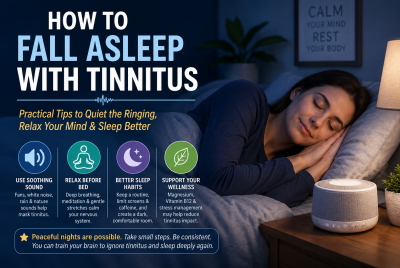
💡 Practical Tips To Reduce Tinnitus At Night
Use Gentle Background Sound
This is one of the most effective strategies for nighttime tinnitus.

Helpful sound options include:
- White Noise
- Rain Sounds
- Ocean Waves
- Soft Fans
- Calm Instrumental Music
The goal is not to drown out tinnitus completely. Instead, background sound reduces contrast between silence and ringing.
Avoid Total Silence
Even a subtle sound can help.
Try:
- A Small Fan
- A White Noise Machine
- Low Nature Sounds
- Soft Sleep Audio
Many people sleep better when the room feels acoustically “soft” instead of silent.
Create A Calming Bedtime Routine
Reducing nervous system stress before bed may lower tinnitus awareness.
Helpful habits include:
- Dim Lighting
- Stretching
- Reading
- Calm Music
- Breathing Exercises
- Avoiding Stressful Content
Simple routines signal safety to the brain.
Reduce Neck And Jaw Tension
If your tinnitus worsens with tension:
- Stretch Your Neck Gently
- Improve Pillow Support
- Avoid Jaw Clenching
- Relax Your Shoulders
- Consider Gentle Massage
Some people benefit from physical therapy or TMJ evaluation if jaw issues are involved.
Limit Stimulants Before Bed
You do not always need to eliminate caffeine completely.
Instead, try:
- Avoiding Caffeine Late In The Day
- Reducing Alcohol Near Bedtime
- Staying Hydrated
- Tracking Personal Triggers
Patterns matter more than rigid rules.
⚠️ Common Mistakes
Obsessively Monitoring The Ringing
Constantly checking whether tinnitus is louder trains the brain to focus on it more.
Instead of asking:
- “Is It Louder Tonight?”
Try:
- “What Can Help Me Relax Right Now?”
This small mindset shift matters.
Panicking During Spikes
Temporary tinnitus spikes are common.
Poor sleep, stress, illness, allergies, loud noise exposure, or fatigue may temporarily increase symptoms.
Panicking often increases nervous system arousal, which can worsen perception even more.
Expecting Instant Silence
Most tinnitus management focuses on reducing distress and improving quality of life — not necessarily eliminating every sound immediately.
Many people improve significantly once the brain stops treating tinnitus like a threat.
❓ FAQs
Is tinnitus actually louder at night?
Usually not. The environment becomes quieter, so your brain notices tinnitus more easily.
Why does tinnitus sound worse when trying to sleep?
Quiet surroundings, stress, fatigue, and increased attention to internal sounds all make tinnitus more noticeable at bedtime.
Should I sleep with white noise?
Many tinnitus sufferers find white noise or gentle background sound extremely helpful for sleep and relaxation.
Can anxiety make tinnitus louder?
Yes. Anxiety and stress can increase nervous system sensitivity, making tinnitus feel stronger or more intrusive.
Is sleeping in silence bad for tinnitus?
Not necessarily, but complete silence often makes tinnitus easier to hear. Many people sleep better with a soft background sound.
🌟 Final Thoughts
If your tinnitus seems louder in quiet bedrooms, you are not imagining it — and you are definitely not alone.
For many people, the nighttime ringing is less about actual volume and more about how the brain processes sound in silence. Stress, fatigue, tension, and hyperfocus can all make tinnitus feel more intense after dark.
The encouraging news is that small changes often help:
- Softer Background Sound
- Better Sleep Habits
- Stress Reduction
- Relaxation Techniques
- Less Nighttime Silence
Over time, many people find that their brain gradually stops reacting so strongly to tinnitus, especially when fear and hyperawareness decrease.
The goal is not perfection. The goal is to make nights calmer, more manageable, and less controlled by the ringing.
Disclaimer: This article is for informational and educational purposes only and is not intended as medical advice, diagnosis, or treatment. Always consult a qualified healthcare professional regarding tinnitus, hearing changes, or any medical concerns.
 Explore more:
- Can Shoulder Pain Cause Tinnitus?
- Tinnitus Specialist Near Me
- Is Tinnitus A Symptom Of High Cortisol?