Can Vitamin D Deficiency Cause Tinnitus? What Research Says And How To Support Your Hearing
Living with tinnitus can be overwhelming. Whether you hear ringing, buzzing, humming, hissing, or whooshing sounds, the constant noise can interfere with work, conversations, relaxation, and sleep. Many people notice that their tinnitus changes over time, leading them to wonder whether nutritional deficiencies could be playing a role.
One question that has gained increasing attention is: Can vitamin D deficiency cause tinnitus?
The answer is possibly. While vitamin D deficiency is not considered a direct cause of tinnitus, research suggests that low vitamin D levels may contribute to hearing problems, inflammation, bone health issues, and overall wellness factors that could influence tinnitus in some individuals.
If you’ve recently been diagnosed with low vitamin D or suspect a deficiency, understanding this connection may help you take positive steps toward better ear health.
Quick Answer
Can vitamin D deficiency cause tinnitus?
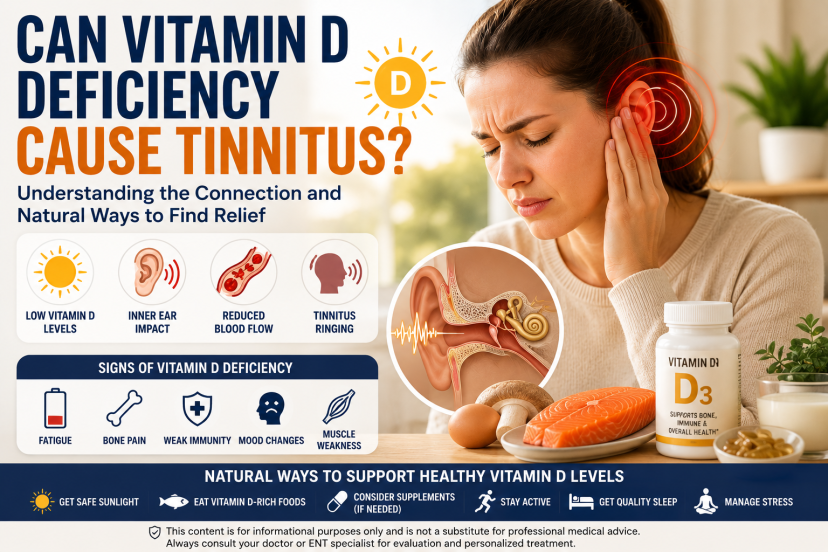
Possibly. Vitamin D deficiency is not a proven direct cause of tinnitus, but some studies suggest it may contribute to or worsen symptoms in certain people. Vitamin D supports healthy nerves, bones, immune function, and circulation—all of which play important roles in hearing health. If a deficiency is present, correcting it may improve overall health and, in some cases, reduce tinnitus symptoms.
☀️ Why Vitamin D Is Important For Hearing Health
Vitamin D is best known for supporting strong bones, but it also plays several other important roles throughout the body.
Healthy vitamin D levels help support:
- Bone strength
- Immune system function
- Muscle function
- Nerve health
- Healthy inflammation response
- Calcium regulation
The tiny bones and delicate structures inside the ear rely on proper nutrition and healthy circulation to function normally.
Although scientists are still studying the relationship, vitamin D deficiency may indirectly affect these systems.
👂 Can Vitamin D Deficiency Cause Tinnitus?
Current research suggests there may be an association between vitamin D deficiency and tinnitus, but scientists have not proven that one directly causes the other.
Several studies have found that some people with chronic tinnitus have lower vitamin D levels than people without tinnitus.
Possible explanations include:
- Increased inflammation
- Poor bone health affecting the middle ear
- Altered nerve function
- Reduced immune health
- Increased risk of certain ear disorders
However, many people with tinnitus have normal vitamin D levels, and many people with vitamin D deficiency never develop tinnitus.
🔍 How Low Vitamin D May Affect The Ears
Vitamin D supports several systems that influence hearing.
Possible mechanisms include:
Bone Health
Vitamin D helps regulate calcium, which keeps the tiny bones of the middle ear healthy.
Nerve Function
Healthy vitamin D levels support normal communication between nerves and the brain.

Inflammation
Low vitamin D has been linked to increased inflammation throughout the body, which may influence certain ear conditions.
Immune Support
Vitamin D plays a role in regulating immune function and may help support recovery from infections that affect the ears.
More research is still needed to fully understand these relationships.
⚠️ Symptoms Of Vitamin D Deficiency
Vitamin D deficiency often develops gradually.
Common symptoms include:
- Fatigue
- Muscle weakness
- Bone pain
- Frequent illness
- Low mood
- Muscle aches
- Back pain
- Poor wound healing
Some individuals with low vitamin D also report:
- Dizziness
- Balance problems
- Ear discomfort
- Increased tinnitus awareness
Because these symptoms overlap with many other conditions, blood testing is the only reliable way to confirm a deficiency.
🩺 Who Is At Higher Risk Of Vitamin D Deficiency?
Certain groups have a greater risk of low vitamin D.
These include:
- Older adults
- People who spend little time outdoors
- Individuals with darker skin tones
- People living in northern climates
- Those with digestive disorders such as Crohn’s disease or celiac disease
- People with obesity
- Individuals following restrictive diets
Your healthcare provider can determine whether testing is appropriate.

🥗 Foods That Naturally Contain Vitamin D
While sunlight helps your body produce vitamin D, food also contributes.
Good dietary sources include:
- Salmon
- Sardines
- Tuna
- Egg yolks
- Fortified milk
- Fortified orange juice
- Fortified breakfast cereals
- Mushrooms exposed to ultraviolet light
Many Americans still struggle to meet recommended vitamin D levels through diet alone.
💊 Should You Take Vitamin D Supplements?
Vitamin D supplements can safely correct a deficiency when taken under medical guidance.
However, more is not always better.
Excess vitamin D may cause:
- High calcium levels
- Kidney stones
- Digestive problems
- Kidney damage in severe cases
A simple blood test measuring 25-hydroxy vitamin D helps determine whether supplementation is needed.
If your tinnitus is related to vitamin D deficiency, improvement may occur gradually as levels return to normal.

🎵 Sound Therapy Can Help Manage Tinnitus
Even if vitamin D deficiency contributes to tinnitus, managing the ringing directly remains important.
Sound therapy helps reduce the contrast between tinnitus and quiet environments.
Many people find relief using:
- White noise
- Ocean waves
- Rain sounds
- Nature recordings
- Soft instrumental music
Popular U.S. apps include:
- ReSound Relief
- Widex Zen
- BetterSleep
- myNoise
Many hearing aids also include built-in tinnitus masking features.
🌿 Other Supplements Commonly Discussed For Tinnitus
No supplement has been proven to cure tinnitus.

However, several nutrients have been studied.
Always consult your healthcare provider before starting supplements.
Magnesium
Supports nerve function and healthy circulation.
Vitamin B12
Low vitamin B12 levels have been associated with tinnitus in some individuals.
Ginkgo Biloba
One of the most researched herbal supplements for tinnitus.
Research findings remain mixed, and benefits vary between individuals.
🧘 Relaxation Techniques May Reduce Tinnitus Distress
Stress often increases awareness of tinnitus.
Relaxation techniques may help reduce the brain’s emotional response to ringing.
Helpful options include:
- Deep breathing
- Meditation
- Progressive muscle relaxation
- Gentle yoga
- Walking outdoors
- Mindfulness exercises
Even 10–15 minutes daily may improve coping skills.
💚 Healthy Lifestyle Habits That Support Ear Health
Healthy daily habits support your ears and your overall well-being.
Consider:
- ✔ Eat a balanced diet.
- ✔ Stay physically active.
- ✔ Maintain healthy vitamin D levels.
- ✔ Protect your hearing from loud noise.
- ✔ Sleep 7–9 hours nightly.
- ✔ Stay hydrated.
- ✔ Manage stress.
- ✔ Avoid smoking.
These habits may reduce tinnitus flare-ups over time.
🚨 When To See A Doctor
You should schedule an evaluation with your healthcare provider, ENT specialist, or audiologist if:
- Tinnitus lasts longer than one to two weeks.
- Ringing occurs in only one ear.
- You experience sudden hearing loss.
- Tinnitus pulses with your heartbeat.
- You have persistent dizziness.
- You suspect vitamin D deficiency.
- Symptoms interfere with sleep or daily activities.
Your provider may recommend hearing tests along with blood work to evaluate vitamin D and other nutritional deficiencies.
❓ FAQs: Can Vitamin D Deficiency Cause Tinnitus?
1. Can low vitamin D cause ringing in the ears?
Low vitamin D may contribute to tinnitus in some individuals, but it is not considered a direct or common cause.
2. Will taking vitamin D stop tinnitus?
If a vitamin D deficiency is contributing to your symptoms, correcting the deficiency may help. However, tinnitus often has multiple causes.
3. How do I know if my vitamin D is low?
A blood test measuring 25-hydroxy vitamin D is the most accurate way to diagnose deficiency.
4. Can vitamin D help hearing health?
Vitamin D supports bone health, nerve function, and immune health, all of which contribute to healthy hearing.
5. Should everyone with tinnitus take vitamin D supplements?
No. Supplements should only be taken if recommended by your healthcare provider after appropriate testing.
6. What other vitamin deficiencies may contribute to tinnitus?
Iron, vitamin B12, magnesium, and vitamin D deficiencies have all been studied for possible links with tinnitus.
7. How long does it take for vitamin D supplements to work?
Blood levels often improve within several weeks to months, depending on the severity of the deficiency and the prescribed dose.
📌 Final Thoughts
So, can vitamin D deficiency cause tinnitus? Current evidence suggests that it may contribute in some people, particularly when low vitamin D affects nerve function, bone health, inflammation, or overall wellness. However, vitamin D deficiency is unlikely to be the sole cause of chronic tinnitus.
If you have tinnitus along with symptoms of vitamin D deficiency, it’s worth discussing blood testing with your healthcare provider. Correcting a deficiency may improve your overall health and could help reduce tinnitus if low vitamin D is playing a role.
Remember that successful tinnitus management is usually built on several healthy habits working together. Proper nutrition, hearing protection, stress management, quality sleep, regular exercise, sound therapy, and personalized medical care can all help make tinnitus less disruptive over time.
Stay patient, stay consistent, and remember that many people successfully learn to manage tinnitus and enjoy a full, active life.
Medical Disclaimer: This article is for educational purposes only and should not replace professional medical advice, diagnosis, or treatment. If you experience persistent tinnitus, sudden hearing loss, severe dizziness, or symptoms of vitamin D deficiency, consult your healthcare provider, ENT specialist, or audiologist for evaluation and personalized care.
 Explore more: