Tinnitus Sleep Problems: Why Ringing in the Ears Feels Worse at Night (And What May Help)
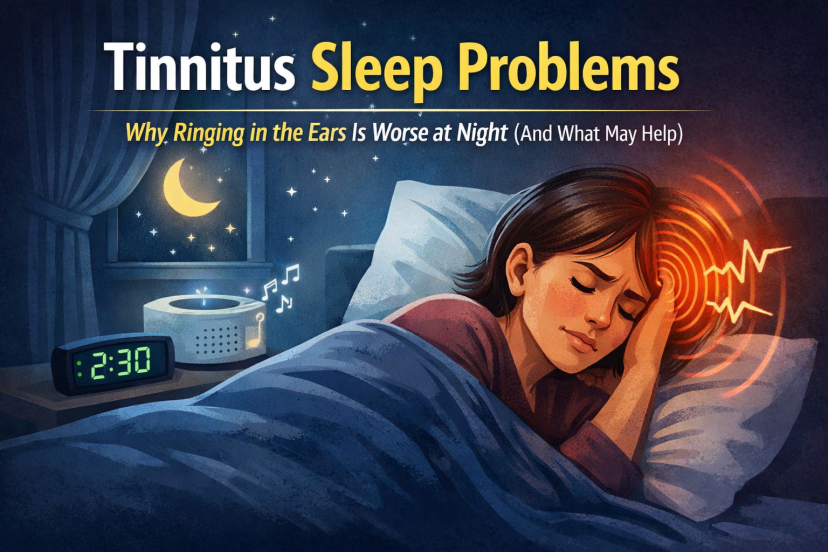
For many adults, tinnitus sleep problems occur because nighttime environments are quiet and the brain has fewer external sounds to focus on. This can make ringing, buzzing, or humming in the ears feel more noticeable when trying to fall asleep.
Many people notice that tinnitus becomes more distracting at bedtime, especially after a stressful day or when lying in silence.
The good news is that research and clinical experience suggest that sleep can often improve when tinnitus is managed with simple sound strategies, relaxation techniques, and consistent sleep habits.
While tinnitus itself may not always disappear completely, many people learn ways to reduce how much it interferes with rest and daily life.
Quick Answer
• Tinnitus often feels louder at night because the environment is quieter
• The brain becomes more aware of internal sounds without background noise
• Stress and fatigue can increase tinnitus perception before sleep
• Many people sleep better using a gentle background sound or relaxation routines
• Persistent or worsening sleep problems may benefit from medical evaluation
Why Tinnitus Can Interfere With Sleep
Tinnitus is not a disease itself. Instead, it is a perception of sound without an external source. People often describe it as ringing, buzzing, humming, or hissing.

During the day, the brain is busy processing external sounds and activities. Traffic, conversations, television, and movement all provide competing sensory input.
At night, several changes occur:
• The environment becomes quiet
• Attention shifts inward
• The brain has fewer distractions
Because of this, the auditory system may amplify internal signals that were less noticeable earlier in the day.
Researchers believe tinnitus involves a complex interaction between the auditory system and the brain’s attention networks. When the brain becomes more aware of the sound, it can trigger frustration or anxiety, which may make it even harder to relax.
This cycle can lead to what many people describe as tinnitus sleep problems, where difficulty sleeping increases awareness of tinnitus—and the tinnitus itself keeps them awake.
A common example: someone lies down in a silent bedroom and suddenly notices the ringing more clearly than they did all day.
Why Tinnitus Often Feels Worse At Night
Many people say the same thing:
“During the day I barely notice it, but at night it’s all I hear.”
Several factors may explain this experience.
Reduced Background Noise
Daytime environments provide natural sound masking.
Examples include:
• Air conditioners
• Traffic noise
• Household activity
• Conversations

When these disappear at night, the auditory system has less external sound to process.
This makes internal sounds stand out more clearly.
Increased Brain Attention
The brain is wired to monitor unusual sensory signals.
When a person lies quietly in bed, the brain may begin focusing more on internal sensations—including tinnitus.
Stress And End-Of-Day Fatigue
Stress hormones and mental fatigue can make sensory signals feel more intense.
Many people notice tinnitus more strongly after:
• Long workdays
• High stress
• Emotional exhaustion
Sleep Anxiety
After several nights of poor sleep, some individuals begin to anticipate sleep problems, which can create additional tension at bedtime.
That tension may increase awareness of tinnitus.
Factors That Can Increase Tinnitus Sleep Problems
Not everyone with tinnitus struggles with sleep, but certain factors can make nighttime symptoms more noticeable.

Common contributors include:
Very Quiet Sleep Environments
Completely silent rooms often make tinnitus easier to hear.
Irregular Sleep Schedules
Inconsistent sleep patterns can disrupt the body’s circadian rhythm and make relaxation harder.
High Stress Levels
Stress is closely linked with both tinnitus perception and insomnia.
Excessive Evening Screen Use
Bright screens before bed can interfere with melatonin production and delay sleep.
Caffeine Or Stimulants
Caffeine late in the day may increase alertness and sometimes intensify tinnitus awareness for some individuals.
Practical Ways To Improve Sleep With Tinnitus
While tinnitus may not disappear overnight, many people find that small changes in nighttime habits can significantly improve sleep quality.
Below are strategies commonly recommended by hearing specialists and sleep experts.

Gentle Sound Enrichment
Adding soft background sound can reduce the contrast between silence and tinnitus.
Options include:
• White noise machines
• Fan noise
• Soft nature sounds
• Low-volume music
• Sound apps designed for sleep
The goal is not to drown out tinnitus completely, but to give the brain something else to listen to.
Consistent Sleep Routine
The body responds well to predictable patterns.
Helpful habits include:

• Going to bed at the same time each night
• Waking at the same time each morning
• Creating a calming pre-sleep routine
Even simple rituals—like dim lighting or reading—can help signal the brain that it’s time to rest.
Relaxation Techniques
Stress management can play an important role in tinnitus perception.
Many people benefit from:
• Deep breathing
• Gentle stretching
• Meditation or mindfulness
• Progressive muscle relaxation
These techniques help calm the nervous system and may reduce bedtime tension.

Bedroom Environment Adjustments
Sleep environments can influence tinnitus awareness.
Consider:
• Using soft background sound
• Keeping the room cool and comfortable
• Avoiding complete silence
• Reducing bright lights before bedtime
Limit Late-Day Stimulation
Sleep specialists often recommend avoiding:
• Caffeine after mid-afternoon
• Intense screen exposure late at night
• Heavy meals close to bedtime
These adjustments may improve sleep quality for many individuals with tinnitus.
What Many Articles Miss About Tinnitus And Sleep
One important point often overlooked is that the brain can adapt to tinnitus over time.
This process is sometimes called habituation.
Habituation means the brain gradually learns that the sound is not a threat and begins to pay less attention to it.
Many people notice that:
• The sound feels less intrusive over months
• Sleep gradually improves
• Their reaction to tinnitus becomes calmer
This doesn’t mean the sound disappears completely, but the brain stops treating it as an urgent signal.
In real life, many individuals who initially struggle with tinnitus sleep problems later report that they barely notice it at night once their stress levels decrease and healthy sleep routines develop.
Understanding this process can be reassuring during the early stages of tinnitus adjustment.
When To Consider Seeing A Healthcare Professional
Although tinnitus is often manageable, certain symptoms should be evaluated by a healthcare professional.
Consider seeking medical advice if tinnitus is accompanied by:
• Sudden hearing loss
• A pulsing sound that follows your heartbeat
• Tinnitus in only one ear with dizziness
• Symptoms after a head injury
• Rapidly worsening ringing or hearing changes
An ear specialist or audiologist can help identify potential underlying causes and discuss management strategies.
Support Options: Some People Explore
Some individuals explore additional tools that may support tinnitus management.
These are not treatments for tinnitus but may help improve daily comfort.
Examples include:
• Hearing evaluations with an audiologist
• Hearing aids for those with hearing loss
• Sound therapy devices
• Cognitive behavioral therapy for tinnitus-related stress
Organizations such as the American Tinnitus Association note that many approaches focus on helping the brain become less reactive to tinnitus rather than eliminating the sound entirely.
FAQ: Tinnitus Sleep Problems
Why is tinnitus louder at night?
Tinnitus often feels louder at night because there are fewer external sounds competing for the brain’s attention. Silence makes internal sounds easier to notice.
Can tinnitus cause insomnia?
Yes. Some people develop insomnia because the ringing becomes distracting when trying to fall asleep. Stress about sleep can also contribute to the problem.
Does background noise help tinnitus at night?
Many people find that soft background sounds such as white noise, fans, or nature sounds make tinnitus less noticeable and help them fall asleep more easily.
Will tinnitus and sleep problems go away?
For many individuals, sleep improves over time as the brain adapts to tinnitus and healthy sleep routines are established.
Should I sleep in complete silence with tinnitus?
Complete silence can make tinnitus more noticeable. Gentle background sound is often more comfortable for people experiencing tinnitus sleep problems.
Key Takeaways
• Tinnitus sleep problems are common because nighttime silence makes internal sounds easier to notice
• Stress and fatigue can increase tinnitus awareness at bedtime
• Gentle background sound can help reduce the contrast between silence and ringing
• Consistent sleep routines and relaxation techniques may improve rest
• Some people experience gradual improvement as the brain adapts to tinnitus
Medical Disclaimer
This article is for educational purposes only and does not constitute medical advice. If you are experiencing persistent tinnitus, hearing changes, or sleep difficulties, consult a qualified healthcare professional for proper evaluation and guidance.
 Explore more: