Tinnitus After Loud Music: What It Means, What To Do, And How To Protect Your Hearing
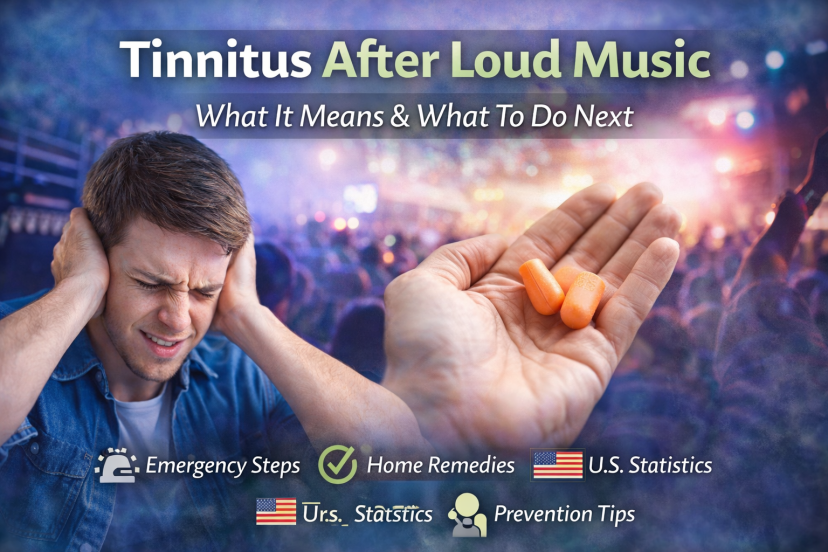
🔊 When The Music Stops… But The Ringing Doesn’t
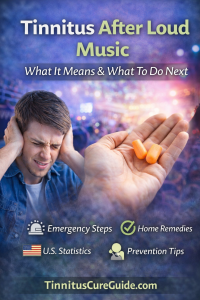
If you’ve ever left a concert, festival, or loud club and noticed ringing, buzzing, or muffled hearing, you’re not alone. Many people experience tinnitus after loud music, and it can feel scary — especially if it doesn’t go away right away.
For some, concert ear ringing fades within hours. For others, it can last days or longer, causing stress, sleep issues, and anxiety. The good news? In many cases, this type of tinnitus is temporary and linked to something called a temporary threshold shift.
This guide explains why tinnitus after loud music happens, what to do immediately after symptoms start, and how to protect your ears long-term.
🌿 What Causes Tinnitus After Loud Music?
Loud sound waves can overstimulate delicate hair cells inside the inner ear. These cells help convert sound into signals your brain understands.
When exposed to high noise levels, these cells can become stressed or temporarily damaged.
Common Loud Noise Sources
-
Concerts and music festivals
-
Nightclubs
-
Sporting events
-
Loud headphones
-
Fireworks shows
As a result, tinnitus after loud music often occurs immediately after high-volume sound exposure.
🧠 What Is Temporary Threshold Shift?
Temporary threshold shift happens when hearing sensitivity temporarily decreases after loud noise exposure.
Temporary Threshold Shift Symptoms
-
Concert ear ringing
-
Muffled hearing
-
Ear fullness sensation
-
Difficulty hearing conversations
Most temporary threshold shift cases improve within 24–72 hours, though some may take longer.
🔊 Symptoms Of Tinnitus After Loud Music
Common symptoms include:
-
Ringing
-
Buzzing
-
Hissing
-
Whooshing sounds
Some people with tinnitus after loud music also notice sensitivity to sound or difficulty sleeping.
🚨 What To Do Immediately After Tinnitus Starts
✅ Step 1: Give Your Ears Quiet Recovery Time
Avoid loud environments for 24–48 hours.
✅ Step 2: Use Gentle Sound Therapy
Low-level background sound can help reduce tinnitus contrast.
Examples:
-
White noise apps
-
Fan sounds
-
Nature sound audio
✅ Step 3: Stay Hydrated
Hydration supports circulation and recovery.
✅ Step 4: Reduce Caffeine And Alcohol
Both can increase nerve sensitivity.
🌿 Home Remedies For Tinnitus After Loud Music
Helpful Natural Support Options
-
Magnesium – Supports nerve and muscle relaxation
-
Vitamin B12 – Supports nerve health
-
Ginkgo biloba – Supports circulation
These nutrients are often studied in tinnitus research for hearing and nerve support.
💆♂️ Relaxation Techniques That Help Reduce Tinnitus Stress
Helpful Relaxation Methods
-
Deep breathing exercises
-
Mindfulness meditation
-
Progressive muscle relaxation
-
Gentle neck stretching
Stress reduction can help reduce tinnitus after loud music perception intensity.
🔊 Sound Therapy Options Used In The U.S.
Common tools include:
-
White noise machines
-
Hearing aids with masking features
-
Sound therapy apps
These are often used if tinnitus after loud music persists longer than expected.
🇺🇸 How Common Is Noise-Induced Tinnitus?
Noise exposure is one of the leading causes of tinnitus in the U.S.
Millions of Americans experience temporary concert ear ringing each year.
🌿 How To Prevent Tinnitus After Loud Music
Hearing Protection Tips
-
Use high-fidelity earplugs at concerts
-
Take listening breaks every hour
-
Stand farther from speakers
-
Keep headphone volume below 60%
Prevention is key to avoiding repeated tinnitus after loud music episodes.
🧘♀️ Lifestyle Habits That Support Ear Recovery
Long-Term Ear Health Habits
-
Maintain cardiovascular health
-
Exercise regularly
-
Reduce chronic stress
-
Eat antioxidant-rich foods
Can You Fix Ear Damage From Loud Music?
Ear damage from loud music depends on how severe the exposure was. In many cases, people experience a temporary threshold shift, where hearing feels muffled and tinnitus appears for hours or days, and this often improves as the inner ear recovers.
However, if delicate hair cells inside the inner ear are permanently damaged, they cannot currently be repaired or regrown. That said, symptoms can often be managed.
Treatments may include sound therapy, hearing aids, tinnitus retraining therapy, and lifestyle changes that support nerve health. Protecting your ears from future loud noise is critical.
If hearing changes or ringing lasts more than a few days, an audiologist or ENT should evaluate you.
🚨 When To See A Doctor Or Audiologist
Seek medical evaluation if tinnitus:
-
Lasts longer than 1 week
-
Gets worse instead of better
-
Occurs with hearing loss
-
Happens in only one ear
-
Includes dizziness or balance issues
❓ FAQs About Tinnitus After Loud Music
1. Is tinnitus after loud music permanent?
Tinnitus after loud music is often temporary and linked to temporary threshold shift. Many people recover within hours or days. However, repeated loud noise exposure can cause permanent damage, so protecting your hearing and monitoring symptoms is important.
2. How long does concert ear ringing last?
Concert ear ringing usually lasts a few hours to 48 hours due to temporary threshold shift. In some cases, it can last several days. If ringing continues longer than a week, you should consider seeing a hearing specialist.
3. Can a temporary threshold shift become permanent?
Temporary threshold shift can become permanent if loud noise exposure happens repeatedly or is extremely intense. Ongoing damage may lead to permanent hearing loss or chronic tinnitus, which is why hearing protection and recovery time are important.
4. Does magnesium help tinnitus recovery?
Magnesium may support tinnitus recovery by helping regulate nerve activity and improving blood flow in the inner ear. Some research suggests it may protect against noise-related damage, but results vary, and it is not a guaranteed treatment.
5. Should I avoid music forever?
6. Can headphones cause tinnitus?
Headphones can contribute to tinnitus if used at high volumes or for long listening sessions. Loud sound delivered directly into the ear increases the risk of hearing damage, so keeping volume moderate and taking listening breaks helps protect hearing.
7. Can sound therapy help temporary tinnitus?
🌿 Final Thoughts: Protect Your Hearing For The Long Run
Experiencing tinnitus after loud music can be scary, but many cases improve with rest and sound care. Protecting your ears, managing stress, and using sound therapy can support recovery and prevent future damage.
Your ears are resilient — but they need protection and recovery time.
⚠️ Medical Disclaimer
This article is for educational purposes only and is not medical advice. Always consult a healthcare professional for diagnosis or treatment.
 Explore more:
- Vestibular Migraine And Ringing In The Ears
- Tinnitus Myths Vs Facts
- What Hormone Imbalance Causes Ringing In The Ears?