Sound Therapy Tinnitus Relief: How Masking Devices And White Noise Help Reduce Ringing Naturally
🔊 When Silence Makes Tinnitus Feel Louder
If you live with tinnitus, you already know how exhausting it can be. The constant ringing, buzzing, or whooshing sound can follow you everywhere — especially at night when the world gets quiet. Many people with tinnitus struggle with sleep, focus, and stress because the sound never fully stops.
This is where sound therapy tinnitus relief techniques can help. Instead of trying to eliminate tinnitus completely, sound therapy helps your brain pay less attention to it. Over time, this can reduce how loud or annoying tinnitus feels.
Millions of people in the U.S. use white noise machines, tinnitus masker devices, and hearing aid sound therapy features to manage symptoms naturally and safely.
🔊 What Is Sound Therapy Tinnitus Relief?
Sound therapy for tinnitus relief uses external sound to reduce how noticeable tinnitus feels. It works by giving your brain another sound to focus on instead of internal ringing.
This approach does not “cure” tinnitus — but it can dramatically improve quality of life.
🧠 How Sound Therapy Helps The Brain
Sound therapy works through brain adaptation, sometimes called habituation.
It helps by:
-
Reducing contrast between tinnitus and silence
-
Lowering stress response to tinnitus
-
Helping the brain filter tinnitus into background noise
-
Improving sleep quality
🔊 Common Tinnitus Symptoms Sound Therapy Can Help
Many people use sound therapy tinnitus relief for:
-
Constant ringing
-
High-pitched tones
-
Buzzing or humming
-
Whooshing sounds
-
Pulsing sounds
Sound therapy is especially helpful in quiet environments where tinnitus feels louder.
🌿 Types Of Sound Therapy Tinnitus Relief Tools
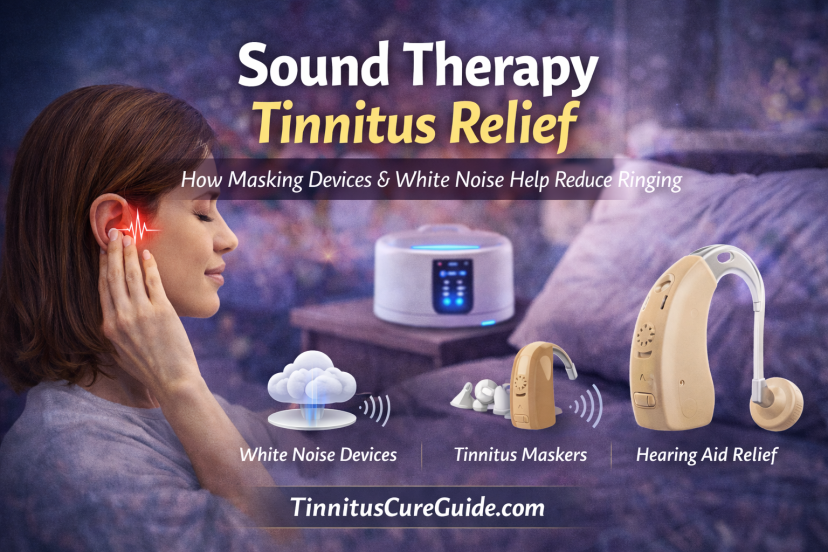
🔊 White Noise Tinnitus Devices And Apps
White noise tinnitus tools create a steady background sound.
Popular sound types include:
-
Rain sounds
-
Ocean waves
-
Fan noise
-
Static white noise
-
Pink noise
U.S. users often try:
-
Sleep sound apps
-
Smart speaker sound routines
-
Bedside white noise machines
🎧 Tinnitus Masker Device Options
A tinnitus masker device is worn in or behind the ear and plays a low-level sound.
These devices:
-
Blend with the tinnitus sound
-
Can be worn all day
-
Are adjustable by audiologists
👂 Hearing Aid Tinnitus Relief Technology
Modern hearing aids often include sound therapy features.
Hearing aid tinnitus relief can help people who have both tinnitus and hearing loss.
Benefits include:
-
Improved hearing clarity
-
Reduced tinnitus perception
-
Built-in sound therapy programs
🔊 How To Choose The Best Sound Therapy Tinnitus Relief Option
Choosing the right tool depends on your lifestyle and symptoms.

✅ If Tinnitus Is Worse At Night
Try:
-
White noise machines
-
Sleep sound appsBedside sound generators
⭐ If Tinnitus Is Constant During The Day
Consider:
-
Tinnitus masker device
-
Hearing aid tinnitus relief options
-
Wearable sound therapy devices
✅ If You Travel Often
Best options:
-
Smartphone sound apps
-
Portable sound generators
-
Compact masking earbuds
🧘♀️ How To Use Sound Therapy In Daily Life
🌙 Nighttime Sound Therapy Routine
Many people get the best results using sound therapy during sleep.
Try:
-
Low-level sound all night
-
Volume slightly below tinnitus level
-
Consistent sound type nightly
🧑💻 Daytime Sound Enrichment
Instead of silence, use:
-
Background music
-
Nature sound playlists
-
Office white noise
🌿 Supplements Sometimes Used With Sound Therapy
Always consult a doctor first.
Some people use:
-
Magnesium – Nerve support
-
Vitamin B12 – Nerve function
-
Ginkgo biloba – Circulation support
These may support ear and nerve health alongside sound therapy tinnitus relief.
🧘♀️ Stress Reduction Boosts Sound Therapy Results
Stress increases tinnitus awareness.

Helpful techniques include:
-
Meditation
-
Guided relaxation
-
Breath exercises
-
Yoga
Combining stress reduction with sound therapy often improves results.
🔊 Realistic Expectations For Sound Therapy Tinnitus Relief
Important to understand:
Sound therapy is:
✅ Symptom management
⭐ Brain training
✅ Long-term improvement tool
Sound therapy is not:
❌ Instant cure
❌ One-size-fits-all solution
Most people see improvement over weeks to months.
🔊 Prevention Tips To Support Long-Term Tinnitus Relief
✅ Protect Hearing
-
Use ear protection in loud environments
-
Lower headphone volume
-
Take listening breaks
✅ Support Circulation And Ear Health
-
Exercise regularly
-
Stay hydrated
-
Manage blood pressure
-
Eat nutrient-rich foods
🩺 When To See A Doctor About Tinnitus
See an ENT or audiologist if:
-
Tinnitus is new or worsening
-
You have hearing loss
-
Tinnitus is only in one ear
-
You feel dizzy or have balance problems
-
Tinnitus disrupts sleep or daily life
Doctors can help determine if sound therapy tinnitus relief is right for you.
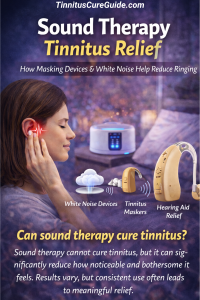
Can Sound Therapy Cure Tinnitus?
Sound therapy cannot cure tinnitus, but it can significantly reduce how noticeable and bothersome it feels. It works by adding external sound, such as white noise, nature sounds, or soft tones, which helps the brain focus less on internal ringing.
Over time, many people experience habituation, meaning the brain treats tinnitus like background noise. Sound therapy is widely recommended by audiologists because it is safe, non-invasive, and can improve sleep, concentration, and stress levels.
While results vary from person to person, consistent use often leads to meaningful symptom relief and better daily quality of life for people living with tinnitus.
❓ FAQs About Sound Therapy Tinnitus Relief
1. Does sound therapy actually work for tinnitus?
Yes. Many people experience reduced tinnitus awareness with consistent use.
2. Is white noise safe to use all night?
Yes, when used at safe volume levels.
3. Are tinnitus masking devices better than apps?
They can be more precise, but apps work well for many people.
4. Can hearing aids stop tinnitus?
They do not cure tinnitus, but can reduce perception significantly.
5. How long before sound therapy works?
Some notice improvement in weeks; full habituation may take months.
6. Can sound therapy cure tinnitus permanently?
It usually manages symptoms rather than curing the condition.
7. Is sound therapy safe for long-term use?
Yes. It is non-invasive and widely recommended by audiologists.
💬 Conclusion: Managing Tinnitus With Sound And Consistency
Living with tinnitus can feel overwhelming — but sound therapy tinnitus relief gives many people real, daily improvement.
Focus on:
-
Consistent sound therapy use
-
Stress management
-
Hearing protection
-
Healthy lifestyle habits
With patience and the right tools, tinnitus can become much less noticeable.
You are not alone — and relief strategies do exist.
⚠️ Medical Disclaimer
This article is for informational purposes only and does not replace professional medical advice. Always consult a qualified healthcare provider regarding tinnitus or hearing concerns.
 Explore more:
- Why Tinnitus Happens: Explained Simply
- Can Energy Drinks Cause Tinnitus?
- Vitamin D Deficiency And Tinnitus