Why Tinnitus Happens: Inner Ear, Brain & Nerves Explained Simply
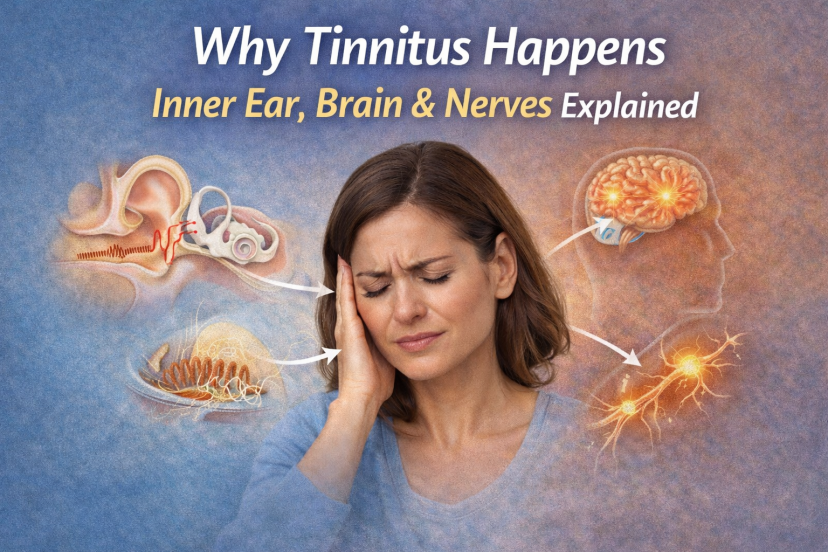
💡 When Sound Comes From Inside Your Head
If you live with tinnitus, you know how confusing and exhausting it can be.
The ringing, buzzing, humming, or whooshing often appears without warning, follows you into quiet rooms, and can make sleep, focus, and relaxation incredibly difficult. Many people feel anxious or frustrated because the sound seems to come from nowhere.
One of the most common questions tinnitus sufferers ask is:
Why tinnitus happens — and why won’t it stop?
Understanding what’s happening inside your inner ear, brain, and auditory nerves can be incredibly empowering. This guide breaks down the science in a clear, easy-to-understand way, so you can better manage tinnitus and reduce its impact on your life.
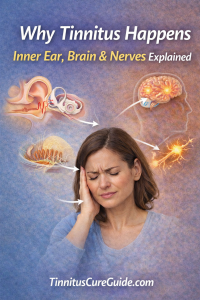
🔊 Why Tinnitus Happens: The Big Picture
At its core, tinnitus is not a disease — it’s a symptom.
It happens when the auditory system sends sound signals without an external sound source.
In simple terms:
-
The ears collect sound
-
The auditory nerve sends signals
-
The brain interprets those signals as sound
When something disrupts this pathway, the brain may create its own noise.
That’s why understanding how tinnitus works requires looking at all three systems together:
-
The inner ear
-
The auditory nerve
-
The brain’s sound-processing centers
🧠 How Tinnitus Works Inside The Auditory System
To understand why tinnitus happens, it helps to know how hearing normally works.
🔊 Normal Hearing Process
-
Sound waves enter the ear canal
-
The inner ear (cochlea) converts sound into electrical signals
-
The auditory nerve sends signals to the brain
-
The brain identifies pitch, volume, and meaning
When this system works smoothly, sound feels natural and effortless.
When it doesn’t, tinnitus can appear.
👂 Inner Ear Damage: A Major Reason Tinnitus Starts
🔊 How Inner Ear Damage Triggers Tinnitus
Inside the cochlea are tiny sensory cells called hair cells. These cells move in response to sound vibrations and help convert sound into nerve signals.
When hair cells are damaged:
-
Sound signals weaken or disappear
-
The brain notices missing input
-
The brain increases signal sensitivity
-
Phantom sound (tinnitus) may result
This explains why inner ear damage is one of the most common tinnitus causes.
Common Causes Of Inner Ear Damage
-
Loud noise exposure (concerts, headphones, machinery)
-
Age-related hearing loss
-
Certain medications
-
Ear infections or trauma
Once hair cells are damaged, they do not regenerate, which is why tinnitus can become chronic.
🧠 The Brain’s Role In Why Tinnitus Happens
Tinnitus isn’t just an ear problem — it’s also a brain adaptation issue.
🔊 Why The Brain Creates Ringing
When the brain doesn’t receive normal sound input, it tries to compensate. This can lead to:
-
Increased neural activity
-
Over-amplification of sound signals
-
Misfiring auditory neurons
The result is auditory nerve ringing that feels very real, even though no external sound exists.
This is similar to phantom limb pain — the brain fills in what it thinks is missing.
🧠 Auditory Nerve Ringing Explained
The auditory nerve acts like a communication highway between the ear and the brain.
When damaged or overstimulated:
-
Nerve signals may fire randomly
-
The brain interprets this as sound
-
Ringing, buzzing, or hissing may occur
Auditory nerve ringing is often linked to:
-
Noise-induced hearing loss
-
Head or neck injuries
-
Chronic stress and tension
🔊 Why Tinnitus Sounds Different For Everyone
Not all tinnitus sounds the same.
Common variations include:
-
Ringing
-
Buzzing
-
Clicking
-
Whooshing
-
Pulsing
The sound depends on:
-
Which part of the auditory system is affected
-
Brain response patterns
-
Blood flow or muscle involvement
This explains why tinnitus is highly individual.
🌿 Stress, Anxiety, And Why Tinnitus Feels Louder
Stress doesn’t cause tinnitus — but it makes it worse.
🔊 Stress And The Nervous System
-
Stress activates the fight-or-flight response
-
The brain becomes hyper-alert
-
Tinnitus moves into conscious awareness
This creates a feedback loop:
-
Tinnitus → stress
-
Stress → louder tinnitus
Breaking this cycle is key to long-term relief.
🔊 Why Silence Makes Tinnitus Worse
Many people notice tinnitus is loudest at night.
That’s because:
-
External noise drops
-
The brain has fewer distractions
-
Internal sounds become more noticeable
This is why sound therapy is so effective.
🌿 Treatments That Help Calm The Auditory System
While understanding why tinnitus happens is important, relief comes from consistent management.
🔊 Sound Therapy
Sound therapy helps by:
-
Reducing contrast between tinnitus and silence
-
Giving the brain something else to focus on
Options include:
-
White noise machines
-
Nature sounds
-
Fans or ambient music
-
Sound therapy apps are popular in the U.S.
🧘♀️ Relaxation Techniques That Support The Brain
Relaxation lowers nervous system arousal, reducing tinnitus intensity.
Helpful practices:
-
Deep breathing
-
Progressive muscle relaxation
-
Mindfulness meditation
-
Gentle yoga or stretching
Consistency matters more than intensity.
🌿 Supplements Often Used For Tinnitus Support
Supplements don’t cure tinnitus, but they may support nerve and ear health.
🌿 Ginkgo Biloba
-
May support inner-ear circulation
-
Mixed research results, some individuals report improvement
🧩 Magnesium
-
Supports nerve signaling
-
May help noise-induced tinnitus
🧩 Vitamin B12
-
Deficiency linked to tinnitus in some people
-
Blood testing is recommended before supplementation
Always consult a healthcare provider first.
✅ Lifestyle Strategies To Protect The Inner Ear
Daily habits influence how tinnitus behaves.
✅ Hearing Protection
-
Use earplugs at concerts
-
Lower headphone volume
-
Avoid prolonged loud exposure
🧩 Sleep Support
-
Maintain consistent sleep times
-
Use background sound at night
-
Avoid caffeine late in the day
✅ Diet Awareness
-
Limit excess salt
-
Reduce alcohol
-
Stay hydrated
🚨 When To See A Doctor Or Audiologist
Medical evaluation is important, especially if tinnitus changes suddenly.
Seek professional care if you have tinnitus:
-
Starts abruptly
-
Occurs in one ear only
-
Pulses with your heartbeat
-
Comes with dizziness or hearing loss
-
Interferes with sleep or mental health
ENTs and audiologists can identify underlying causes and guide treatment.
❓ FAQs About Why Tinnitus Happens
Why does tinnitus happen even without hearing loss?
Subtle nerve changes or brain processing issues can trigger tinnitus even when hearing tests appear normal.
Can inner ear damage heal itself?
Hair cell damage is usually permanent, but the brain can adapt through habituation.
Is auditory nerve ringing dangerous?
Usually no, but sudden or one-sided tinnitus should be evaluated.
Why does tinnitus change in volume?
Stress, fatigue, diet, and sound exposure all influence brain sensitivity.
Can tinnitus come from the brain alone?
Yes. Brain signal processing plays a major role in chronic tinnitus.
Why is tinnitus worse at night?
Silence increases awareness of internal sound signals.
Does understanding how tinnitus works help reduce it?
Yes. Education reduces fear, stress, and symptom amplification.
🌟 Conclusion: Understanding Tinnitus Is A Powerful First Step
Knowing why tinnitus happens — from inner ear damage to brain and nerve involvement — helps remove fear and uncertainty. While tinnitus can feel overwhelming, it’s not a sign of danger, and it doesn’t mean you’re powerless.
With:
-
Education
-
Sound support
-
Stress reduction
-
Healthy daily habits
-
Professional guidance
Many people successfully reduce the impact of tinnitus and regain control. Relief comes from patience, consistency, and self-care — not from chasing quick fixes.
⚠️ Medical Disclaimer
This article is for informational purposes only and does not replace professional medical advice. Always consult a qualified healthcare provider for diagnosis and treatment of tinnitus or hearing conditions.
 Explore more:
- Neurological Tinnitus: When the Brain Causes the Ringing
- Tinnitus In Older Adults: Age-Related Hearing & Ringing Risks
- Hearing Protection & Lifestyle Habits To Prevent Tinnitus